Creating a functional home gym in a small space means every centimetre counts. Instead of letting resistance bands, jump ropes and light accessories pile up in a corner, a smart solution is a foldable wall rack or compact hook system. These organisers keep gear visible, easy to grab and safely off the floor, reducing trip hazards and protecting your bands from damage. In this guide we look at what to consider when choosing a foldable wall rack and how to store your equipment efficiently without sacrificing precious floor space.
Key features of a good foldable wall rack
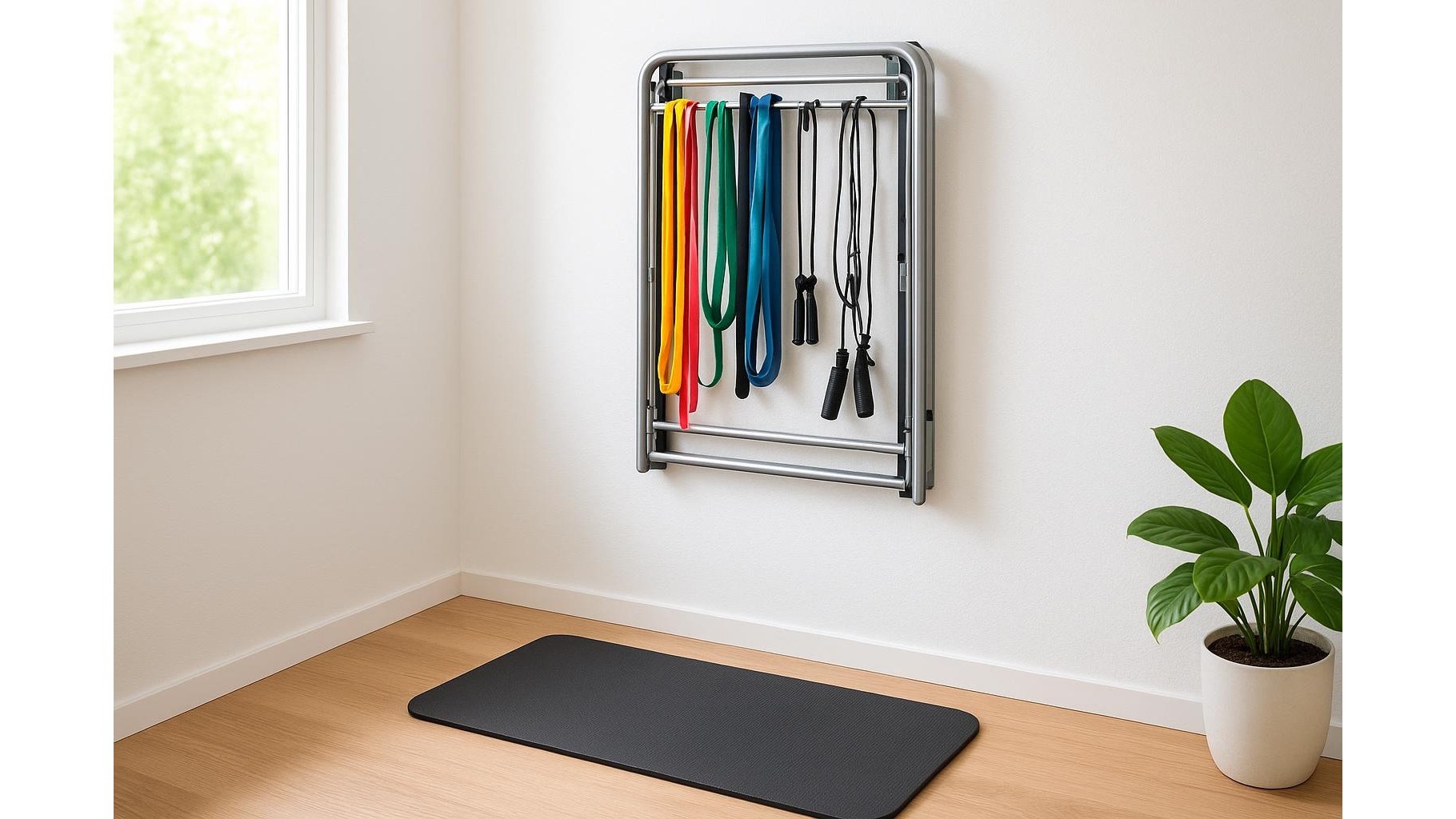
A quality foldable wall rack for resistance bands should be sturdy, compact and easy to operate. Look for racks made from steel or heavy-duty metal with a load rating clearly indicated by the manufacturer. Multiple hooks or arms are essential so you can separate loop bands, tubes with handles, jump ropes and light accessories. A folding mechanism that sits close to the wall when not in use is ideal in narrow rooms or behind doors. Smooth edges and rounded hooks help prevent fraying or cutting into latex bands. Finally, choose a finish that resists rust and sweat, especially if your home gym is in a garage or basement.
Measuring your space and planning the layout
Before buying, measure the wall area where you plan to mount the rack. Consider door swings, low ceilings and nearby equipment such as squat racks or cable machines. For most users, eye-level mounting works best so you can easily see and grab each band. In a very tight space, a vertical hook rail can hold bands from top to bottom, while a horizontal foldable rack suits wider walls. Leave enough clearance under the rack for a storage box or bench if needed. Think about your future kit too: if you plan to add foam rollers, yoga straps or light kettlebells, choose a system with spare hooks or room to expand.
Organising resistance bands and small accessories
The way you organise your rack is as important as the rack itself. Group resistance bands by tension level, placing light bands on one side and heavy bands on the other so you can grab the right resistance quickly during workouts. Hang jump ropes loosely coiled on individual hooks to avoid kinks in the cable. Use separate hooks or a small accessory strip for ankle straps, handles, door anchors and glute bands. If your rack does not include hooks of different sizes, you can add clip-on carabiners to create extra hanging points. A clear, logical layout saves time, encourages regular training and helps you spot worn or damaged bands early.
Safety, installation and wall type
Safe installation is crucial when mounting any wall rack. Always check your wall type: solid brick or concrete can usually support higher loads with the correct masonry anchors, while plasterboard requires fixing directly into studs using suitable screws. Follow the manufacturer’s weight limits and remember that several bands and accessories together can be surprisingly heavy. Use a spirit level to keep the rack straight and ensure folding arms can move freely without hitting other fixtures. Once installed, test the rack with light items first, then gradually add more. Regularly inspect screws and anchors for loosening, especially if children might pull on hanging bands.
Keeping your home gym clutter-free long term
A foldable wall rack is most effective when paired with simple habits. After each workout, take a minute to hang every band and accessory back in its designated spot. Wipe down bands and handles if they are damp with sweat to protect both the material and the wall. If you share the home gym, label hooks or use colour coding so everyone knows where items belong. When you upgrade or replace bands, remove old, cracked pieces immediately so they do not mix with safe gear. Over time, this consistent organisation transforms even a small corner into a tidy, motivating space that feels like a professional home gym.
Choosing the right foldable wall rack for resistance bands and light home gym accessories can dramatically improve the safety and usability of your training area. By focusing on build quality, compact design, correct sizing for your wall and a thoughtful organisation system, you can store bands, ropes and small tools neatly without giving up floor space. A well-planned rack not only protects your equipment but also keeps your workout flow smooth, so you spend less time searching for gear and more time training effectively.