
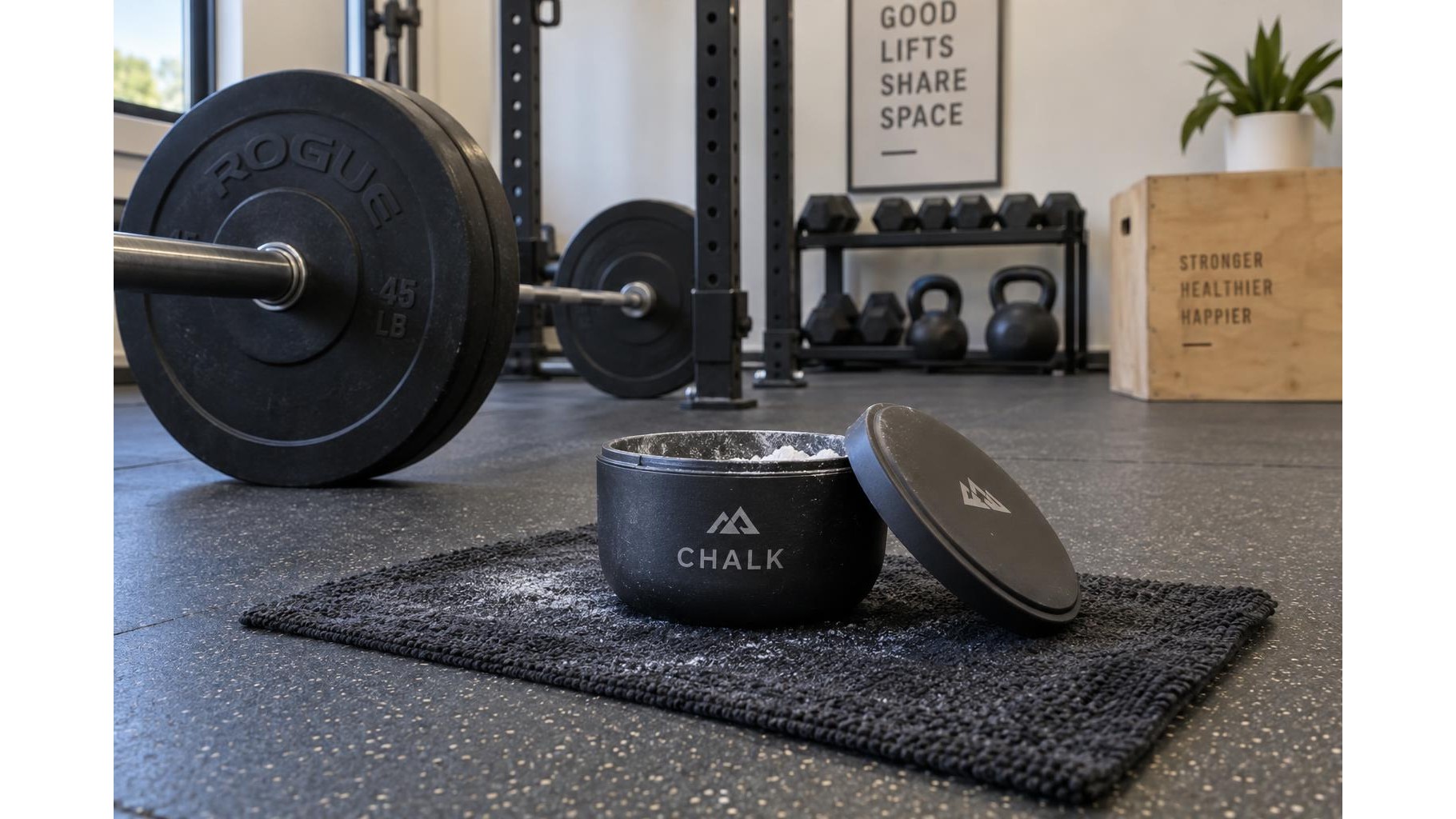
A small station, a cleaner training space
A chalk bowl can make a home-gym grip station more convenient, but an open container may also spread dust onto equipment and floors. The best compact setup balances easy access with stability, enough capacity for your training routine, and a way to keep loose chalk contained. Before buying, consider where you will place it, who shares the room, and whether you use loose chalk or a block. These details matter more than choosing the largest bowl available.
Freestanding or wall-mounted?
A freestanding chalk bowl is simple to move, requires no installation and can be positioned near a rack or pull-up bar. Look for a broad base and a low centre of gravity; a lightweight, narrow vessel can tip when someone brushes against it or reaches in quickly. A wall-mounted holder keeps the floor clear and can be a smart choice in a shared or particularly small gym. It does, however, need a secure fixing into a suitable wall or stud, and its position should allow comfortable access without obstructing movement. Compare options through this Amazon UK chalk bowl search.
[iol_placeholder type=”cta” id=”telegram”/>
Check stability before capacity
Capacity should match how often you train and how many people use the station. A compact bowl is easier to tuck away and typically holds enough for one lifter’s regular sessions; a larger container may suit a shared setup but takes up more space and leaves more chalk exposed. Pay attention to the bowl’s footprint, height and construction, rather than relying on volume alone. A weighted base, non-slip feet or a stable mounting plate can reduce the risk of spills. If specifications do not state how the bowl is secured, treat stability as something to verify before use.
Choose a dust-conscious design
Chalk dust is difficult to avoid entirely, but the right habits and design can limit how far it travels. A bowl with taller sides or a recessed opening helps catch crumbs as you chalk up. A lid or cover is useful between sets, especially when the gym doubles as a living space. Keep the container away from fans, open windows and busy walkways, where air movement and accidental contact can scatter powder. Use only a small amount at a time, and avoid clapping or blowing excess chalk from your hands.
Match the bowl to your chalk
Not every holder works equally well with every chalk format. Loose chalk needs a container deep enough to reach into without dragging powder over the rim. Blocks may sit neatly in a smaller bowl, though you should check that its opening is wide enough to retrieve them easily. Some lifters prefer a refillable fabric insert or a chalk ball, which can reduce loose powder compared with dipping directly into a pile. Whatever format you choose, make sure it is easy to remove, clean or refill without tipping the contents across the floor.
Plan for placement and upkeep
Put the bowl close enough to your lifting area that you do not carry chalk across the room, but far enough from plates, electronics and upholstery to avoid coating them. For a freestanding model, place it on a level, wipeable surface; for a wall-mounted model, choose a reachable height and test the fixing before loading it. A small mat beneath the station can catch stray powder and simplify cleanup. Wipe the bowl regularly, and empty accumulated crumbs before they become a dusty mess. In a shared home, agree on a quick reset after each session.
A practical choice for a tidy grip station
The right compact chalk bowl is stable, appropriately sized and suited to the chalk you actually use. Choose freestanding for portability or wall-mounted to reclaim floor space, then reduce dust with a cover, careful placement and a simple cleanup routine. A tidy station makes chalk easier to use without letting it take over a shared home gym.









