A weightlifting belt can help you create a firmer brace during challenging squats, deadlifts and other compound lifts, but it does not make a lift safe by itself. For a home gym, the best choice is usually a belt that fits your torso, stays secure through movement and is comfortable enough to use correctly. This guide covers belt fit, support, materials and sizing, plus how to brace and what to check before buying.
Know what a belt can—and cannot—do
A belt gives your abdomen something to brace against, which may help you increase trunk stiffness when you take a deep breath and brace under load. It is most relevant for heavy or near-heavy sets where you already have consistent technique. You do not need to wear one for every exercise, and it is not a substitute for sensible load progression, a stable setup or sound lifting mechanics. If you have pain, an injury or a medical concern, ask a qualified health professional before relying on a belt.
Choose a profile that suits your torso
Belts are commonly sold in uniform-width designs and tapered styles that are narrower at the front. A uniform-width belt offers an even contact area, while a tapered belt can feel less restrictive when sitting, hinging or moving between exercises. Compact home lifters should consider torso length and the space between the ribs and hips: a wide belt that digs into either area can make bracing uncomfortable. Try moving through a squat and hip hinge, if possible, before committing.
Compare materials, stiffness and closure
Leather belts are generally firm and durable, but can feel stiff at first and may be less comfortable for quick changes between exercises. Nylon belts are lighter and often more flexible, making them a practical option for general home training. Check the closure as carefully as the material: a secure buckle, lever or hook-and-loop system should stay put during a set and be straightforward to adjust. Look for clean stitching, sturdy hardware and edges that will not rub your skin.
Measure for a reliable fit
Use the manufacturer’s sizing instructions rather than your trouser size. Measure around your abdomen where the belt will sit, keeping the tape snug but not tight, and compare the result with the brand’s size chart. If you fall between sizes, check whether the closure offers enough adjustment for changes in clothing or body weight. The belt should feel secure without pinching, sliding or restricting a full breath. A belt that only fits at the tightest setting may leave little room to adjust.
Practise bracing before lifting heavy
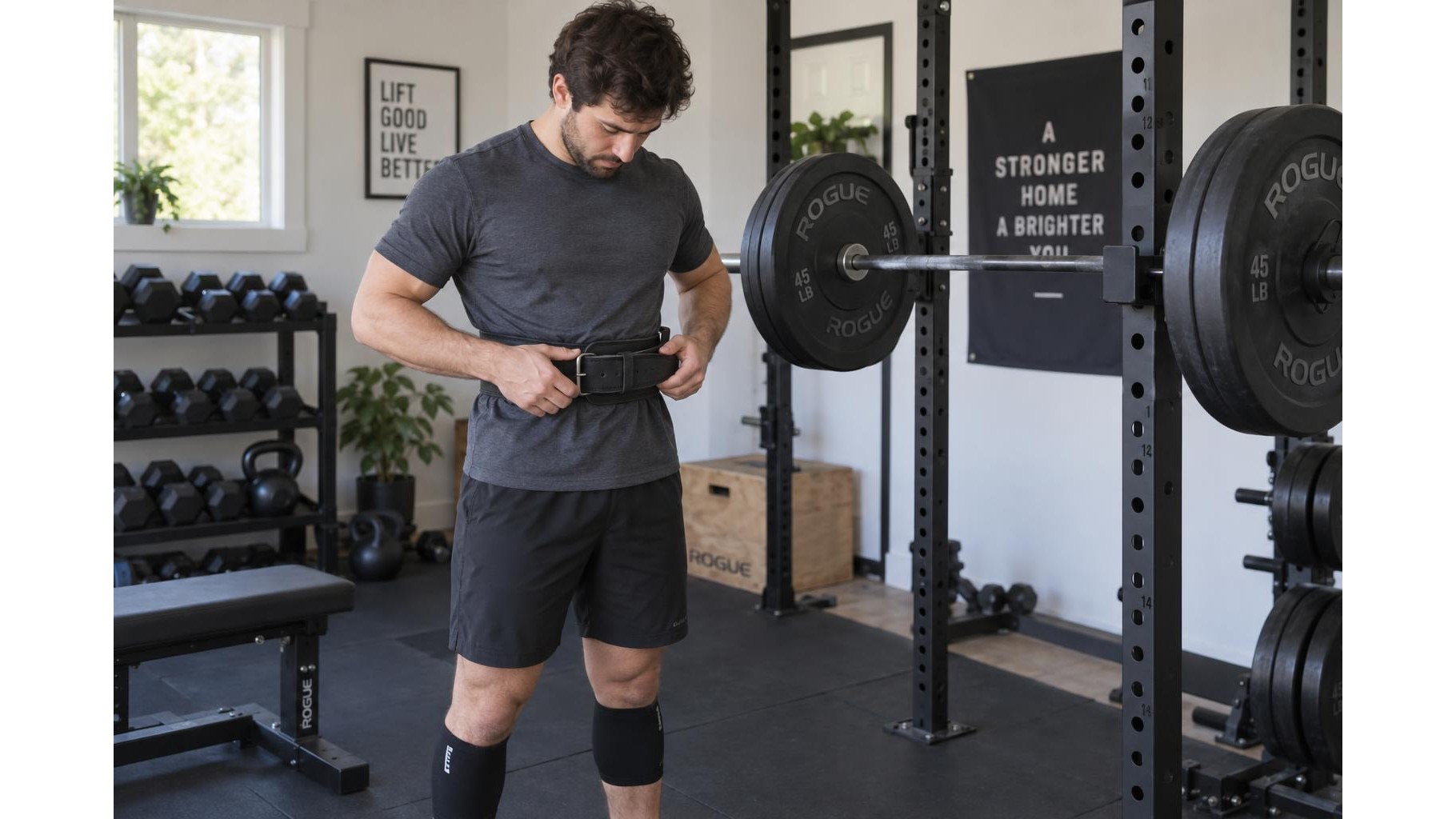
Fasten the belt so it is snug, not painfully tight. Breathe into your abdomen and sides, then brace as if preparing for a gentle push; your trunk should expand against the belt all around, rather than relying only on your chest. Practise first with light loads and maintain your usual controlled technique. If you cannot breathe, brace or move comfortably, loosen or reposition the belt. Stop a set if your form breaks down, regardless of the belt.
Check the practical details before buying
For a compact home gym, consider whether the belt is easy to store, quick to put on and suitable for the lifts you actually perform. Read the care instructions, return policy and sizing guidance, and check that the closure can be operated safely without assistance. Avoid choosing solely by thickness, appearance or claims of added strength. The right belt is one you can adjust consistently and use without distracting discomfort; a belt that stays in a drawer offers no practical benefit.
In short, choose a compact weightlifting belt for a comfortable, secure fit and support that matches your training—not as a shortcut to heavier lifts. Measure carefully, compare materials and closures, and practise bracing with lighter weights before using it for demanding sets. Keep technique, gradual progression and sensible load choices at the centre of every home workout.