
Why a compact pulley needs careful planning
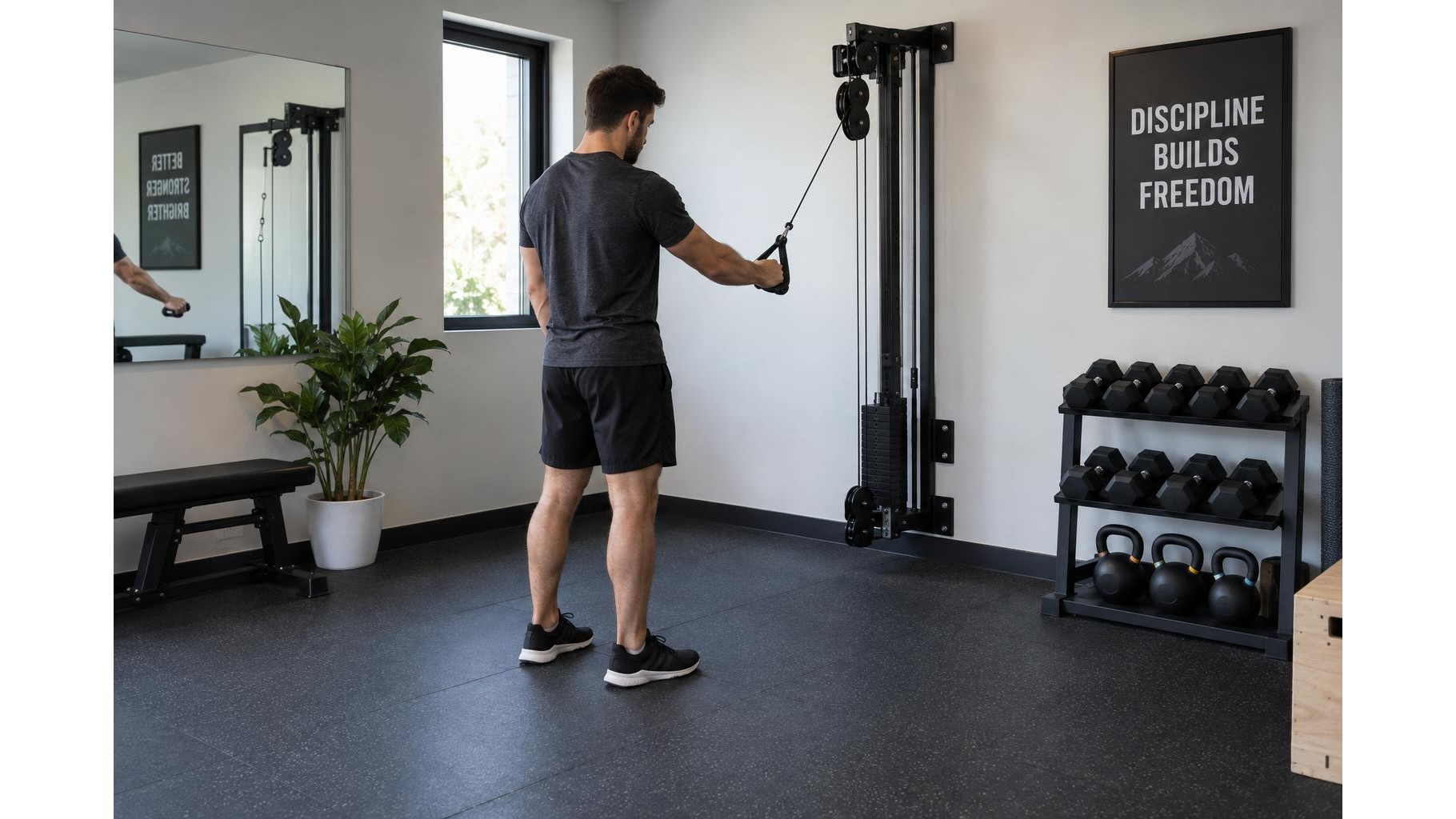
A wall-mounted pulley system can add rows, pulldowns, triceps work and other cable exercises to a home gym without taking up the floor space of a full-size machine. Compact designs still need enough room to move, a suitable structure to attach to and reliable hardware. Before choosing one, compare its usable cable travel, mounting method, pulley action and stated load capacity with your training needs and your room. A system that fits the wall but restricts your range of motion—or cannot be safely installed—will not be a useful space-saving upgrade.
Measure cable travel and exercise space
Check the cable’s usable travel, not only the machine’s overall height. The cable must extend far enough for the movements you intend to perform, including standing exercises, rows and overhead pulls. Consider whether the design offers one high pulley, one low pulley or adjustable positions; each layout supports a different range of exercises. Measure from the proposed mounting point to the floor and leave clear space in front of the unit for your body, bench, handles and full cable extension. Also check that the weight stack or loading pin can move freely without striking a skirting board, furniture or other equipment.
[iol_placeholder type=”cta” id=”telegram”/>
Confirm the wall and mounting method
Identify the wall construction before buying. A pulley should be fixed to a suitable structural surface, such as masonry or appropriately located timber studs, using fasteners specified for that surface. Plasterboard alone is not a safe structural anchor. Read the manufacturer’s instructions for hole spacing, fixing type and installation clearances, and do not assume that generic wall plugs are adequate. If you cannot identify the structure or verify the fixings, ask a qualified installer. Renters should get written permission before drilling; homeowners should still check for concealed wiring, plumbing and other services before making holes.
Assess cable smoothness and build quality
A good system should move consistently through its full range, without catching, scraping or sudden changes in resistance. Look for clearly described cable construction, pulley materials, bearings and replaceable wear components. Multiple pulleys can create more exercise options, but alignment matters: poor routing or a cable that rubs against the frame can make movement rough and accelerate wear. Inspect reviews and product information for comments on noise, slack and long-term operation, while remembering that reports can vary with installation and maintenance. Handles and attachment points should also feel secure and suit the exercises you plan to do.
Understand load capacity and resistance
Compare the stated maximum load with your intended training progression, but first determine what that figure measures: the weight on the loading pin, the total supported load or a component’s limit. On a multi-pulley route, the resistance felt at the handle may differ from the plates added, depending on the pulley arrangement. Follow the maker’s limits for the cable, carabiners, loading pin and wall attachment; the weakest component sets the safe limit. Start with a light load and test the system smoothly. Never exceed a published rating or use improvised weights that can slip off the pin.
Check safety, upkeep and everyday fit
Before each session, look for fraying, damaged connectors, loose bolts and movement at the wall mount. Keep the cable path clear, secure plates against slipping and avoid jerking the load. Choose a location where other household members cannot walk into the moving cable or weights. Check whether the unit can remain mounted without blocking doors, storage or other training stations, and whether its components are easy to inspect and maintain. A compact footprint is useful only when the system remains accessible and safe to operate.
Make the choice that fits your room
Prioritise full cable travel, compatible structural mounting, smooth movement and clearly defined load limits over a long list of features. Measure the room, confirm permission and wall suitability, then match the pulley layout to the exercises you will actually perform. Careful checks help renters and homeowners avoid unsuitable installations and make a compact cable station a practical, durable part of a home strength-training setup.









