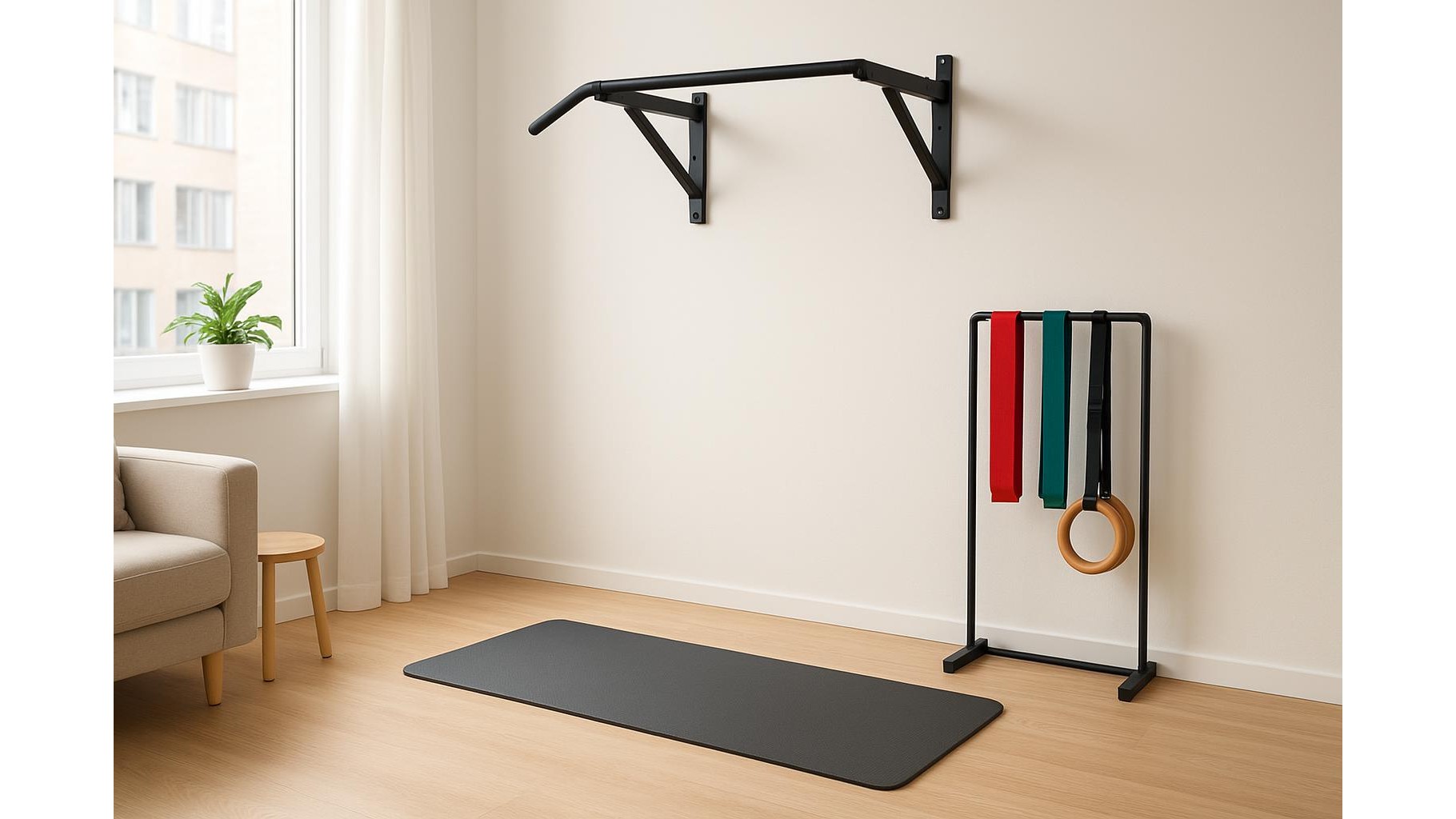
Creating a home gym in a rented apartment is all about making smart choices that save space and protect your walls. A compact, wall-mounted pull-up bar system, or a no-drill door-frame pull-up bar, can turn a small room or hallway into a versatile training zone. The key is understanding mounting options, safety checks and the accessories that add exercise variety without leaving damage behind when you move out.
Understanding wall-mounted vs no-drill systems
When choosing a pull-up bar for renters, the first decision is between a fixed wall-mounted bar and a no-drill doorway pull-up bar. Wall-mounted models usually offer the greatest stability and weight capacity, often including multiple grips for wide, narrow and neutral pull-ups. However, they require drilling into brick, concrete or solid timber studs, which might not be allowed in every tenancy agreement. No-drill doorway bars clamp or wedge against the door frame, spreading pressure across large pads to reduce marks. These are ideal for lightweight users, occasional training and situations where you must remove everything without a trace. For heavy users or advanced calisthenics, a solid wall mount is usually the safer, more stable choice if your landlord permits it.
Checking your walls, frames and landlord rules
Before buying any compact pull-up bar system, assess your space carefully. For wall-mounted pull-up bars, you need a structural wall (brick, concrete or load‑bearing stud) rather than thin partition plasterboard. Measure ceiling height and clearance above the bar so you can perform full pull-ups without hitting your head. If you are going for a door-frame pull-up bar, measure internal width and frame depth; most designs have a minimum and maximum door width they can safely fit. Always read your rental contract and, if in doubt, ask for written permission before drilling. Take photos of the wall condition before installation. Planning these details in advance prevents disputes when you move out and ensures the bar can actually be mounted where you intend to train.
Key safety features to prioritise
Safety is crucial in a small home gym, where you may train alone. Look for pull-up bars with a clearly stated maximum load rating, ideally well above your bodyweight to add a safety margin. Wide mounting plates, multiple fixing points and high‑quality anchor bolts help distribute force across the wall and reduce the risk of cracks. For renters, it is smart to choose bars with rubber pads or protective spacers wherever the frame contacts walls or door trim, limiting scuffs and dents. Non‑slip foam or knurled steel grips provide secure hand positions even when you sweat. If you opt for a telescopic no-screw bar that presses between two sides of a doorway, ensure it has mechanical locking and safety caps, and always follow the instructions about correct mounting height and surface type.
Space-saving designs and exercise variety
In compact apartments, a folding pull-up bar or a multi-function door gym can transform a tight space into a flexible workout area. Some wall-mounted bars include a fold-down design, letting the frame collapse flat against the wall when not in use to free up corridors or small rooms. Doorway units that hook over the frame can be removed in seconds and stored under a bed or in a wardrobe. To increase exercise variety without adding bulky machines, consider bars that offer multiple grip positions and attachment points for resistance bands, gymnastic rings or TRX-style suspension trainers. This way you can perform rows, core work, mobility drills and assisted pull-ups on the same compact setup, maximising training options in a tiny footprint.
Protecting walls and speeding up removal
For renters, an ideal pull-up solution combines stability with minimal impact on the property. With wall-mounted systems, use the supplied fixings that match your wall type and avoid improvising with undersized screws. Adding thin plywood backing boards or larger washers can help spread load and reduce the chance of wall damage, but only if they fit within your agreement. For door-frame bars, always check that protective pads fully cover contact points and that the bar does not compress soft or decorative trim. After each workout, quickly inspect the surfaces for marks so you can adjust before long-term wear sets in. Choose finishes that are easy to wipe down and designs that can be removed and packed in minutes when it is time to move, keeping your landlord happy and your deposit safe.
Choosing a compact wall-mounted or no-drill pull-up bar for a rented home is about balancing training goals with practical constraints. By checking your walls and door frames, understanding load ratings and safety features, and favouring folding or easily removable designs, you can build a versatile home gym in even the smallest flat. Add a few smart accessories like bands or rings and you will unlock a wide range of strength exercises—without leaving permanent scars on your walls when you hand back the keys.