
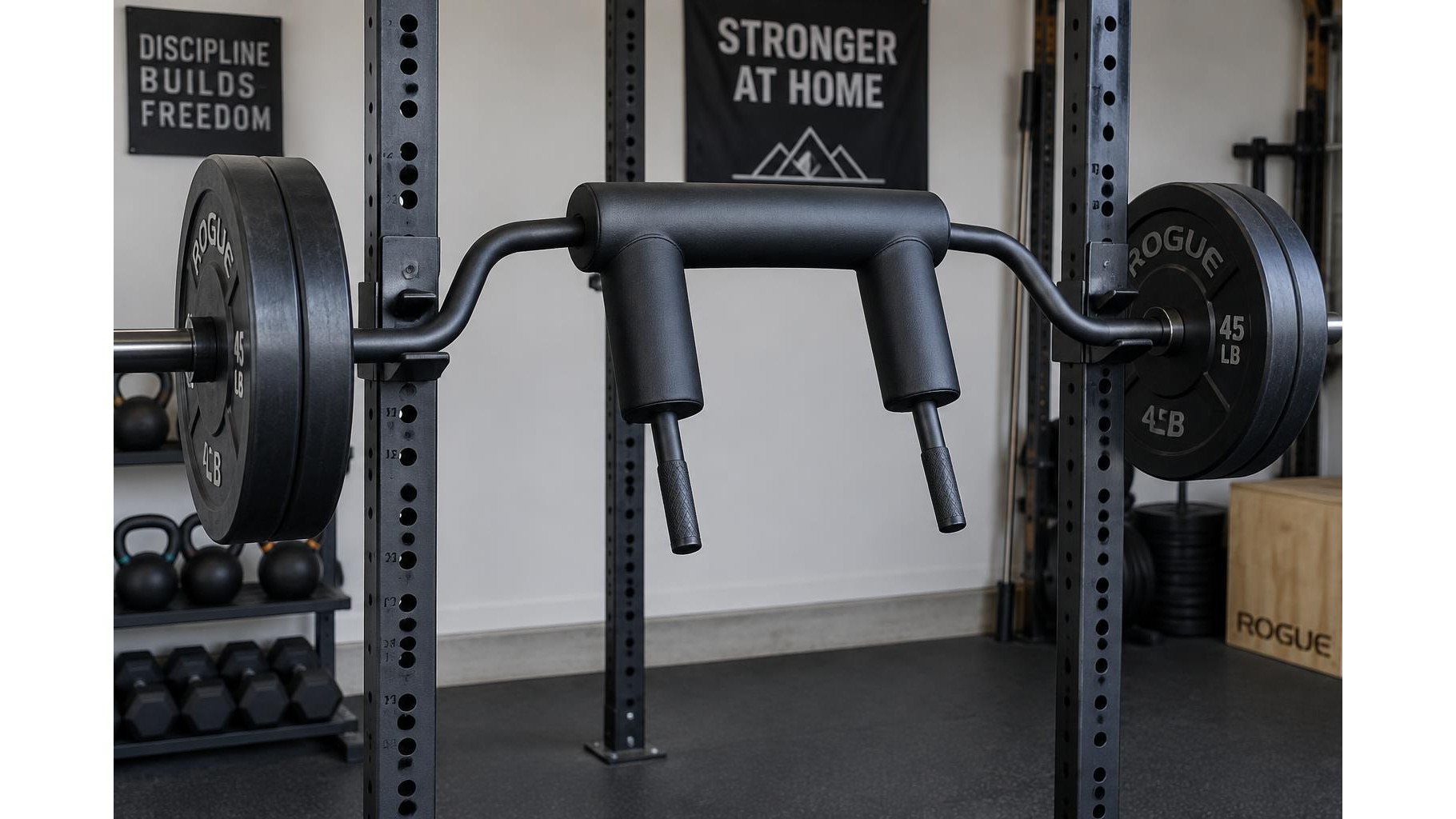
A specialty bar for limited space
A safety squat bar can add a useful squat variation to a home gym, especially for lifters who want to change how the bar sits on the shoulders or reduce the need to hold a conventional bar in a low-bar position. Its padded yoke and forward-facing handles make it distinctive, but the bar’s size and shape can create storage and rack-fit challenges. Before buying a compact safety squat bar, compare its handle design, sleeve length, camber, overall dimensions and compatibility with your equipment. A little measuring can help you avoid a costly mismatch.
Check the handles and padding
The handles should feel secure and let you maintain a comfortable grip throughout the squat. Some designs use fixed handles; others offer removable or adjustable options. Fixed handles are straightforward, while detachable handles may make the bar easier to store or provide more choice in hand position. Check the handle length, spacing and attachment method, and make sure the ends will not interfere with your chest or arms. Padding should sit comfortably across the upper back without slipping or creating pressure points. If possible, try a similar bar in person, since comfort depends on your build and preferred squat stance.
Measure sleeve length and loading needs
Shorter sleeves can help keep a bar compact, but they also limit how many weight plates you can load. Estimate the total plate space you need for your working sets, allowing for the thickness of your plates and collars. Sleeve diameter matters too: confirm whether the bar suits your plates, and check that collars fit securely. A bar that works with standard-sized plates may have less usable loading capacity than one designed for larger sleeves. Review the manufacturer’s stated load limit and distinguish it from the amount of weight that physically fits on the sleeves.
Understand camber and balance
The camber is the bend that drops the sleeves below the level of the shoulder pads. Its depth and shape affect how the bar balances and how it feels during a squat. A pronounced camber can change the bar’s movement and make control more demanding, while a shallower design may feel more familiar. There is no single ideal shape: consider your training experience, intended use and comfort. Look for clear product dimensions and guidance on loading. When first using a new bar, start with a light load and practise bracing, unracking and turning safely before progressing.
Confirm rack and home-gym compatibility
Measure your rack’s upright spacing, J-cup width and available clearance before ordering. The bar’s yoke and handles can be wider or longer than a straight bar, so check that they clear the uprights when you unrack and rerack. Confirm the bar sits securely in your J-cups and that the sleeves do not hit a wall, door or other equipment. Also consider ceiling height and the space needed to walk out. If your rack has unusual dimensions or attachments, ask the seller to confirm fit rather than relying on a general compatibility claim.
Plan storage and everyday handling
A specialty bar may be awkward to store even when its shaft is relatively short. Check the bar’s total length, width across the yoke and handle configuration, then compare those measurements with your storage area. A wall-mounted bar holder or a dedicated rack attachment can keep it off the floor, but verify that the holder supports the bar’s shape and weight. Removable handles may help with storage, though repeated assembly can be inconvenient. Leave enough room to pick up and return the bar without striking other equipment, and keep it where the padding will not be crushed or damaged.
Choose for fit, not just compactness
For a home gym, the best compact safety squat bar is one that fits your rack, storage space and training needs—not simply the one with the shortest advertised dimensions. Check handle comfort, sleeve capacity, camber, load rating and clearance before purchasing. A well-chosen bar can provide a different squat variation and a practical alternative for lifters who find a straight-bar position uncomfortable. Measure first, verify specifications with the seller, and begin with manageable loads as you learn the bar’s balance.









