
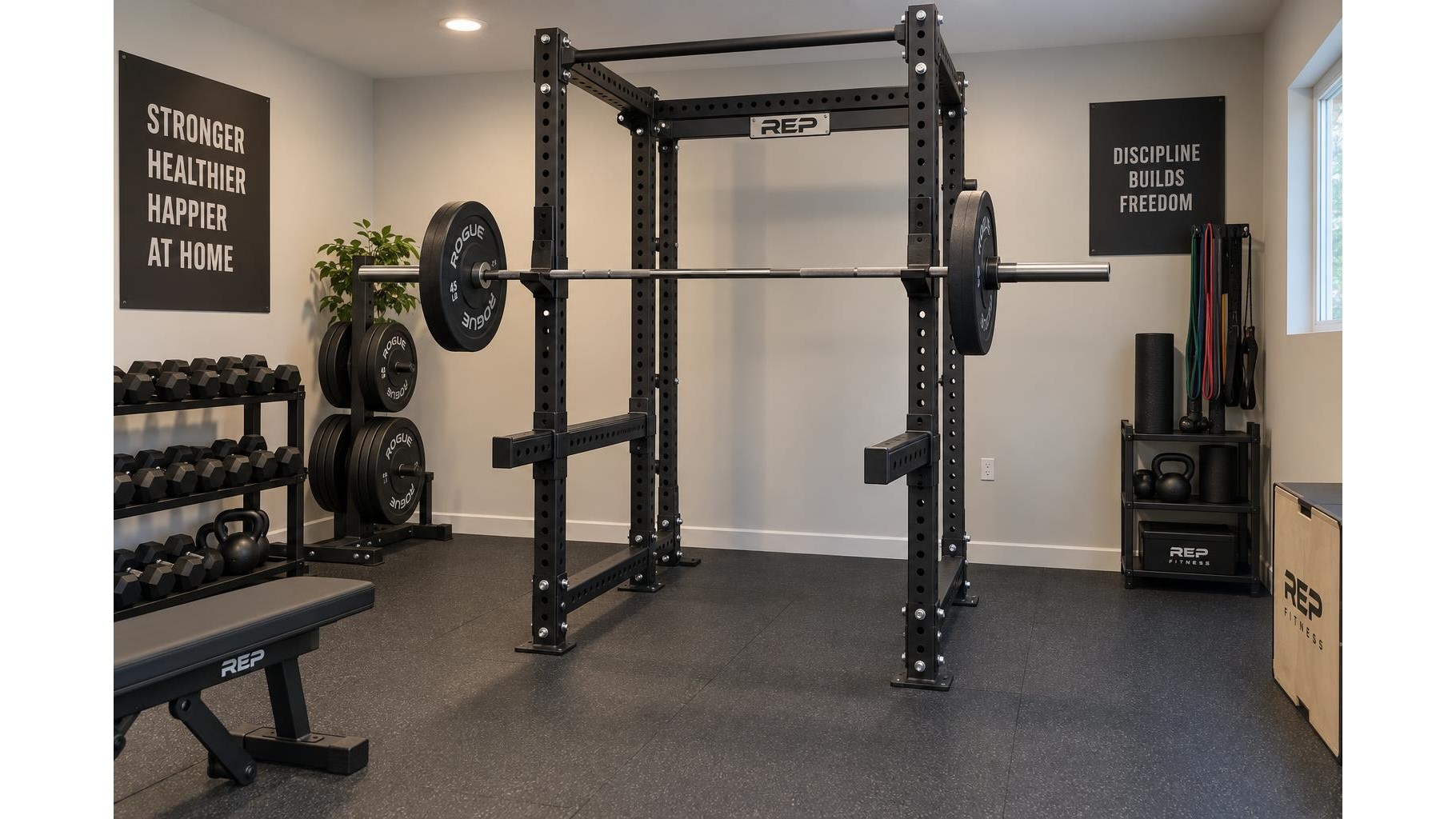
A compact power rack can make barbell training safer and more versatile without taking over a home gym. The right choice is not simply the smallest frame or the one with the highest advertised capacity. You need a rack that fits your room, suits your lifts and provides reliable protection when a repetition goes wrong. Before comparing models, measure the space carefully and decide how you plan to train.
Measure the room before shopping
Check the rack’s full height, width and depth, then allow extra room for loading plates, moving around the frame and using a bench. Measure ceiling height at the exact installation point, including any beams, lights or sloped sections. If you intend to do standing overhead presses inside the rack, leave enough clearance for your bar and hands; otherwise, you may need to press outside it. Also consider the barbell’s full length and the space required at both ends. A rack that fits on paper can still feel cramped once a bench and plate storage are added.
Match the frame to your training
Compact racks come in several formats: four-post power racks, shorter half racks and wall-mounted folding racks. A four-post design typically gives you an enclosed lifting area and adjustable safeties, but needs more floor space. A half rack can reduce the footprint while still supporting squats and presses, though it may offer less enclosure. Folding models can free up floor area, but require a suitable wall and secure installation. List your main exercises, training frequency and likely progression first. If you lift alone, prioritize a setup that lets you position safeties correctly for every barbell movement.
Understand steel and construction
Compare the frame’s steel thickness or gauge, upright dimensions, cross-bracing and stated maximum load. Gauge numbers can be confusing: a lower gauge number generally indicates thicker steel, but manufacturers may use different specifications and testing methods. Treat load ratings as one part of the assessment rather than a guarantee of overall quality. Inspect how the uprights connect to the base and whether bolts, hole spacing and welds appear suited to repeated use. A sturdy frame should feel stable under the movements you plan to perform, with no noticeable rocking during normal bar handling.
Check safeties and adjustment range
Safety bars, straps or pin-and-pipe safeties are essential when training without a spotter. Confirm that they are compatible with the rack, lock securely into the uprights and can be set at the right height for squats and bench presses. Their length should support the bar across the working area. Test the intended safety position with an unloaded bar before lifting, and make sure it can catch the bar without trapping you. Check the upright hole spacing too: closer spacing around the bench area makes it easier to fine-tune J-cups and safeties.
Evaluate J-cups, anchoring and accessories
J-cups should seat securely, adjust easily and protect the bar’s finish with suitable liners. Verify that their attachment style and dimensions match the rack; accessories are not universally interchangeable. Consider whether the rack needs to be bolted to the floor or wall. Follow the manufacturer’s anchoring instructions, taking account of the floor or wall material, and do not assume an unanchored rack is stable simply because it is heavy. If you rent or cannot drill, look for a design explicitly intended for freestanding use and assess its base, footprint and stability requirements. Check what is included, since safeties, J-cups and hardware may be sold separately.
Choose for the space and the lifter
Before buying, compare the assembled dimensions with your measured workout area and confirm that the rack supports your preferred barbell exercises, safety setup and future training plans. Prioritize a secure frame, dependable safeties and compatible J-cups over optional attachments. A compact rack is a good fit only when it leaves enough room to train and can be installed as intended. Careful measurements and a clear list of lifting needs will help you choose a practical home setup that supports safer, more consistent sessions.









