Creating a compact home gym in a small flat is absolutely possible, but choosing the right all‑in‑one home gym station can be confusing. Between pulley systems, weight stacks, foldable frames and upgrade kits, it’s easy to overspend or buy something that simply doesn’t fit. This guide walks you through the key features to check so you can make a smart choice that suits your space, training style and budget.
Table of contents
Measure your space and plan the footprint
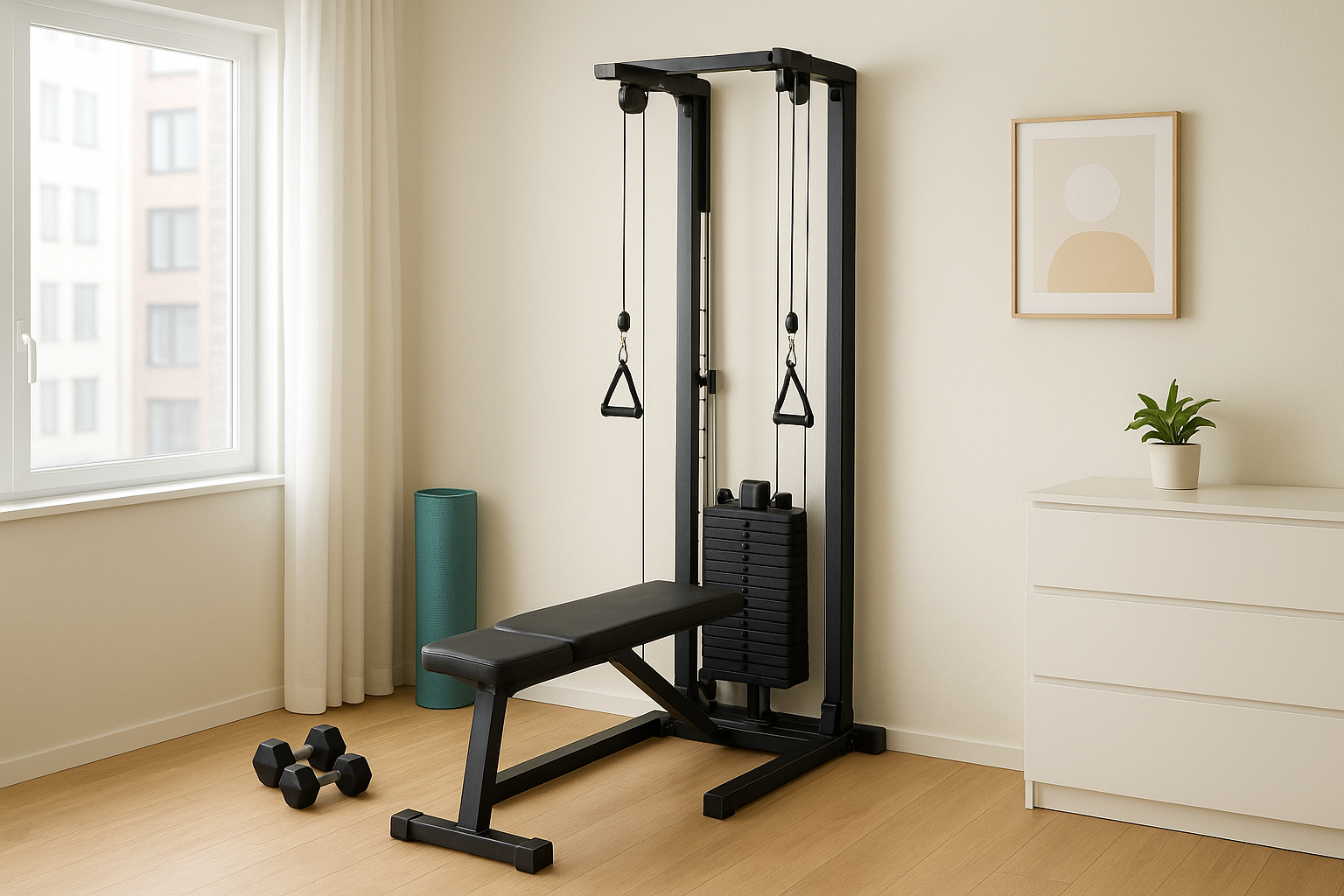
The first step in choosing a compact home gym station is to understand exactly how much room you have. Measure floor area, ceiling height and access points (doors, hallways, stairwells). Many multi‑gyms need more space than their listed footprint once you factor in the movement of cables, benches and your own body. As a rule of thumb, add at least 60–80 cm of clearance around the machine so you can perform exercises safely. In tight apartments, prioritise stations with a small footprint, vertical designs and, if possible, foldable or low‑profile benches. Avoid bulky leg press attachments or wide Smith machines if you can barely walk around them – extra features are useless if you end up not using them because the room feels cramped.
Understand pulleys, resistance and exercise range
On compact stations, the pulley system determines both how the machine feels and what you can do with it. Look for smooth, low‑friction pulleys and clearly labelled weight stacks. In many machines the pulley ratio (for example 2:1) means that selecting 60 kg on the stack actually feels like 30 kg at the handle. This is not a problem, but you need to know it so you can judge whether the top weight is sufficient for long‑term progress. Cable height adjustability is also crucial: a station with high, mid and low pulleys will cover lat pulldowns, rows, curls, triceps work and core training in a very small footprint. If you’re serious about variety, check that the machine supports compound movements (rows, pulldowns, presses, leg extensions/leg curls) rather than only a few isolation exercises.
Prioritise safety, build quality and stability
In a home environment, especially in a flat, your home gym station must be safe, quiet and stable. Heavy duty steel frames, solid welds and a rated max user weight are non‑negotiable. Cable ends, carabiners and adjustment pins should feel robust, not flimsy. Because many compact stations rely on cables, double‑check that moving parts are protected and that there are clear instructions for safe use. Weight stacks that are fully enclosed are safer if you have children or pets at home and also reduce noise. Stability is essential: look for wide bases, the option to bolt down if needed, and rubber feet that protect floors and help absorb vibration. A slightly heavier, well‑built station is usually a better long‑term investment than a super‑light, wobbly model that you’ll want to replace after a year.
Check upgrade paths and modular options
To avoid wasting money, think about how your training needs might change. Many compact stations are compatible with extra attachments such as lat bars, ankle straps or different grips, which can dramatically increase exercise variety at low cost. In some cases, manufacturers sell upgrade kits that add more plates to the weight stack or additional stations like a leg developer or preacher pad. When comparing products, ask yourself: can I grow into this machine, or will I outgrow it in six months? Machines that allow for progressive overload, extra accessories and simple adjustments for different users (for example seat and pad height) will stay useful longer, especially if more than one person in the household trains on the same system.
Balance budget, value and real‑world use
A higher price tag does not always mean better value. For a small flat, you may not need every possible station (pec deck, leg press, Smith machine) built into one frame. Instead, focus on the features that you will actually use 2–3 times per week. A solid compact multi‑gym with smooth cables, a decent weight stack, adjustable pulleys and a stable frame will often beat a huge, feature‑packed monster that dominates your living room. Factor in hidden costs such as delivery, assembly and potential floor protection. Reading real‑world feedback on ease of assembly, noise levels and long‑term durability can help you spot whether a station delivers day‑to‑day comfort and reliability. In the end, the best compact home gym is the one that fits your space, matches your training style and encourages you to train consistently.
Choosing a compact home gym station without wasting space or money comes down to planning and priorities: know your room, demand smooth and safe pulley systems, insist on solid construction, look for upgrade options and stay honest about what you will truly use. With a clear checklist, you can turn even a small apartment corner into a functional, efficient home gym that supports your fitness goals for years.