Building a compact home gym often means working around tight spaces, neighbours and landlords who do not want holes in the walls. A freestanding dip station is one of the best ways to train your chest, triceps and core without drilling at all. The challenge is choosing a model that is stable, space‑efficient and comfortable enough for regular use, especially in small apartments or multipurpose rooms. This guide walks you through what matters most and how to match a dip station to your space, strength level and training goals.
Table of contents
Know your space and footprint constraints
The first step is to measure where your dip station will live. Look at both the footprint (length x width on the floor) and the vertical clearance. Many compact stations fit into 70–90 cm of width and around 70–100 cm of depth, but tall users and people who prefer straight‑leg dips may need more open space in front. Check that you can walk around the station and that it will not block doors or wardrobes. If you are in a studio flat, prioritise models that are easy to move or that can stand alongside a wall when not in use. Rubber feet are important to protect floors and stop the frame from sliding on laminate or tiles.
Build quality, stability and load capacity
For safe training, pay close attention to frame construction and maximum user weight. Look for heavy‑duty steel tubing, welded joints and a stated capacity of at least 120 kg if you plan to add weight with a belt or vest. A wider base generally improves lateral stability, but in very small rooms it can become a trip hazard, so balance width against available space. Cross‑braces between the uprights and non‑slip end caps both help to reduce wobble. If you are a beginner, a slight flex is not dangerous, but avoid ultra‑light frames that rock as soon as you start to dip or do leg raises. User reviews that mention stability when performing explosive movements are a good indicator of real‑world performance.
Handle design, grip comfort and ergonomics
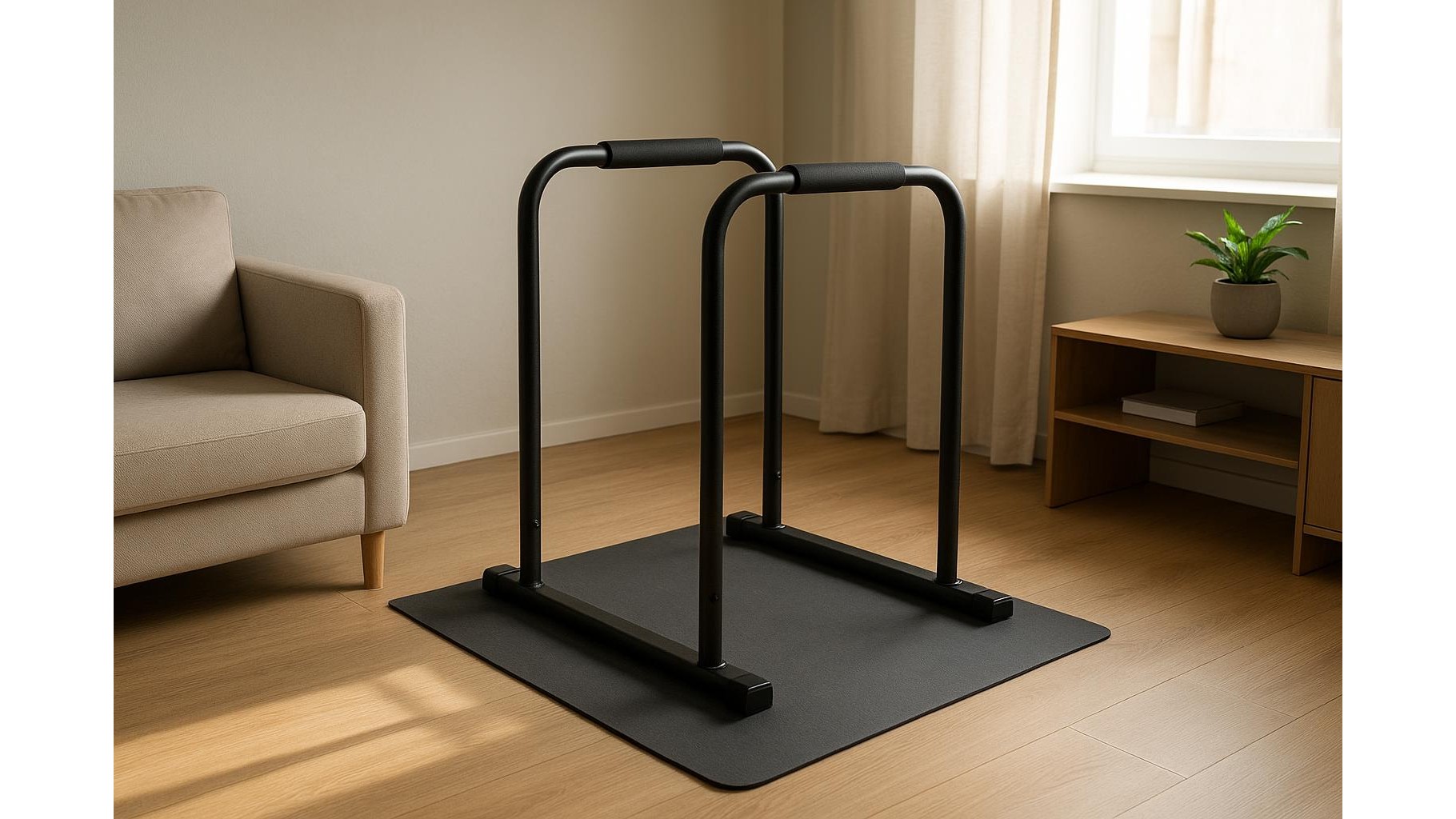
The most overlooked feature of a home dip station is the handle area. Ideally, you want parallel bars spaced roughly shoulder‑width apart, or adjustable between about 45–60 cm to suit different builds. Fixed bars that are too wide can stress your shoulders; too narrow and you cannot lean forward comfortably. Look for thick, dense foam grips or textured rubber that stays secure even when your hands are sweaty. Some frames offer slight outward flaring of the bars, giving you a choice of narrow and wide positions in one unit. Rounded tube edges and smooth welds are important so you can safely perform not only dips, but also incline push‑ups, knee raises and support holds without hotspots in your palms.
Features that suit small apartments and shared spaces
If you train in a flat or shared living room, ease of storage becomes critical. Look for dip stations that are either light enough to carry between rooms or have a folding design that collapses flat. Some minimalist parallel bar sets can be separated into two pieces and stacked behind a sofa or under a bed. Integrated rubber or silicone feet protect delicate floors and reduce vibration noise, a big plus when you have neighbours below. Because you are avoiding wall‑mounted solutions, choose a model with a small but stable base that will not dominate the room. A neutral black or dark grey finish tends to blend better with home furniture than bright industrial colours.
Beginner‑friendly progressions and training versatility
Even with the best dip station, you need a sensible progression plan, especially if you are new to bodyweight training. Start with assisted dips using a resistance band looped around the bars or by keeping your feet on the floor in a bent‑knee position. Many freestanding stations are also perfect for Australian pull‑ups, bodyweight rows, support holds and L‑sit progressions. When comparing products, consider whether the bar height works for these variations and if the frame allows you to attach bands safely. Over time, you can progress to full dips, then add a weight belt or vest once 10–12 bodyweight reps feel comfortable. Choosing a station that supports multiple exercises ensures you get maximum value from a single, compact piece of kit.
Choosing a compact dip station without drilling into your walls comes down to a few key factors: measuring your space, demanding solid build quality, prioritising comfortable and ergonomic handles, and thinking ahead about storage and noise. A well‑designed freestanding frame can turn even a small corner of your flat into a capable home gym, letting you train chest, triceps and core effectively with minimal equipment. Take the time to match the station’s footprint and features to your room and your current strength level, and you will have a stable, space‑saving training partner for years to come.