Designing a compact home gym often means working around tight spaces, neighbours and landlord rules. If you want the versatility of a cable machine but can’t bolt anything into walls or ceilings, freestanding and doorway systems are your best friends. They let you perform pulldowns, rows, curls and rotations without permanent fixings, making them ideal for renters and small homes. This guide walks you through what to look for so you can pick a space‑saving cable setup that feels safe, smooth and stable.
Freestanding vs doorway cable systems
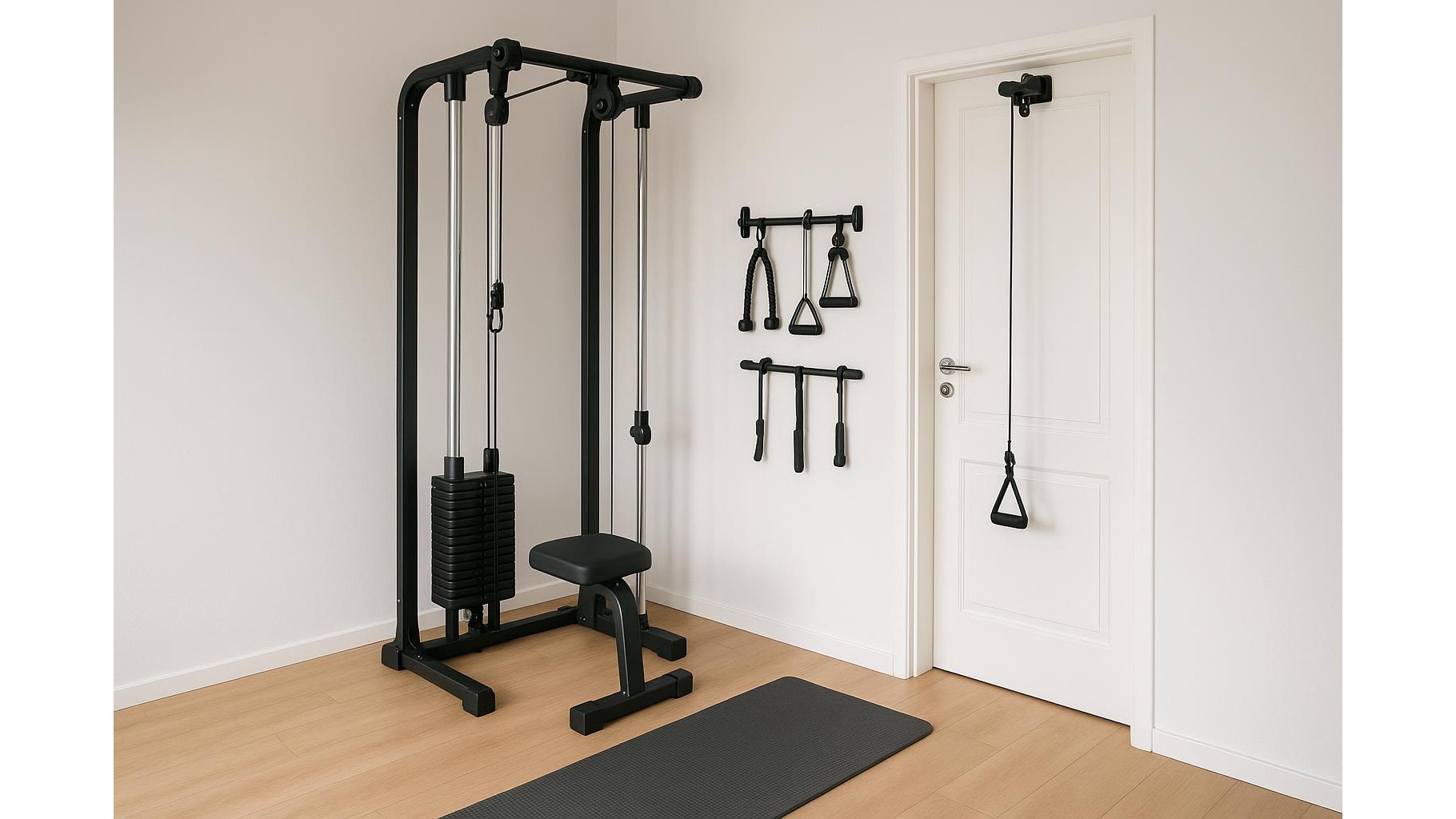
Freestanding cable machines behave like slimmed‑down versions of commercial towers. They stand on their own base, so you don’t need to drill into walls. Look for a compact footprint that will fit next to a rack or in a corner, and check height if you’re training in a room with low ceilings. By contrast, a doorway cable pulley system hangs from the top of a sturdy door using straps or metal brackets. These take up almost no floor space and can be packed away, but they depend on the strength of the door and frame. If you’re in a rental, doorway systems are usually safer from a deposit point of view, while freestanding frames feel more stable and closer to a “real” gym experience.
Stability and safety without wall mounting
Without wall anchors, stability is everything. On freestanding cable machines, check that the base is wide and heavy enough to resist tipping, especially when you use higher weights or train unilaterally. Some models allow you to add weight plates or sandbags on the base for extra security. For doorway systems, always attach the pulley to a solid, hinged door that closes firmly; hollow or damaged frames are a red flag. Inspect straps and carabiners regularly for wear, and make sure the door opens away from you so it can’t fly towards you under tension. Simple habits like standing centered, not overleaning and starting with lighter weights go a long way to keeping your home cable workouts safe.
Cable travel, weight capacity and smoothness
A compact unit is only useful if the cable travel and weight capacity match your training style. Short travel limits overhead presses and rows for taller users, so check the maximum stretch of the cable and whether you can adjust pulley height. Many compact freestanding towers use a plate‑loaded design where you slide your own weight plates onto a pin; this is great if you already own plates and want room to progress. Doorway pulley kits usually rely on weight plates, dumbbells or even a backpack as the load. Whatever you choose, pay attention to the pulley and cable quality: steel cables with smooth, ball‑bearing pulleys glide better and feel closer to a commercial machine, while thinner cords can snag and wear faster, especially with rotational work.
Attachments and exercise variety in small spaces
The beauty of a home cable machine is exercise variety in a tiny footprint. Look for kits that include multiple attachments: at minimum, a straight or EZ bar, a short bar or row handle, a tricep rope and a single D‑handle. These allow you to train back, chest, arms and core without extra equipment. If space is tight, wall‑hook storage or a small bin keeps handles organised and off the floor. Some systems support low and high pulley positions using different anchor points, letting you set up for curls, face pulls, woodchops or kickoff lunges in seconds. When you’re comparing products, think in terms of movement patterns—push, pull, squat, hinge, rotate—rather than individual muscles; the best compact system will let you cover all of these without having to rearrange your entire room.
Practical tips for renters and shared homes
If you rent or share your space, focus on non‑marking, portable cable systems. Doorway‑mounted pulleys with thick, padded anchors help protect frames from dents and paint damage, and freestanding towers with rubber feet safeguard flooring. Check the packed size and weight of the unit so you know whether it can be tucked into a cupboard or rolled into another room when guests arrive. Noise matters too: smooth pulleys, coated plates and rubber‑coated handles make early‑morning or late‑night sessions less intrusive. Finally, keep all manuals and assembly tools together—being able to quickly disassemble and move your compact cable machine is a major plus when it’s time to redecorate or change flats.
Choosing a compact home cable machine without drilling is about balancing space, stability and versatility. Freestanding towers feel closest to a commercial gym, while doorway systems win on portability and zero damage to walls. Prioritise a secure base or anchor, smooth cables, enough travel for your height and a good mix of attachments so you can train your whole body. With a little planning, you can enjoy the benefits of cable training in almost any home—no power tools, no wall brackets and no awkward conversations with your landlord required.