
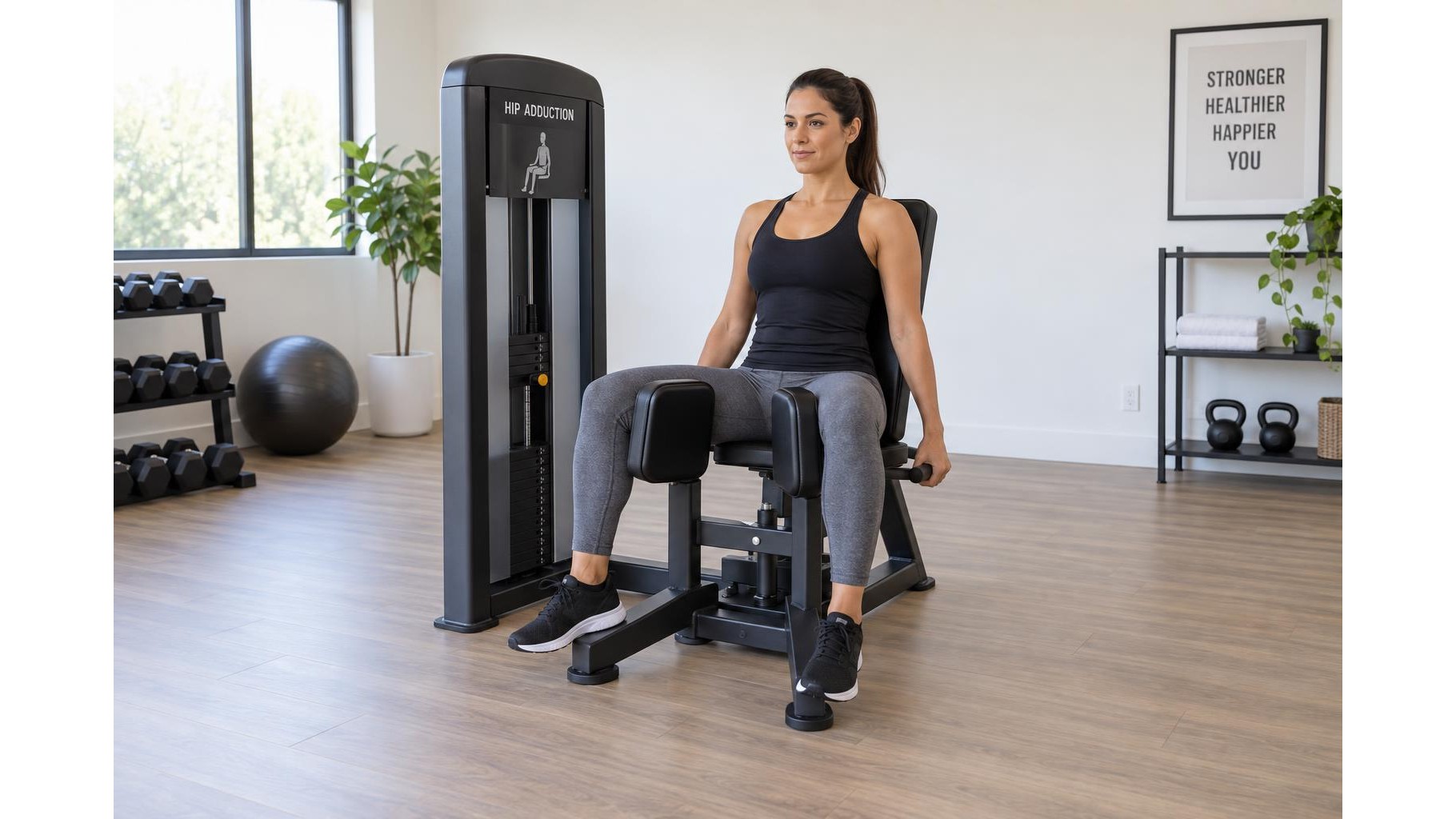
A home hip adduction machine can provide focused resistance for the muscles of the inner thigh, but a dedicated station is worth buying only if it fits your room, training needs and budget. Before choosing one, compare its actual footprint, resistance system, adjustment range, stability and comfort. Just as importantly, consider how it will complement—not replace—a balanced lower-body programme.
Measure the footprint and access
Check the machine’s assembled dimensions, not just its advertised compact design. Measure the floor area where it will sit, and allow extra room for mounting, adjusting the pads and moving the levers through their full range. Ceiling height, doorways and stairs matter too if the unit arrives assembled or in a large box. If space is limited, look for a design with a manageable frame and, where available, transport wheels or a folding feature. Confirm that it can be moved safely and stored without blocking access to other equipment. Usable clearance is part of the footprint: a machine that technically fits but leaves no room to exercise is not a practical choice.
Choose resistance you can progress
Machines may use a weight stack, plate loading, bands or another resistance system. A weight stack is convenient to adjust between sets, while plate-loaded designs can be simpler but require compatible plates and storage space. Check the smallest resistance increment as well as the maximum load: small steps can make it easier to build gradually, especially when learning the movement. Ask whether the stated resistance refers to the weight selected or the force at the pads, since lever geometry can affect how challenging a setting feels. Smooth movement through the available range matters more than an impressive maximum figure. Choose resistance that lets you complete controlled repetitions without swinging or forcing the knees together.
Check adjustability and fit
Look for adjustable starting positions, thigh-pad spacing and seat settings. These features help different users find a comfortable range without being pushed into an excessive stretch at the beginning of each repetition. Check the manufacturer’s user-height and weight guidance, and compare seat width and pad placement with your body. Ideally, you should be able to sit upright with your back supported, feet placed securely and knees aligned with the machine’s pivot points. Adjustment controls should be easy to reach while seated and lock firmly into position. If possible, test a similar machine before ordering; photographs and product dimensions cannot fully show whether the pads will suit your leg length.
Prioritise stability and construction
A compact frame still needs a broad, secure base. Read the assembly instructions and verify that the machine can be placed on a level, firm surface. Check frame material, welds, fasteners and the stated maximum user weight, while treating ratings as limits rather than goals. A unit that rocks, shifts or makes repeated clanking noises can distract from controlled training. Protective floor mats may help guard flooring, but they cannot correct an unstable frame. Read recent owner feedback for recurring reports about loose hardware, difficult assembly or parts wearing prematurely. Retighten fasteners as directed and inspect them periodically.
Make comfort part of the decision
Thigh pads should feel supportive rather than sharp or restrictive, and upholstery should be easy to clean. A padded seat and backrest can improve longer sessions, but excessive softness may make it harder to stay positioned. Confirm that the machine’s movement feels smooth and that the pads do not press uncomfortably on the knees. Begin with a modest range and light resistance, then increase gradually while keeping the motion controlled. Stop if you feel sharp pain, numbness or joint discomfort; a trainer or clinician can help you adapt the exercise if needed.
Fit adduction into a balanced programme
Hip adduction is a specialist exercise, not a complete lower-body workout. Pair it with compound movements such as squats or sit-to-stands, hip hinges, glute-focused work and appropriate calf exercises. Use the machine after larger movements or as a supplementary exercise, following its manual and your training plan. Start with a manageable number of sets and repetitions, leaving room to progress gradually rather than chasing fatigue. Allow recovery between sessions, and consider whether the machine’s cost and floor space are better spent on versatile equipment if your programme needs broader coverage.
In summary, choose a compact hip adduction machine by checking its real operating clearance, smooth and suitable resistance, useful adjustments, stable construction and comfortable fit. A careful setup and a balanced programme help make this specialist station a practical addition to home training.









