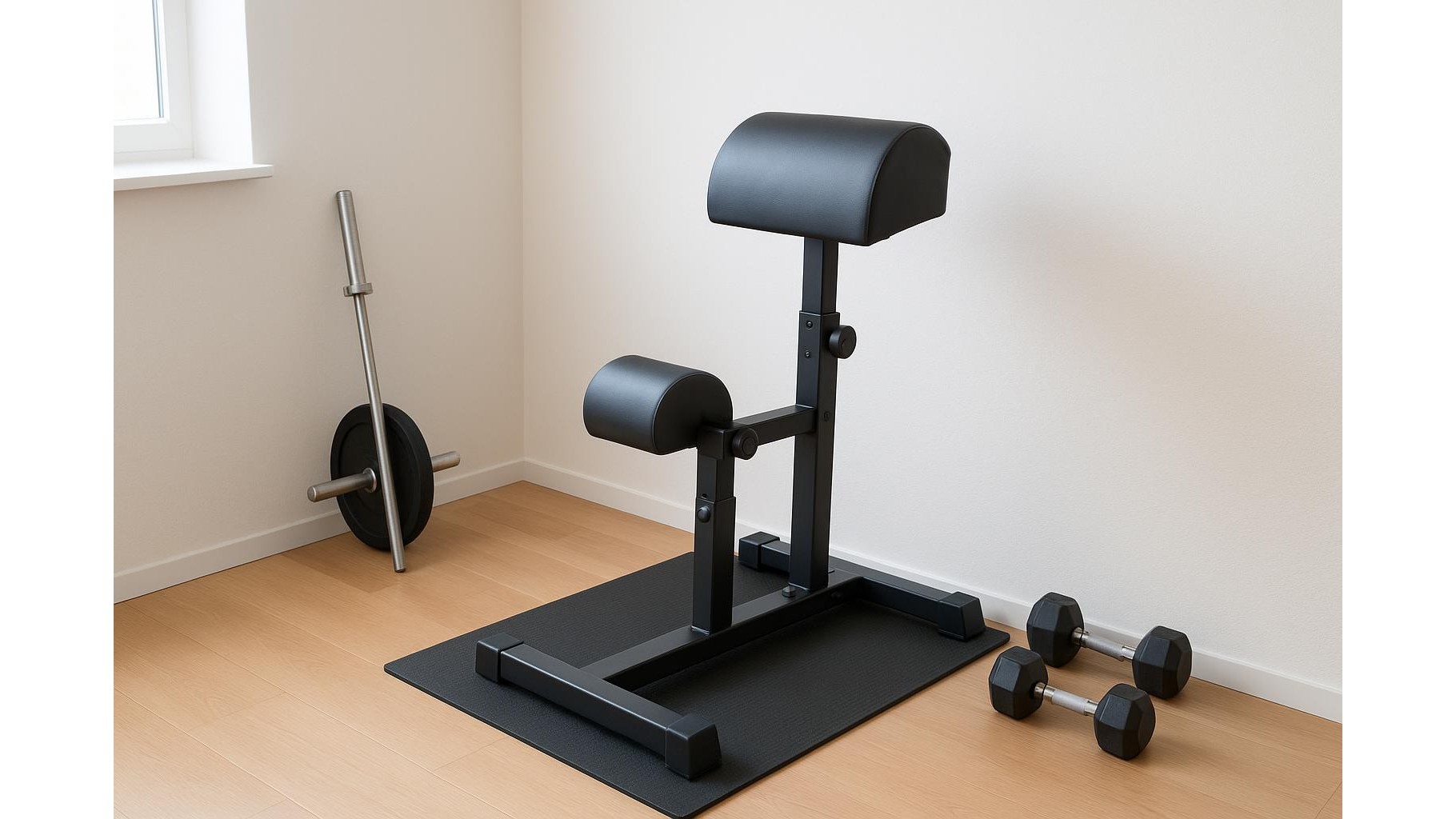
A compact glute ham developer (GHD) is one of the most effective tools you can add to a home gym for building powerful hamstrings, glutes and a resilient lower back. Unlike simple back extension benches, a GHD lets you train hip and knee extension together, mimicking athletic movements like sprinting and jumping. The challenge for most home lifters is space: a full–size commercial GHD can dominate a small room. This guide explains how to choose a space‑efficient GHD, what features really matter, and how to use it safely and effectively in a home setup.
Why a compact GHD belongs in your home gym
A well‑designed, compact GHD offers benefits you will not get from machines like leg curls. GHD hip extensions, back extensions and glute ham raises train the entire posterior chain through long ranges of motion, building strength that carries over to squats, deadlifts and running. Because you are moving your own bodyweight, you can train with minimal equipment and easily scale the difficulty using tempo, partials or added load. In a home gym, a compact footprint means you can dedicate space to a truly high‑value piece instead of multiple single‑purpose machines. For lifters with a history of lower‑back niggles, controlled GHD work can also help build endurance in the spinal erectors when used with sensible programming.
Key dimensions and footprint for tight spaces
When you are shopping for a compact glute ham developer, the first specification to check is the total footprint: length, width and height. Even smaller home‑gym models typically run around 120–150 cm long and 60–80 cm wide, so measure your intended training area carefully, including clearance to mount and dismount. Look for frames that sit closer to the floor without oversized bases, but avoid ultra‑tiny units that sacrifice stability. A practical strategy is to choose a GHD that can be stored against a wall or rotated out of the way when not in use. Some modern designs use a shortened base with smart bracing so they remain solid during heavy, explosive work while taking up much less real estate than commercial club machines.
Essential adjustments and comfort features
To get real value from a GHD, you need precise adjustability. At minimum, the machine should offer multiple positions for the footplate or ankle rollers so you can set the distance from the hip pad to match your leg length. This ensures your knees line up correctly for glute‑ham raises and that your hips sit on the pad, not behind it, during back extensions. Look for thick, dense foam pads that will not bottom out under bodyweight and a non‑slip surface on the footplate. Smooth but secure adjustment mechanisms—such as pop‑pin sliders—make it easy to change settings between users. Comfortable pads and accurate positioning do more than feel nice: they encourage you to use the GHD consistently and help keep your movement patterns safe and repeatable.
Safety, stability and build quality
Even in a small home gym, your GHD must feel rock solid. A compact frame should still use heavy‑gauge steel with wide contact points on the floor for stability. Avoid designs that tip or rock when you perform fast hip extensions or when a heavier lifter mounts the machine. Non‑marking rubber feet are helpful if you train on finished floors, and a well‑placed handle or two can make getting on and off safer. Check the stated user weight rating and choose a model that exceeds your bodyweight plus any load you might hold. Because you will be working the lower back and hamstrings under stretch, always start conservatively: use only bodyweight, limit the range of motion at first and focus on controlled eccentrics. A stable, well‑built GHD combined with smart progressions dramatically reduces the risk of tweaks or strains.
Programming ideas for posterior‑chain strength at home
Once your compact GHD is set up, you can integrate it into your weekly training in several ways. For general strength, start with 2–3 sets of 8–12 reps of back extensions twice per week, focusing on a neutral spine and strong glute squeeze at the top. Progress to glute ham raises by using partial range reps or assistance from your hands on the pads until you can control full reps. Athletes can use the GHD for hip extension swings and isometric holds to improve sprint power and trunk stability. A simple lower‑body day might pair goblet squats with GHD work and a hip hinge like Romanian deadlifts. Over time, you can add a light plate or band for extra resistance, but the priority for home training is consistency and clean technique, not maximal loading.
Choosing the right compact glute ham developer for your home gym comes down to balancing space, adjustability, stability and your training goals. By measuring your room, prioritising a solid frame and meaningful adjustments, and programming thoughtful posterior‑chain work, you can turn a small corner of your house into a powerful engine for stronger hamstrings, glutes and a more robust lower back. Invest once in a quality, space‑efficient GHD and you will have a versatile tool that supports serious training for years to come.