Designing a home gym is not just about racks, benches and cardio machines. Keeping the space cool, comfortable and safe is essential if you want to train hard all year round. A compact ceiling fan system can improve airflow, reduce sweat build-up on equipment and help you stay focused. The key is choosing low‑profile, quiet fans that work with your ceiling height, layout and lighting, while avoiding any clearance issues around bars and moving parts.
Why airflow matters in a home gym
In a closed room full of iron, rubber mats and electronics, heat and humidity build up fast. Good air circulation helps regulate temperature, reduces perceived effort and limits the risk of slippery grips or floors. Unlike a simple desk fan, a compact ceiling fan system can move air across the whole room, breaking up hot pockets around cardio machines and squat racks. This is especially important in garage gyms and loft conversions where insulation and ventilation are often poor. Think of your fan setup as part of your overall performance gear: if the room feels cooler and fresher, you can train longer and recover better between sets.
Ceiling height, clearances and safety around equipment
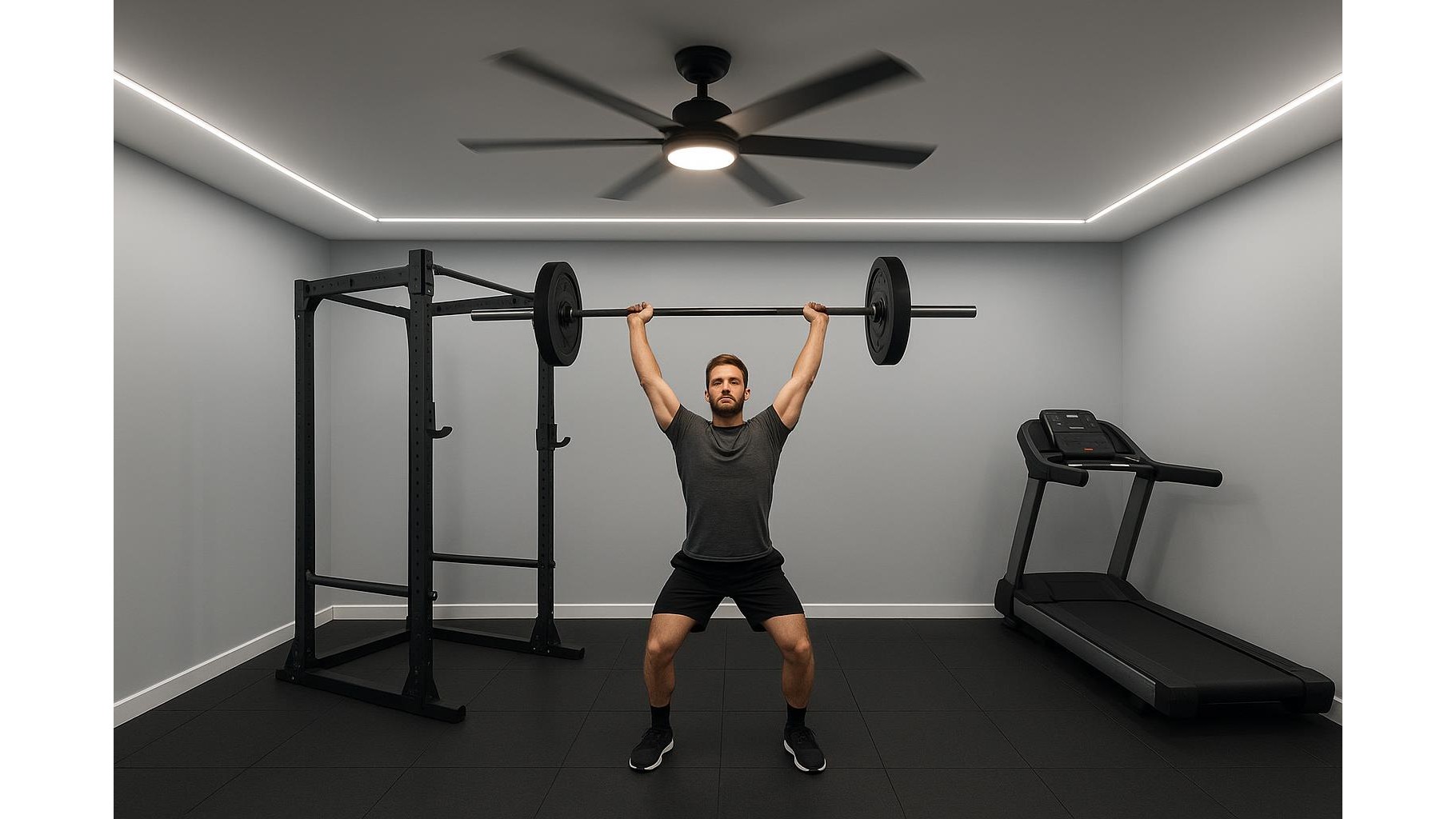
Before you buy, measure your ceiling height and the maximum standing height you reach when using your equipment. In a home gym, this usually means standing on a bench for overhead presses, doing pull‑ups on a rack, or using a plyometric box. Aim to keep at least 45–60 cm of clearance between the lowest fan blade and your highest reach. Opt for flush‑mount or low‑profile ceiling fans if your ceiling is under 2.5 m, and avoid any fan placement directly above squat racks or lifting platforms where barbells travel vertically. Instead, position fans slightly offset from the rack so they push air across the lifting area without creating a collision risk. Always check the manufacturer’s recommended clearances for blades and housings.
Choosing compact, quiet fans and air circulators
Noise is a major factor in a home gym, especially if it shares walls with living spaces or bedrooms. Look for fans that specify a low noise level across multiple speeds, not just at the lowest setting. A compact ceiling fan with a smaller blade span (around 30–42 inches) can be ideal for tight rooms, as long as it offers sufficient CFM (airflow) for the square footage of your gym. Many athletes combine a primary ceiling fan with one or two floor air circulators to target specific zones such as the cardio corner or lifting platform. This layered approach lets you keep the ceiling fan on a moderate speed while directing more intense airflow only where you need it, reducing overall noise and distraction.
Integrating fans with lighting and smart controls
Home gyms often rely on a central light fitting, so replacing it with a ceiling fan with integrated light can be a smart way to save space. Choose LED lighting with a neutral colour temperature (around 4000–5000K) to keep visibility high without eye strain. Check wiring requirements: some fans need separate switches for light and fan, while others support remote controls or smart home integration. If you already use platforms like Alexa, Google Home or Apple HomeKit, consider fans or smart switches that let you automate cooling based on time of day, temperature or workout routines. Being able to say a single command to turn on lights and fans, or trigger them from an app, makes your training flow smoother and lets you ramp airflow up or down between warm‑ups and heavy sets.
Optimal placement and combining ceiling fans with other cooling
The best fan is only effective if it is positioned correctly. For rectangular rooms, centre the main ceiling fan over the middle of the training area rather than in a corner. If your gym is L‑shaped or has distinct zones (cardio vs strength), consider using one main ceiling fan and a secondary wall‑mounted or pedestal fan to cover dead spots. Avoid aiming powerful air streams directly at your face when you are under a heavy bar or on a treadmill, as this can be distracting. Instead, angle supplementary fans to skim across your torso and equipment. In very hot climates, pair ceiling fans with basic ventilation—like opening a window or using an extractor—to move stale air out. The goal is consistent, even airflow that keeps chalk dust and humidity from settling while preserving a clear, safe training environment.
Choosing the right compact ceiling fan system for your home gym comes down to three pillars: safety, comfort and integration with your existing setup. Measure your ceiling height carefully, plan clearances around racks and machines, and opt for low‑profile, quiet models that match your room size. Combine ceiling fans with targeted air circulators for flexible cooling, and consider smart controls to streamline your warm‑up and training routines. With a thoughtful approach to airflow and placement, you can create a gym environment that feels cooler, cleaner and more professional, helping you focus fully on your performance.