Designing a modular home gym in a small space means every piece of equipment has to earn its place. A well-chosen compact barbell set can cover strength training for the whole body while taking up minimal room, but you need to balance bar length, load capacity, grip comfort, plate style and storage. This guide walks you through the key choices so you can build a versatile, space-efficient setup that can grow with your training.
Table of contents
Choosing the right bar length for small spaces
The first decision is the barbell length. Standard commercial barbells are around 220 cm, which is often too long for spare rooms or narrow garages. Many lifters opt for 5 ft or 6 ft compact bars, which make it easier to turn, rack and store the bar in tight spaces. When choosing a compact bar, check that it still offers enough sleeve length for the plates you plan to use and that the shaft is wide enough for a comfortable grip. Shorter bars can feel more stable for beginners and are ideal if you won’t be using a full-size power rack but still want to perform presses, rows and squats with limited floor area.
Load capacity and durability for progressive training
Even in a small home gym, you should plan for long-term progression. Look for a compact barbell with a clearly stated maximum load capacity and a solid finish that resists rust and wear. Steel construction with a treated coating tends to be the most durable choice for frequent use. If you are a beginner, you might not need extremely high load ratings immediately, but choosing a bar that can comfortably handle more weight than you currently lift means you won’t outgrow your setup. Pay attention to sleeve design as well: smooth or lightly grooved sleeves are easier for quick plate changes, which is valuable when you are training in a tight time window at home.
Knurling and grip for comfortable, safe lifting
The knurling—the textured pattern on the bar—directly affects how secure the bar feels in your hands. In a compact, multi-purpose home gym setup, you want a balance between grip and comfort. Very aggressive knurling can be harsh for high-rep workouts, while bars with almost no texture can feel slippery, especially if you train without chalk. When selecting a compact barbell, look for a medium knurl that supports a variety of lifts, from deadlifts and rows to overhead presses. Pay attention to the bar diameter as well: a slightly thinner shaft can improve grip for smaller hands, making your modular barbell set more accessible to multiple users in the household.
Plate types: cast iron, bumper and compact designs
Your choice of weight plates has a huge impact on noise, floor protection and storage. Cast iron plates are usually thinner and cheaper, allowing more weight on a short bar sleeve, which is ideal for compact setups. However, they can be noisy when loaded and unloaded. Rubber-coated or bumper plates are quieter and kinder to floors, appealing if you train above living spaces. For very small gyms, look for slim profile plates that maximise load capacity on a compact bar. Matching the plate type to your training style—powerlifting, general strength or circuit training—ensures your barbell set stays versatile without overflowing your storage area.
Storage ideas for a modular home gym
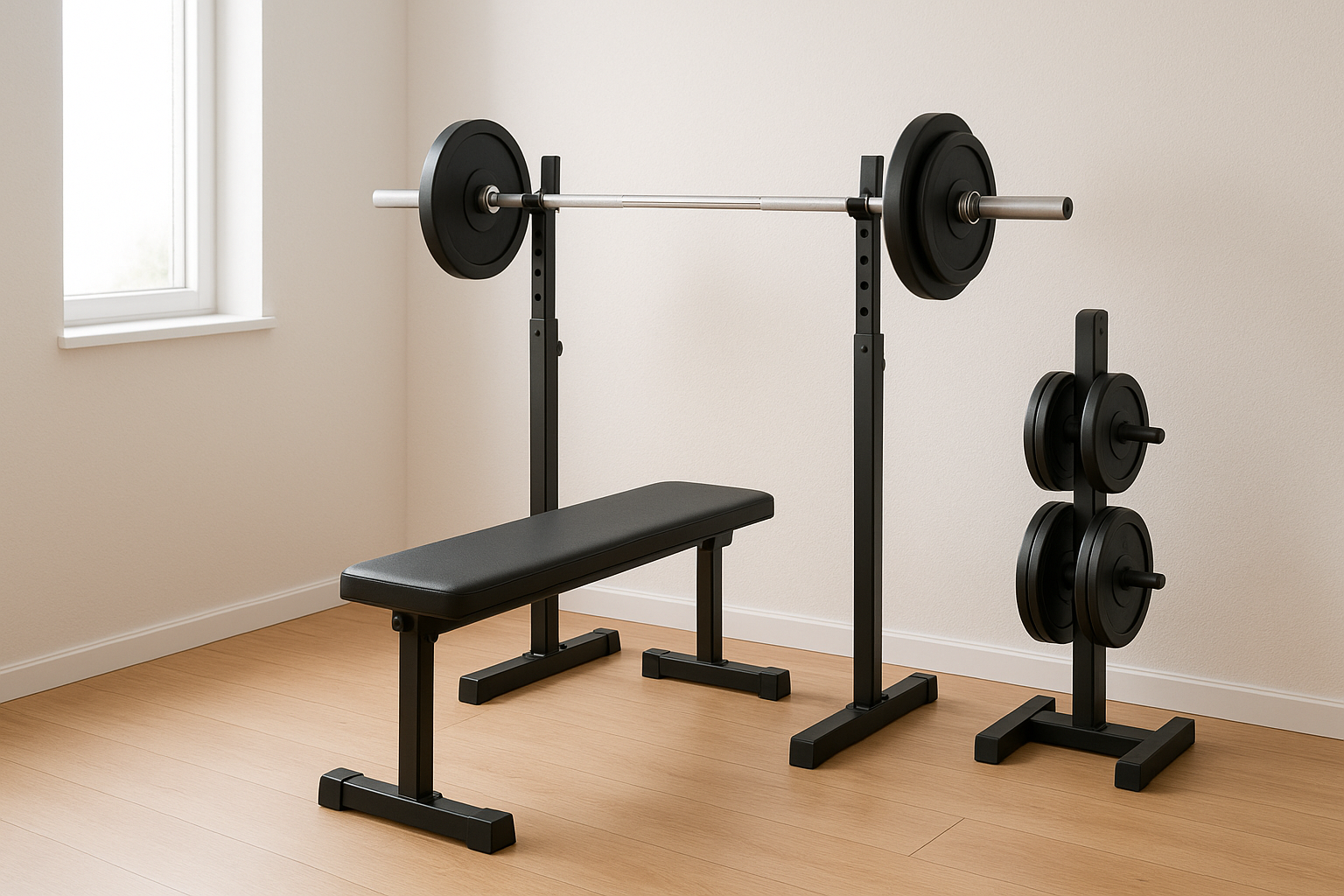
A true modular home gym is not just about the equipment itself but also how you store and reconfigure it. Compact barbell sets work best when paired with simple, vertical plate storage, like wall-mounted pegs or a narrow plate tree that tucks into a corner. Bars can be stored in vertical floor tubes or wall brackets to keep walkways clear. Consider organising your plates by weight so you can make fast changes during supersets or circuits. With smart storage, you can quickly transform a small room from a clear living space into a fully functional training zone, then reset it after your workout.
In summary, choosing a compact barbell set for a modular home gym means balancing bar length, load capacity, knurling comfort, plate style and smart storage. Focus on a bar that fits your available space while still offering enough sleeve room and strength for long-term progression. Pair it with space-efficient plates and vertical storage solutions, and you will have a flexible, scalable strength setup that supports effective training without overwhelming your home.