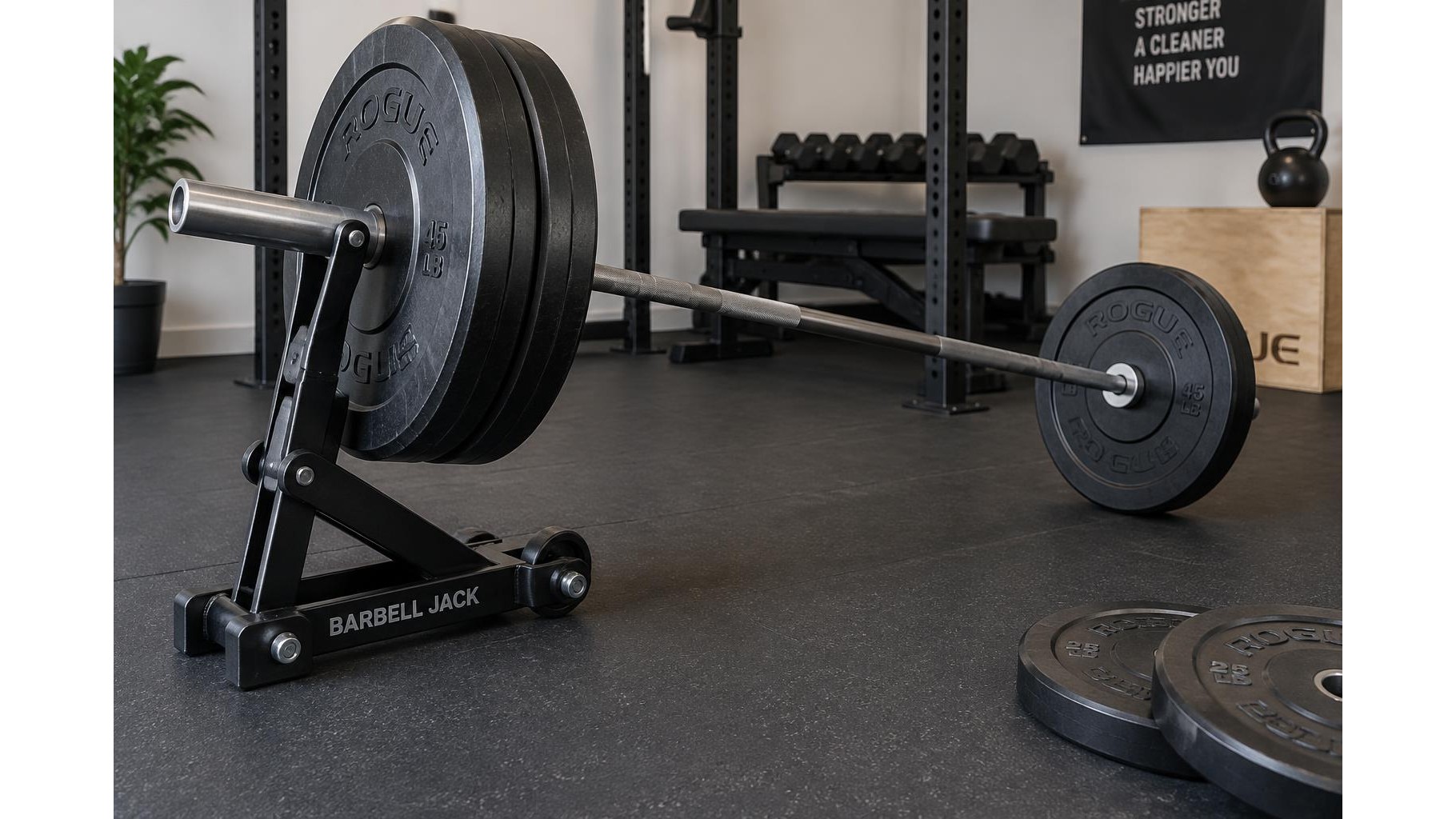
Changing plates should not mean wrestling a loaded barbell across the floor or putting your fingers beneath a plate. A barbell jack raises one end of the bar so you can load and unload it with less effort. For a home gym, the right compact model balances lifting capacity, stability and easy storage without taking up valuable floor space.
Choose capacity with a safety margin
Start by checking the jack’s stated weight capacity and compare it with the heaviest end of the bar you expect to lift. Capacity figures may describe the supported load, not necessarily the total weight of the bar and plates, so read the manufacturer’s instructions carefully. Allow a margin rather than choosing a jack that only just meets your usual training load. If you use heavy plates, a long bar or plan to increase your lifts, a model with a higher rated capacity can provide more flexibility. Never exceed the stated limit, and avoid using a jack if its rating or intended use is unclear.
Look for a broad, stable base
A compact jack still needs a footprint that stays planted under load. Check for a wide, non-slip base and a frame that does not rock when set on a level surface. Consider your flooring, too: rubber gym flooring can grip well, while a smooth or uneven surface may make the setup less secure. A small base is convenient to store, but it should not be so narrow that the jack tips or shifts as the bar rises. Inspect welds, moving parts and contact points regularly, and stop using the equipment if anything is bent, cracked or loose.
Check bar compatibility and contact points
Not every jack suits every bar. Confirm the device is designed for your barbell’s shaft diameter and style, and check how it engages with the bar. The lifting cradle should hold the shaft securely without pinching sleeves, collars or nearby plates. Some designs lift the bar from beneath its shaft; others use a different contact arrangement, so follow the specific product instructions. If you use a specialty bar, such as a thick-grip or unusual-shaped bar, verify compatibility before buying rather than assuming a standard jack will fit.
Match the lifting action to your routine
Think about how often you change plates and how much effort you want to save. A deadlift jack typically lifts one end of a bar, making it easier to slide plates on and off. A lever-style design may be quick to operate, while other formats can prioritise compactness or a different lifting motion. Whatever the mechanism, it should move smoothly and let you control the bar throughout the lift. Practise with an unloaded bar first, following the maker’s directions, so you understand where to position the jack and how far it raises the sleeve.
Plan storage and safe setup
Measure the space where you will keep the jack, including a shelf, rack or gap beside your equipment. A compact, lightweight design is easier to put away, but should not compromise stability or load rating. Before changing plates, place the jack on a firm, level surface and clear the lifting area of loose collars, plates and trip hazards. Keep hands and feet away from pinch points, secure the bar as instructed, and do not leave it raised unattended. Lower it under control before moving the jack or changing your setup.
A good home-gym barbell jack should suit your heaviest planned loads, fit your bar and remain stable on your floor. Prioritise clear capacity information, secure contact points and straightforward storage, then practise the setup before using it with loaded plates. Used correctly, this simple tool can make plate changes more controlled, reduce awkward lifting and help keep your training area organised.