
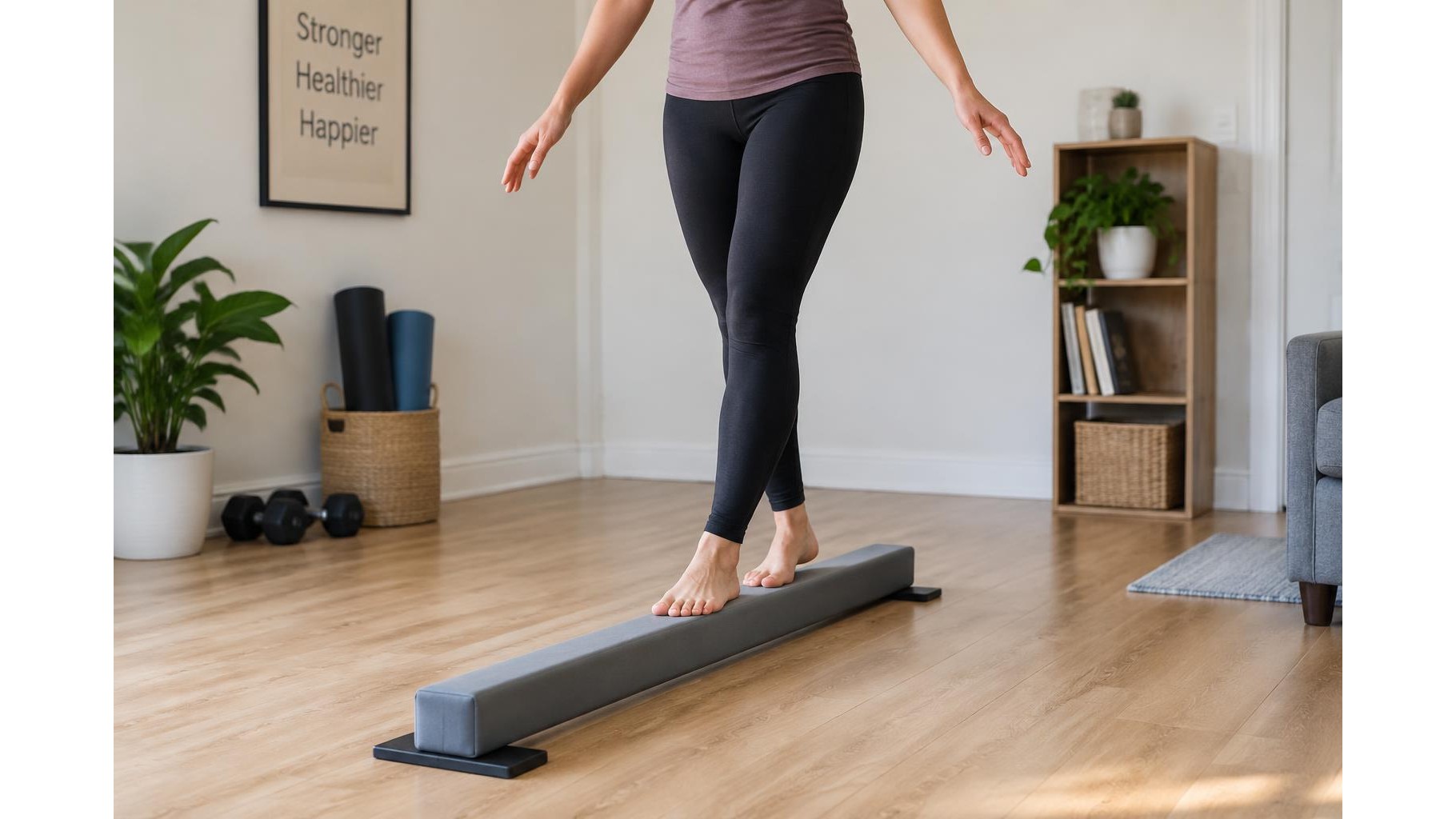
A compact balance beam can make coordination practice easy to fit into a home routine, but the right choice is about more than length. Surface traction, stability, height and storage all affect how confidently you can train. This guide explains what to look for, how to progress from basic drills, and which safety checks matter for different ages and experience levels.
Choose a surface that supports confident footwork
Look for a top that feels secure under bare feet or the footwear recommended by the manufacturer. A textured, fabric-covered or lightly cushioned surface can help provide grip, while an overly slick finish may make turns and side steps less predictable. Check that the covering is firmly attached and does not wrinkle, peel or bunch at the edges. If you expect to practise in socks, test how the material behaves on a clean, dry floor; grip can vary considerably between surfaces. Avoid using a beam when it is wet, dusty or visibly worn.
Prioritise a stable base and sensible height
For home coordination work, a low-profile beam is generally the practical starting point. A low height reduces the consequence of a misstep and makes it easier to step on and off without assistance. Examine the underside for a broad, even base and non-slip feet, and check that the beam sits flat without rocking on your intended floor. A narrow beam increases the balance challenge, but beginners benefit from enough width to place each foot deliberately. Do not assume that a product designed for play is suitable for advanced gymnastics skills; follow its stated age, weight and use limits.
Measure your space before buying
Measure both the available training area and the storage space, including room to step safely off either end. A shorter beam takes up less floor space and can suit basic balance drills, while a longer model allows more continuous walking and directional changes. Consider whether it can be folded, separated into sections or stored upright, and check how much space those options actually save. A portable product is useful only if it can be moved and stored without damaging its joints or surface. Keep the exercise area clear of furniture, sharp corners and loose rugs.
Build coordination with beginner-friendly progressions
Start on the floor beside the beam: practise standing on one leg, heel-to-toe walking and controlled weight shifts. Once those feel comfortable, walk slowly along the beam with eyes forward and arms relaxed for balance. Progress to pauses, careful backward steps or gentle turns only when basic walking is steady. Change one challenge at a time—such as speed, direction or reduced hand support—rather than combining several new demands. Keep sessions short and stop when fatigue affects control. For children, make drills playful and closely supervised; adults returning to exercise should progress gradually.
Use age- and experience-appropriate safety checks
Before each session, inspect the beam for cracks, loose fasteners, unstable sections or damaged grip material. Place it on a level, dry, non-slip surface and confirm it does not shift under gentle pressure. Children should use equipment suited to their age and size, with an attentive adult nearby; never leave a young child practising alone. Beginners should stay close to the floor and avoid jumps, flips or elevated setups. More experienced users should still follow the product’s instructions and avoid skills beyond the beam’s intended use. If pain, dizziness or unusual instability occurs, stop.
Make the choice fit your routine
The best home beam is the one that fits your space and encourages consistent, controlled practice. Favour reliable grip, a stable low base and dimensions that allow safe mounting and dismounting; then match storage and length to your room. Begin with simple drills, progress patiently and check the equipment and surroundings every time. With those priorities in place, a compact beam can be a useful tool for developing balance and coordination at home.









