Setting up a home gym for squats, lunges and hip thrusts is exciting, but the first time you rest a loaded bar on your neck or across your hips, the discomfort can be a shock. A good barbell pad or hip thrust cushion can make training safer and more enjoyable, but only if you choose the right thickness, density, materials and fit for your bar. This guide walks you through what to look for, when you truly need extra padding and when better technique is the real solution.
What barbell pads and hip thrust cushions actually do
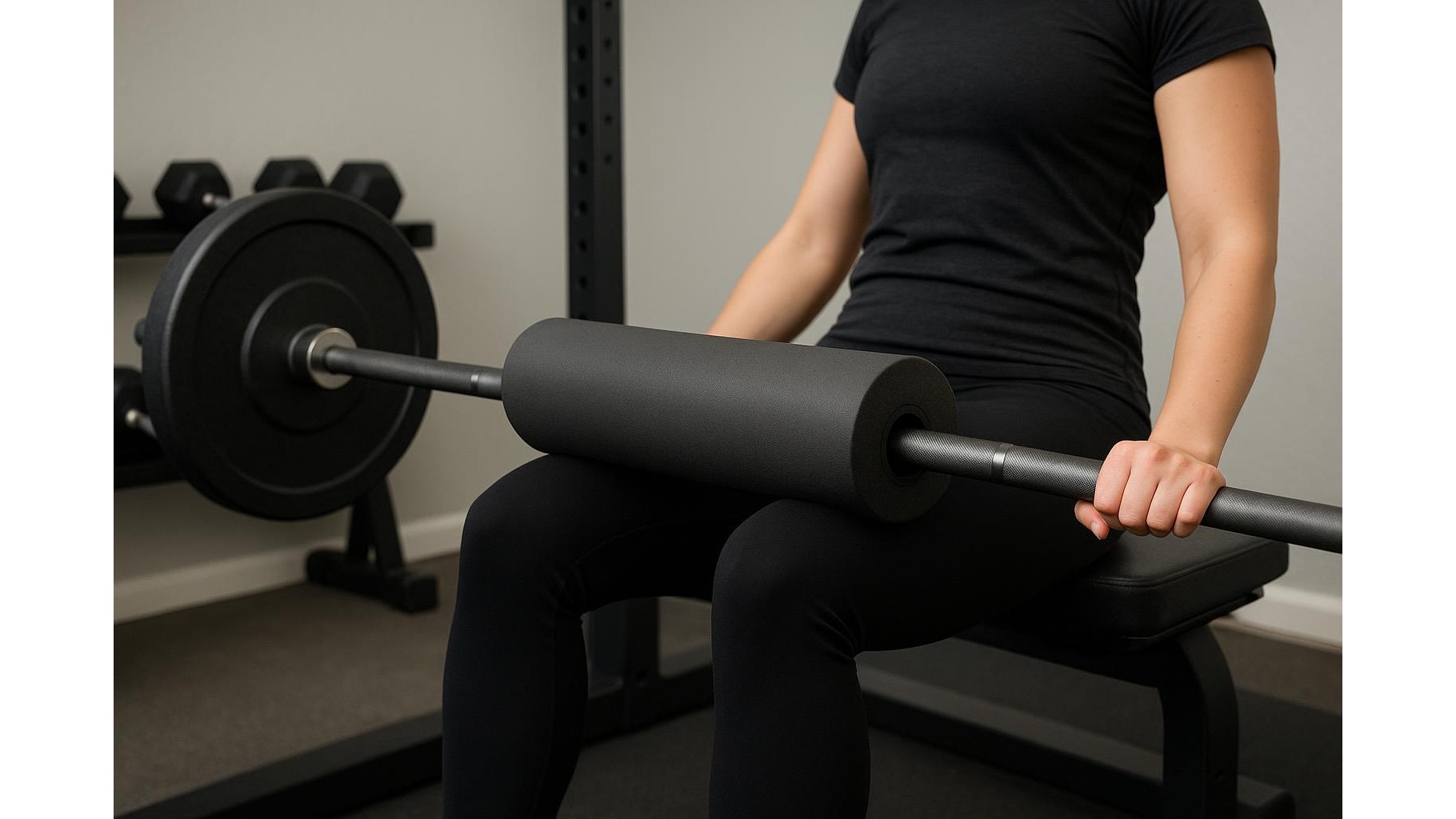
A quality barbell pad spreads pressure over a larger surface area so the load is not digging into one painful point on your neck, shoulders or hips. For squats and lunges it cushions the contact on your upper back and traps; for hip thrusts and glute bridges it protects the front of the hips where bone is close to the skin. Pads do not make the weight lighter; they simply reduce peak pressure and skin irritation. In a home gym, where you may train alone and use basic racks or benches, the right pad can be the difference between confidently adding load and avoiding an exercise altogether.
Thickness and foam density: comfort versus stability
When choosing a barbell pad, balance thickness and foam density. Very thick but soft pads feel plush at first, yet they compress unevenly under heavy loads and can make the bar feel unstable or roll on your back. Thinner but denser pads distribute weight effectively while still giving a firm, predictable platform for squats and hip thrusts. For most home gym lifters a medium thickness (around 3–4 cm) with high-density foam is ideal: enough padding to avoid bruising without turning the bar into a wobbly log. If you mainly perform heavy hip thrusts, look for a pad marketed as extra dense rather than just “extra thick”.
Materials, bar fit and anti-slip features
The outer material and how the pad locks to the bar are critical. Durable synthetic leather or high-quality nylon sleeves resist tearing and sweat better than cheap fabric. For a secure bar fit, a closed design with full-length Velcro or buckle straps hugs both 25 mm and 28–30 mm bars, preventing rotation. Anti-slip features—like a textured surface or inner rubberized strip—stop the bar from sliding on your clothing during squats or shifting on your lap during hip thrusts. In a home gym where you may not have a spotter, this extra grip reduces your risk of losing bar position mid-rep and helps keep your set focused on the muscles, not on fighting the bar.
When you need more padding vs better technique
Extra padding is useful, but it should not hide poor technique. If back squats hurt your neck, first check that the bar is resting on your upper back and rear delts—not your cervical spine—and that you are squeezing your shoulder blades together to create a muscular “shelf”. For hip thrusts, the bar should sit in the crease of the hips with your ribs down and core braced; sometimes simply adjusting bench height or foot position reduces discomfort more than any pad. Use a barbell pad or hip thrust cushion when bone is sharply pressed by the bar or your skin bruises easily, but do not rely on padding to fix bad bar placement or sloppy setup. Think of the pad as the finishing touch after your technique is dialed in.
Choosing the right pad for your home gym routine
Match the pad to how you train. If your home routine is mostly light to moderate squats, lunges and glute bridges, a general-purpose high-density foam pad with a secure closure is usually enough and keeps your setup simple. If you prioritize heavy hip thrusts several times a week, consider a wider and denser hip thrust cushion that covers more of your lap and won’t bottom out under load. Check that the pad fits both your straight bar and any shorter bar you might use in a compact home gym. Easy on/off design matters too: if the pad is fussy to attach, you are less likely to use it consistently.
In summary, the best barbell pad or hip thrust cushion for your home gym is one that combines appropriate thickness, firm foam density, durable materials, secure bar fit and reliable anti-slip features, all in support of solid technique. Start by refining bar placement and body position, then add padding to remove unnecessary pain and irritation. With the right balance of comfort and stability, you will be able to push your squats, lunges and hip thrusts harder—without dreading the feel of the bar every time you train at home.