Creating a compact home corner for aerial and suspension strength training is absolutely possible, even in a small flat. With the right anchors, protective crash mats and modular gear like aerial hoops, suspension trainers and gymnastic rings, you can build a safe, versatile space for full‑body workouts and skill progressions. This guide walks you through key safety checks, ceiling and doorway options, and smart equipment choices for beginners.
Planning your home aerial and suspension space
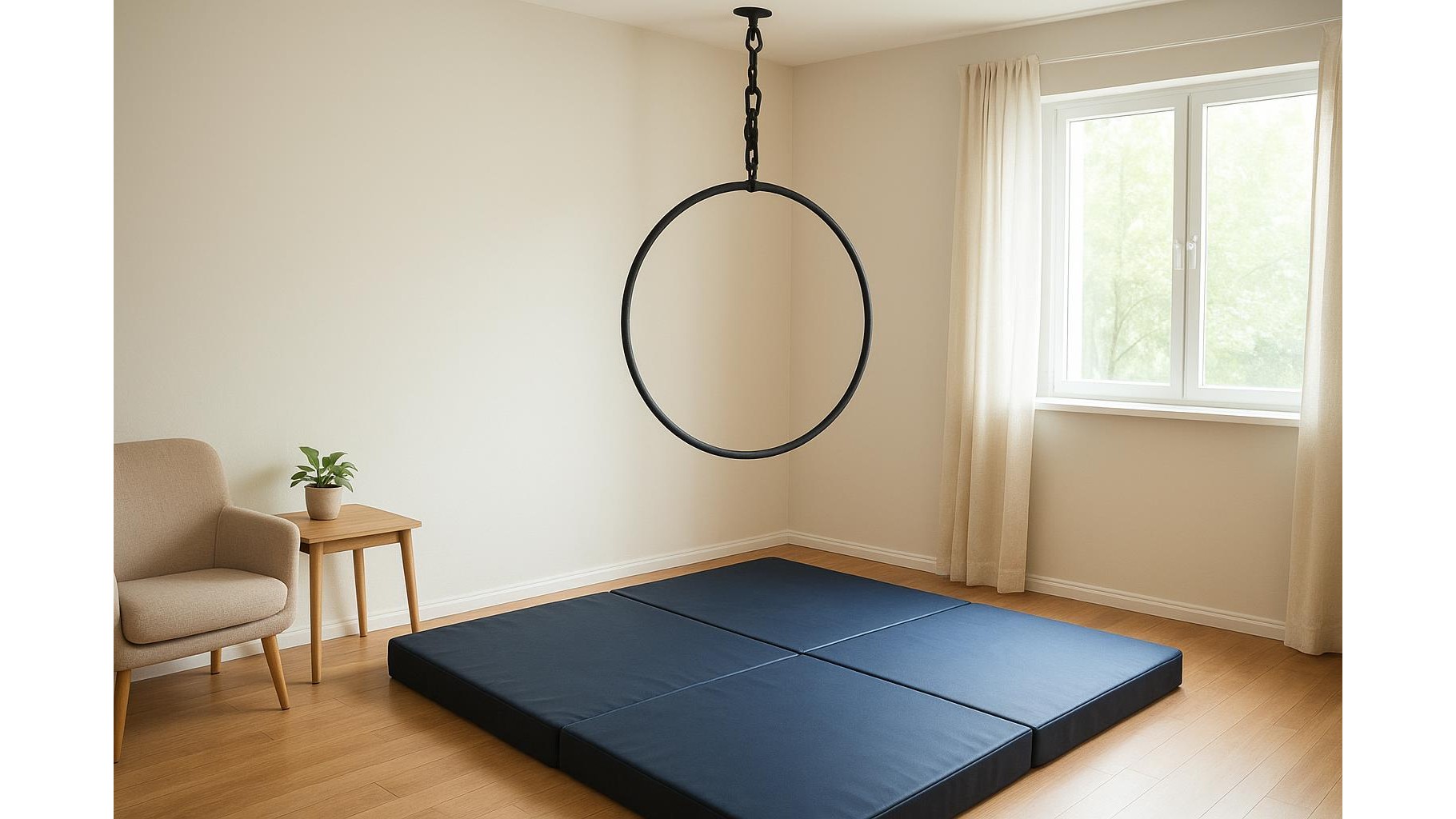
Before you buy any equipment, assess the space and structure available. For aerial work you ideally want at least 2.4–3 m of ceiling height, clear floor space of about 2 x 2 m, and no sharp furniture edges nearby. Check what type of ceiling you have (concrete, steel beam, or joists above plasterboard) as this determines what kind of anchor a professional installer can safely fit. In rental homes, permanent overhead anchors might not be allowed; in that case, a doorway‑based setup for suspension trainers and gymnastic rings often works better. Always prioritise structural integrity over convenience: an unsuitable ceiling is a deal‑breaker for aerial hoops at home.
Ceilings, anchors and doorway options
For true aerial hoop training, you need a professionally installed ceiling mount fixed into solid structure, rated for dynamic loads (not just bodyweight). Many people consult a structural engineer or experienced rigger for this step. If an overhead point is not realistic, you can still create a powerful suspension corner using a door anchor and wall‑friendly hardware. Suspension trainers and rings can be clipped to removable doorway mounts that spread the load without damaging the frame when used correctly. Remember to close and lock the door so it opens away from you while training. Mark a clear area on the floor where your feet will land, and keep pets and children out while you are working out.
Crash mats and floor protection for aerial safety
No home aerial setup is complete without appropriate crash mats. Even at low heights, fatigue or a missed grip can lead to a fall, so a thick, firm mat is essential. Look for mats at least 10 cm thick for basic hoop and conditioning work; thicker is better as you progress. Modular foldable mats make it easier to store gear in a small home and can double as a stretching or core training surface. Place your mat so that it covers the full drop zone beneath your hoop or rings, and inspect it regularly for tears or compression. On hard floors, an additional thin foam or rubber layer under the mat helps reduce noise and impact.
Choosing equipment: aerial hoops, suspension trainers and rings
In a compact corner, modular and multi‑use equipment is your best ally. An aerial hoop offers beautiful static shapes, grip strength and mobility work, but only if your ceiling and anchors are certified safe. For more flexible setups, a suspension trainer with adjustable straps lets you perform rows, presses, core and single‑leg exercises using bodyweight and angle changes. Wooden gymnastic rings add instability and grip challenge; they can be hung from a ceiling point or a strong beam, or temporarily from a doorway using compatible mounts. Prioritise products with clear load ratings, high‑quality stitching and buckles, and easy length adjustment so you can switch between low rows, push‑ups and supported squats in seconds.
Progression ideas for beginners in small spaces
When you first start aerial and suspension strength training at home, keep the focus on control rather than flashy tricks. For aerial hoop beginners, start with low‑height mounts, basic mounts and dismounts, and supported positions where one or both feet can reach the mat. Suspension trainers and rings are ideal for building the pulling and core strength you need: think inverted rows, assisted squats, hip hinges and planks with feet in the straps. Progress by slowly changing the angle of your body, reducing assistance and increasing time under tension. Use your small corner for regular short sessions—10–20 minutes of focused practice two to three times a week will build confidence without overwhelming your body or your space.
Keeping your compact aerial corner safe and sustainable
With thoughtful planning, a small home corner can support meaningful aerial and suspension training for years. Regularly inspect anchors, straps and mats, and keep your training area clutter‑free so you always have a clear landing zone. Combine low‑level aerial conditioning with suspension and ring exercises to build strength progressively before attempting more advanced skills in a studio environment. By respecting safety guidelines and working within the limits of your ceiling and doorway structures, you can enjoy creative, full‑body workouts at home in a footprint no larger than a yoga mat.