
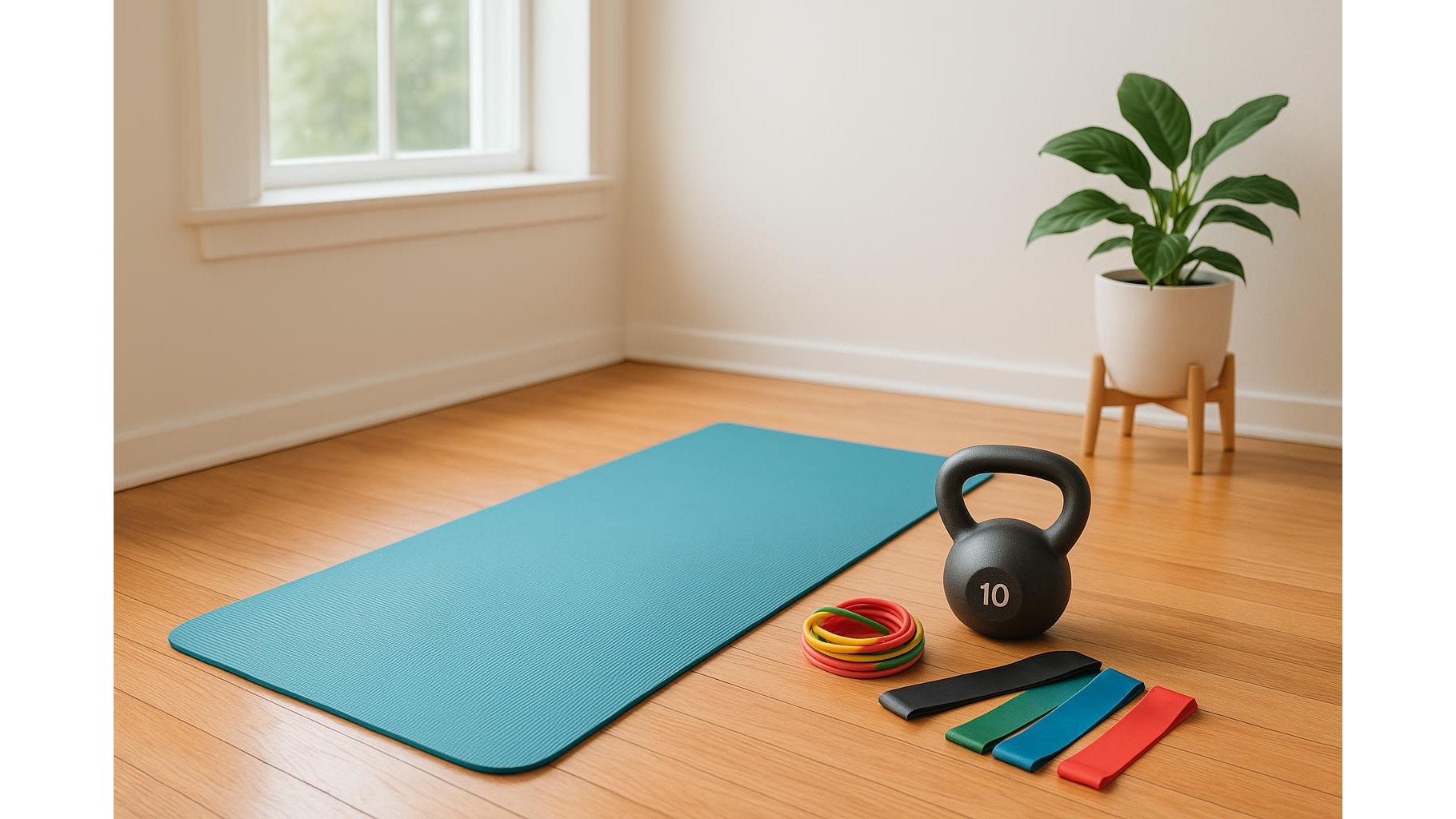
Creating your first home gym corner does not have to be complicated or expensive. With one well-chosen kettlebell, a small set of resistance bands and a supportive exercise mat, you can cover strength, mobility and conditioning in a very small space. This guide explains how to choose each piece so they work together as a complete, minimalist starter kit you can store in a wardrobe or beside the sofa.
Choosing the right kettlebell weight and design
The kettlebell is the “engine” of your compact setup, so pick one that is versatile, durable and comfortable to grip. For most beginners, a single kettlebell in the 8–12 kg range works well for swings, goblet squats, rows and presses. Lighter users who are completely new to training might start at 6–8 kg, while stronger users can choose 12–16 kg. Look for a cast iron or steel bell with a smooth, slightly textured handle that is wide enough for a two‑handed grip but not overly thick, so you can control it as you fatigue. A flat, stable base helps keep the kettlebell steady for exercises like renegade rows and for safe floor storage in a small corner.
Selecting a compact, versatile resistance band set
Resistance bands add horizontal and diagonal resistance that complements kettlebell work, and they take up almost no space. Aim for a minimalist kit that includes: long tube bands with handles for rows, presses and pulldowns; a couple of mini loop bands for glute work; and, if possible, one flat long band for assisted pull‑ups or mobility drills. Prioritise bands made from high‑quality latex or latex‑free elastic with clearly marked resistance levels (light, medium, heavy). A door anchor is useful if you do not have a rack or rail, allowing you to create both low and high attachment points. Because bands degrade over time, inspect them regularly for cracks and store them away from direct sunlight to extend their life.
What to look for in a training mat for a tiny space
Your mat is the foundation of your home gym corner, protecting both your joints and your floor. For kettlebell and band work in a compact area, choose a thick exercise mat of around 8–10 mm for extra cushioning when kneeling or doing core work, but not so squishy that you lose balance during standing lifts. Materials like TPE or high‑density foam balance grip and comfort and are easy to wipe clean. A standard yoga‑mat length (around 180 cm) is usually enough, but if you are tall or plan to do ground‑based flows, consider a slightly longer option. Non‑slip texture on both sides is important if you are placing the mat on smooth tiles or laminate in a living room corner.
How to make the three pieces work as a complete mini gym
Once you have your kettlebell, bands and mat, you can build full‑body sessions without extra machines. A simple routine might start with kettlebell hip hinges, squats and presses for strength and power, then switch to banded rows, lateral walks and face pulls for upper‑back and hip stability, all performed on the mat. Use the mat for core work (dead bugs, planks, Russian twists) and stretching at the end of your session. Rotate movements over the week so you hit all major muscle groups 2–3 times without needing more equipment. This combination delivers resistance in multiple planes, supports mobility and encourages consistency because everything is within arm’s reach at home.
Storage, safety and progression in a small home gym corner
To keep your compact home gym truly minimalist, plan storage from the start. The kettlebell can live under a console table or in a small crate; bands can be rolled and stored in a drawer or hung on a hook; and the mat can be rolled and stood vertically behind a door or wardrobe. Train on a clear area of floor, ensuring the kettlebell’s swing path is unobstructed. Learn proper technique from reputable tutorials and progress gradually: increase kettlebell reps before weight, add thicker bands over time, and shorten rest periods as conditioning improves. With these habits in place, your simple trio of kettlebell, bands and mat will remain a powerful, space‑efficient training solution for years.
By focusing on one solid kettlebell, a well‑chosen set of resistance bands and a reliable exercise mat, you can build a practical home gym corner that fits into almost any room. These three pieces cover strength, mobility and conditioning while remaining easy to store and quick to set up, making it far more likely you will train regularly and turn your minimalist kit into lasting results.









