Adding a smith machine to your home gym can transform how you train the big lifts while boosting safety when you are working out alone. A compact, well‑designed smith opens up smoother squats, presses and rows with a fixed bar path that lets you push closer to failure without a spotter. Before you invest, it is crucial to understand how features like footprint, bar path, safety stops and weight capacity will fit your space, goals and existing equipment such as rack, bench and free weights.
Understanding the smith machine’s role in a home gym
A home smith machine is best seen as a complement, not a replacement, for free weights. The guided bar path reduces stabilisation demands so you can isolate target muscles and train safely when lifting heavy without a partner. This makes it especially useful for hypertrophy‑focused squats, incline and flat presses, rows and lunges. At home, the key is choosing a design that does not dominate your training area or lock you into only one style of movement. Look for compact frames with integrated storage so your smith supports, rather than crowds out, your existing racks, benches and dumbbells.
Footprint, ceiling height and layout planning
Before you buy, measure your training space carefully. A typical compact smith machine still needs enough depth for the bar to travel freely and enough width so you can grip comfortably without hitting walls or other kit. Check overall height against your ceiling, allowing extra clearance if you plan to perform standing presses or mount a pull‑up bar. Think about walk‑around space too: you want to be able to move a bench in and out, load plates and step away from the bar safely. Mapping out the footprint with tape on the floor helps you see whether the smith will clash with your existing rack or cable station and where plate storage will sit.
Bar path, smoothness and training feel
The defining feature of any smith is its guided bar path. Some machines use a perfectly vertical track, while others have a slight angle to better match natural movement in squats and presses. Neither is automatically superior, but the path should feel intuitive for your main lifts. Test for smooth travel: the bar should glide without sticking, catching or wobbling, even under heavier loads. Check the hooking mechanism as well—rotating the bar to rack it onto the safeties should be fast and secure from multiple grip widths. Pay attention to knurling and bar diameter too, so the bar feels familiar if you alternate between the smith and a standard Olympic barbell.
Safety catches, stoppers and weight capacity
One of the biggest reasons to add a smith to a home gym is safety when training solo. Look closely at the safety stoppers and adjustable spotter arms: they should be easy to set at precise heights for squats, presses and RDLs, catching the bar if you fail a rep. A solid frame with wide feet or bolting options prevents tipping, especially if you train heavy or also use pull‑ups on the frame. Always check the stated weight capacity of both the bar carriage and any integrated cable or pulley systems, and remember that home lifters often progress faster than they expect. Choose a machine that exceeds your current max lifts comfortably so you are not forced to upgrade too soon.
Integrating the smith with rack, bench and free weights
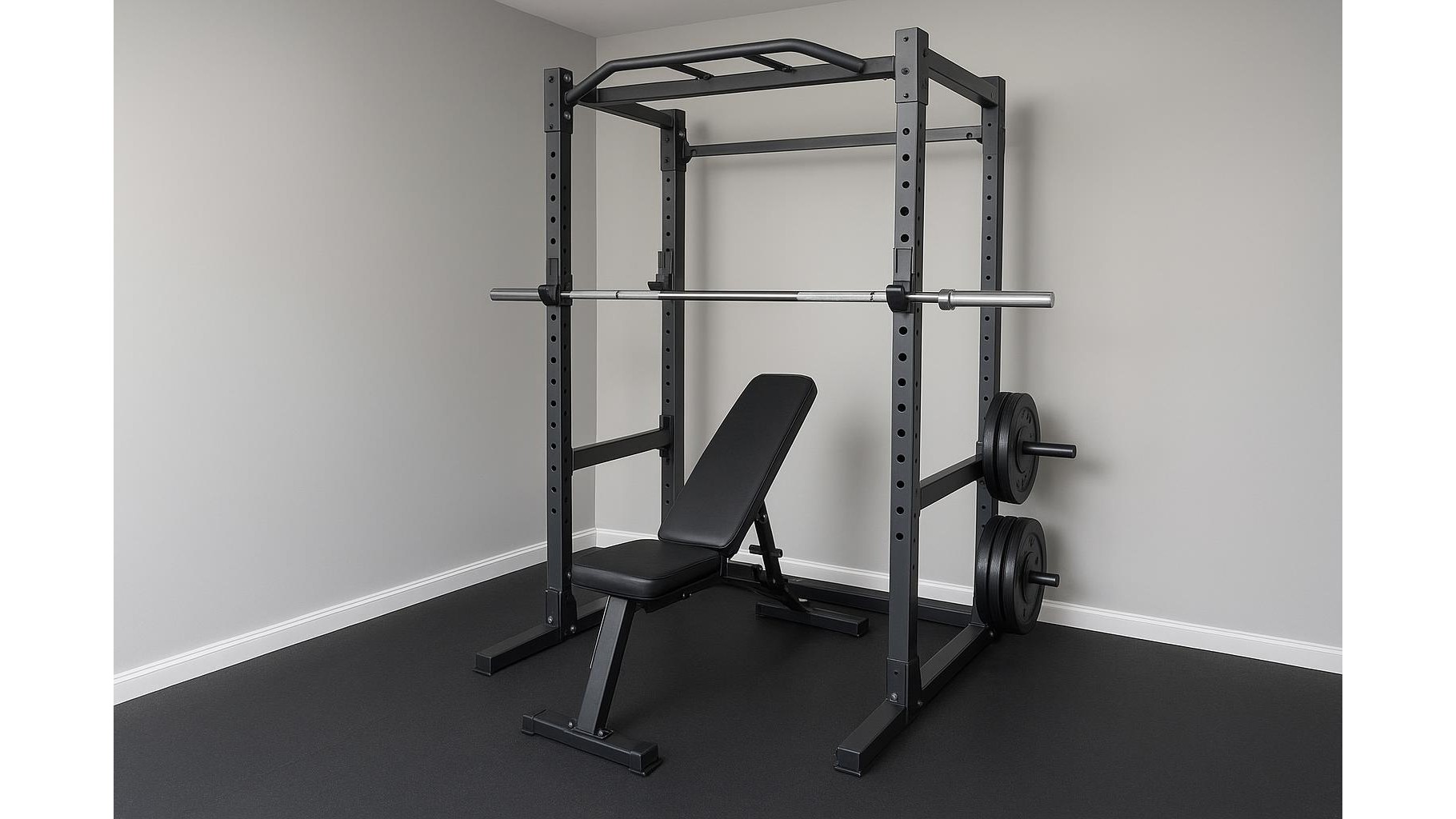
To get full value from a smith, plan how it will work with your existing equipment. Your adjustable bench should roll easily into the frame at multiple angles for flat, incline and shoulder presses, and it must sit securely without wobble on the base of the machine. If you already own a power rack, use the smith for high‑rep or fatigue work while keeping heavy, low‑rep sets on the free barbell. Store weight plates on integrated pegs if available, or position a separate plate tree close by so loading is quick and safe. A thought‑out setup lets you move seamlessly from compound free‑weight lifts to controlled smith variations in the same session without constantly rearranging your gym.
When you understand the basics—how a smith machine will fit your space, how its bar path feels, how robust the safety systems are and how it integrates with your rack, bench and free weights—it becomes a powerful addition to a home gym. Choose a compact but sturdy unit with smooth movement and generous weight capacity, and it will support years of progressive training, allowing you to push harder with confidence while preserving the versatility of your existing setup.