Setting up a small home gym in a flat or studio forces you to be very selective with your gear. Two of the most versatile tools are the slam ball and the classic medicine ball. Both promise full‑body conditioning, core strength and power, but they behave very differently in tight spaces. This guide explains how each ball works, which weights and sizes make sense in an apartment, and how to match the right tool to your training style and flooring.
What is a slam ball and how does it behave at home?
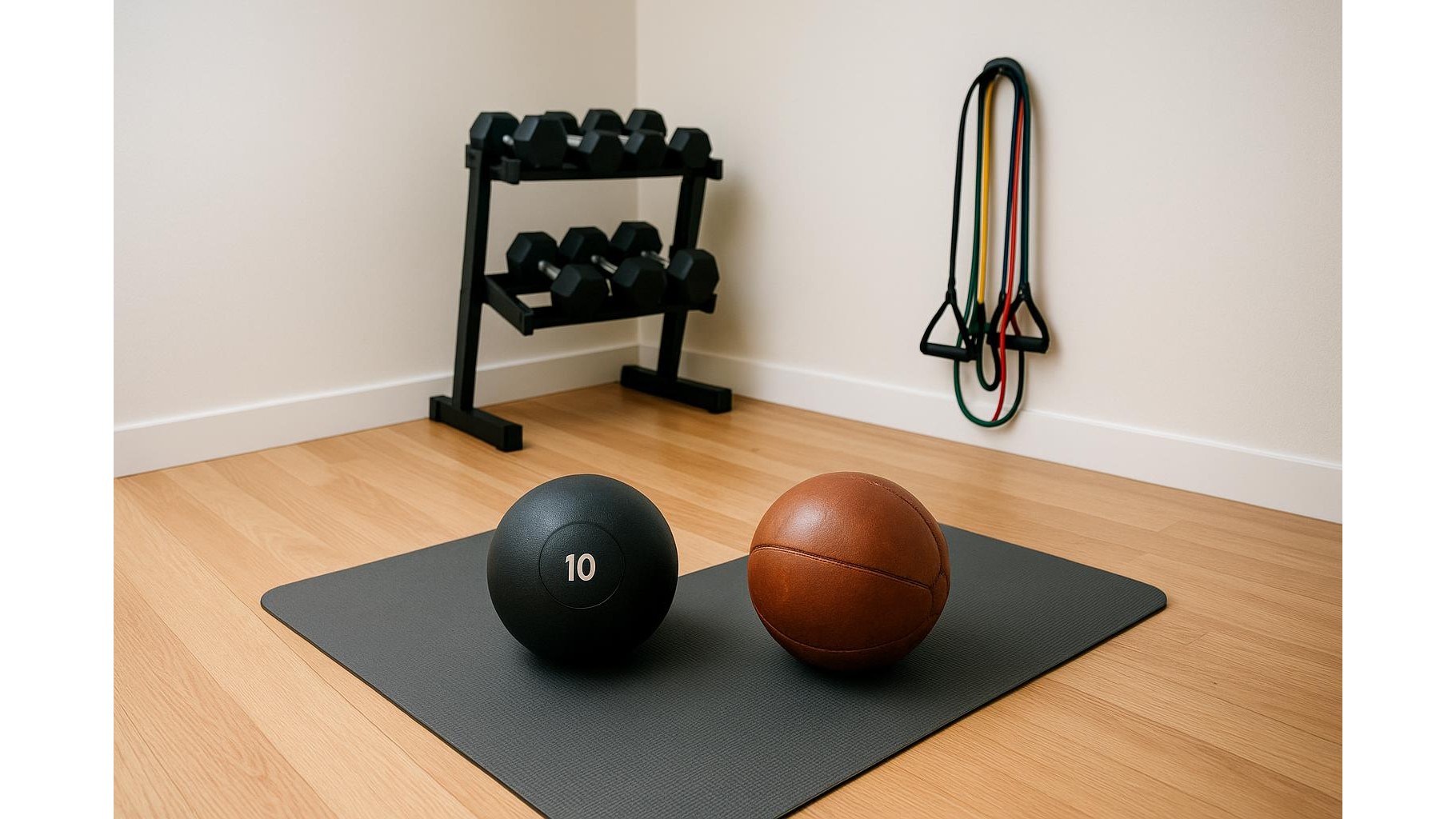
A slam ball is a dead‑bounce ball designed specifically for high‑impact movements like overhead slams and hard throws into the floor or wall. Unlike bouncy medicine balls, it is usually filled with sand and has a thick, durable shell so it won’t rebound back into your face or roll away. In a small home gym, this low bounce is a big safety bonus, especially in narrow rooms or next to furniture. The textured rubber surface also gives a secure grip for sweaty hands, making it ideal for powerful, explosive moves. However, slam balls tend to be heavier and less comfortable for classic core twists or partner work, and repeated slams can be noisy on hard floors.
What is a classic medicine ball and where does it shine?
A classic medicine ball is designed for more controlled strength and core training: think Russian twists, overhead presses, single‑leg squats and partner throws. Many have a slightly bouncy construction and a firmer shell, which makes them feel more responsive in your hands but also more likely to rebound if thrown too hard against a wall. In a small apartment, this means you’ll typically use a medicine ball for low‑impact, quieter exercises that don’t involve slamming into the floor. Their rounder, sometimes softer finish makes them comfortable to hold close to the body for loaded carries, sit‑ups and rotational work, and they usually come in lighter weights that suit beginners or anyone focused on core stability rather than all‑out power.
Choosing weights and sizes for a small space
For an apartment‑friendly home gym, choosing the right weight range is crucial. Most home users find that a 4–6 kg classic medicine ball covers core work, rehab drills and light strength training without being intimidating; heavier options (8–10 kg) suit stronger athletes but can feel awkward for long sets. A slam ball is often used heavier because movement is full‑body and explosive: 8–12 kg is a realistic sweet spot for many, while advanced lifters may go up to 15 kg or more for conditioning circuits. Diameter matters too: smaller‑diameter balls are easier to store and hug to the chest during squats or wall sits, and they fit better between furniture. For most flats, one compact slam ball plus one mid‑weight medicine ball is more versatile than a big, space‑hungry set.
Noise, flooring and neighbour‑friendly training
When you live above someone else, noise and impact are as important as training effect. Slam balls are built to survive being smashed into concrete, but your floor and your neighbours may not be as tough. On bare tile or thin laminate, even a dead‑bounce slam ball can transmit a heavy thud through the structure. To make it more neighbour‑friendly, limit full‑power slams, use a thick exercise mat or small platform under the slam area, and focus on controlled drops and chest passes instead of all‑out overhead slams. Classic medicine balls, used mainly for controlled lifts and twists, are naturally quieter. If your priority is training late at night or early in the morning without complaints, a softer‑shell medicine ball and low‑impact drills will generally be the safer choice.
Which ball makes more sense in a small home gym?
The decision between a slam ball vs classic medicine ball comes down to your goals and environment. If you’re chasing high‑intensity conditioning and explosive power and you have decent flooring plus tolerant neighbours, a slam ball offers brutal, full‑body workouts in a very compact package. If you care more about core strength, mobility, rehab and quieter sessions, a classic medicine ball is easier to live with and more forgiving on both joints and floors. Many small‑space lifters will get the best of both worlds by starting with a mid‑weight medicine ball for everyday strength work, then adding a slightly heavier slam ball once they know how much noise their building can handle and how confidently they can control the movements.
In summary, both slam balls and classic medicine balls can be smart additions to a small home gym if you choose the right weight, size and exercises for your space. A medicine ball suits quieter, controlled core and strength training, while a slam ball unlocks powerful conditioning—at the cost of more noise and floor impact. Think honestly about your goals, neighbours and flooring, then invest in the single ball, or pairing of balls, that lets you train consistently without stressing about damage or complaints.