Mastering your first pull-up at home can feel impossible, but the right set of pull-up assist bands turns it into a clear, step-by-step journey. By choosing the right resistance, setting up safely and following a simple progression, you can build pulling strength even if you currently cannot do a single rep. This guide explains how assist bands work, how to select the best levels for your body weight and ability, and how to use them in your home gym to finally unlock that first unassisted pull-up.
Why pull-up assist bands are perfect for home training
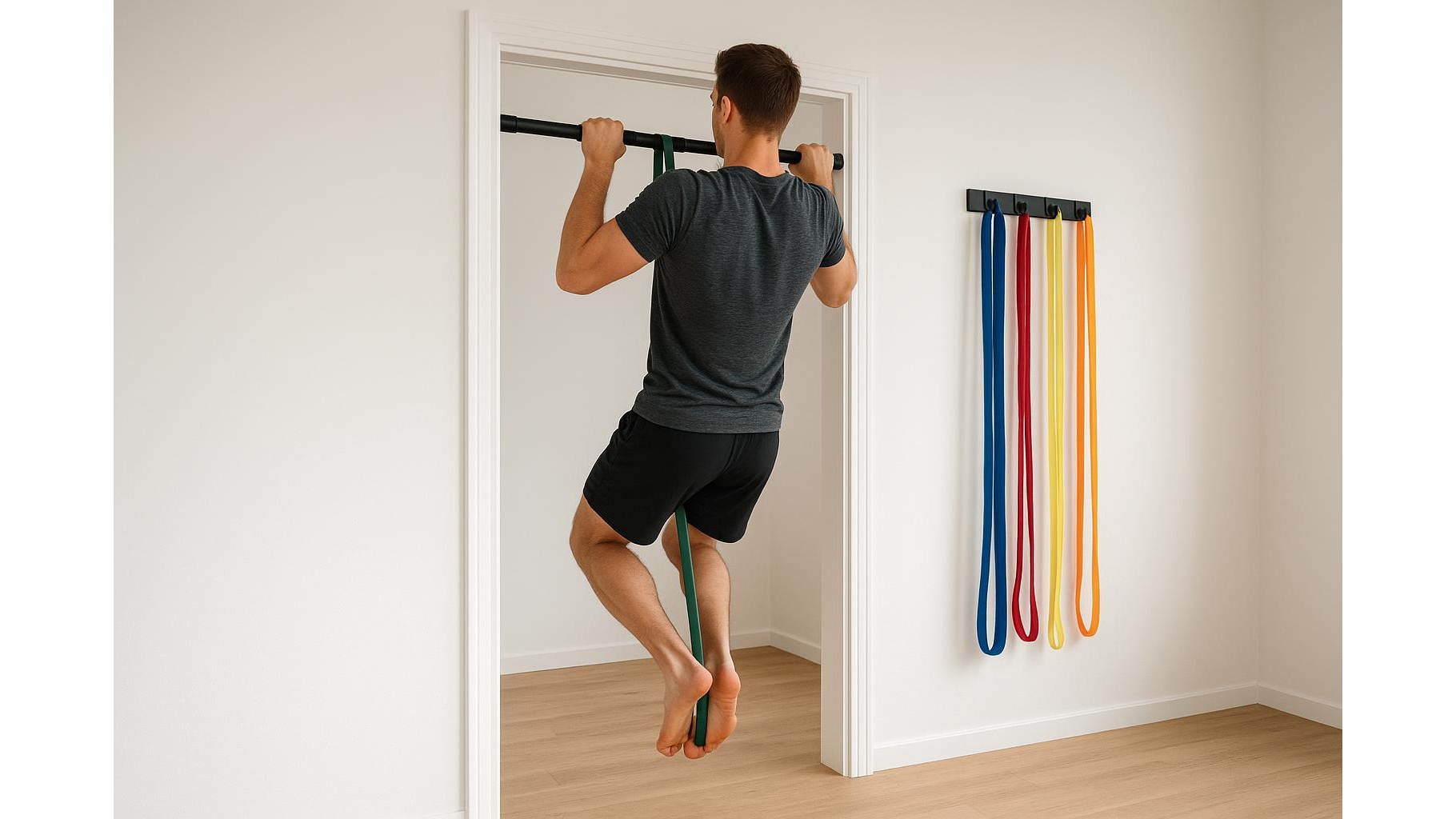
Pull-up assist bands are long, looped resistance bands that reduce the effective load you have to pull. When anchored to a pull-up bar and placed under your knees or feet, the band stretches and provides upward assistance. For home gym users, they are compact, quiet and incredibly versatile: the same bands can be used for assisted pull-ups, rows, presses, mobility work and warm-ups. Because they come in multiple resistance levels, they also scale with your progress, making them an ideal investment for small spaces and tight budgets.
How band resistance works and what the colours mean
Most loop bands are organised by thickness and colour. Thicker bands provide more assistance, meaning they make the exercise easier by taking more of your body weight. Thinner bands provide less help and demand more strength from you. Brand colour-coding is not universal, so always check the estimated resistance range in kilograms or pounds. As a rule of thumb, beginners who cannot yet perform a single pull-up usually start with a heavy band plus a medium band, then gradually drop to a single medium or light band as they gain strength and improve technique.
Choosing the right resistance for your first pull-up
To select the right assist band, consider your body weight and your current pulling ability. If you cannot perform any pull-ups or negatives, start with a band (or combination of bands) that allows you to do 5–8 controlled reps without swinging or straining your neck. If you can do controlled eccentric (lowering) reps, you may need slightly less assistance. Test different bands: if you shoot above the bar too quickly, the band is likely too strong; if you cannot clear your chin, you need more help. Aim for a level where the last two reps feel challenging but your form stays tight.
Progression strategy: from heavy assistance to bodyweight
A simple progression with pull-up bands is to gradually reduce assistance as your strength improves. Start by performing 3–4 sets of 5–8 assisted pull-ups, twice per week, with a heavy band. Once you can complete 3 sets of 8 clean reps, move to a slightly lighter band, or combine a lighter band with a heavier one and remove the heavier when you are ready. Over time, transition to a thin band for just a small boost at the bottom of the movement. Mix in negative pull-ups (jump or step up to the top, then lower slowly) and isometric holds at the top to build specific strength where you are weakest.
Safety tips and form cues for assisted pull-ups
Using bands safely is crucial in a home gym. Always anchor the band around a sturdy pull-up bar and double-check that it is centered and secure before stepping into it. Place the band under one foot or both knees, keeping your body tight to reduce swinging. Think about pulling your chest toward the bar, engaging your lats first rather than shrugging your shoulders. Avoid sudden bouncing at the bottom, and control each rep through the full range of motion. Inspect your bands regularly for cracks or fraying and replace them if the rubber shows signs of wear to prevent snapping during use.
With the right pull-up assist bands, a smart progression plan and attention to safety, your first unassisted pull-up becomes a realistic goal instead of a vague dream. Choose resistance that matches your starting point, focus on clean reps and gradually reduce assistance over time. Combined with consistent practice and complementary back and grip exercises, these simple bands can transform your home setup into an effective environment for building serious upper-body strength.