Bringing the feel of a pilates reformer into a small home gym is easier than it looks. While a full-sized machine takes up space and budget, a smart mix of resistance bands, sliders, pilates bars and straps can closely mimic the pulling, pushing and gliding patterns you get in the studio. The key is understanding which compact tools reproduce key reformer functions – springs, carriage, footbar and straps – and how to combine them into safe, progressive workouts.
Understanding what you’re replacing from the reformer
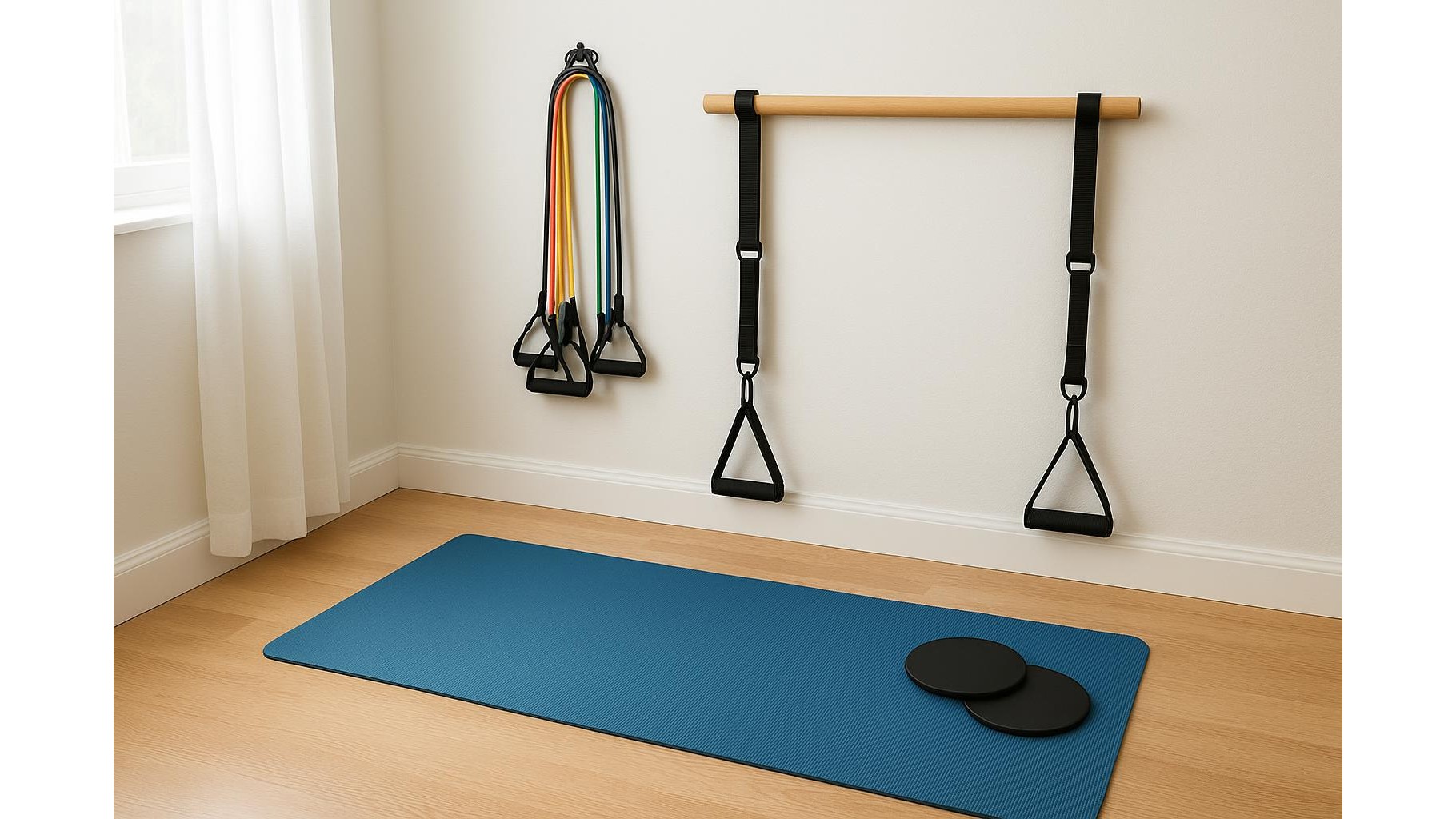
A classic pilates reformer gives you four main elements: adjustable spring resistance, a sliding carriage, a footbar and straps for arms and legs. At home, resistance bands and tubing stand in for the springs; sliders and gliding discs simulate the moving carriage; a pilates bar or sturdy support mimics the footbar; and suspension-style straps recreate the pulling patterns for upper and lower body. When you select compact gear, look for systems that let you vary resistance, adjust length and anchor safely to doors or heavy furniture so you can replicate that smooth, controlled reformer feel without rails and wheels.
Using resistance bands to emulate springs
High-quality resistance bands are the backbone of any home pilates reformer alternative. Multi-band kits with light to heavy tubes and interchangeable handles let you imitate the color-coded reformer springs. Loop one or more bands around a solid anchor point at floor level to mimic leg presses, or higher up for arm work like chest expansion and rows. Focus on slow, controlled tension in both directions to mirror the constant pull of reformer springs. For progression, increase band resistance gradually or step further from the anchor to lengthen the lever. Pair band work with pilates breathing and precise alignment so you’re not just strength training, but reinforcing the core control that defines reformer practice.
Sliders as your mini moving carriage
Core sliders and gliding discs turn any smooth floor into a mini reformer carriage. Place your feet or knees on the discs in a plank and slowly glide in and out to imitate reformer pikes, knee tucks and long stretch series. Standing, sliders under one foot can reproduce front splits, side splits and skating patterns that challenge hip stability. To make them feel closer to a true reformer, think of maintaining constant light contact with the floor, avoiding jerky movements. Beginners can reduce range of motion and keep hands elevated on a stable surface, while advanced users add resistance bands or a pilates bar to link upper and lower body for full-chain control.
Pilates bars and mini-bars as your footbar stand‑in
A compact pilates bar with attached bands acts like a portable footbar and pulley system. Standing on the bands and holding the bar at chest height lets you replicate reformer footwork patterns for the upper body, while anchoring the bands behind you can create loaded roll-downs and long stretch variations. Look for a bar that disassembles for storage but locks firmly when in use, with carabiner clips so you can change band resistance quickly. In small spaces, a pilates bar kit can become your central station: move from squats and presses that mimic jumping on the reformer to lying hamstring curls and hip bridges that reproduce leg strap work, all without a full frame.
Straps and suspension for arm and leg strap work
Door-anchored straps and light suspension trainers are ideal for copying reformer arm and leg strap exercises. Adjustable handles or padded cuffs let you transition from arm circles and triceps presses to frog, leg circles and hip extension. Position the anchor low for leg work and mid-height for upper body sequences. Prioritise comfort and smooth hardware so the straps glide easily and don’t snag, echoing the pulley action of a reformer. For a safe progression, start with short lever positions – bent knees and elbows – before moving to long lever extensions. Combine straps with sliders under the supporting limbs to simulate advanced reformer flows in a very compact footprint.
To build a balanced home pilates reformer alternative, combine resistance bands for springs, sliders for the carriage, a pilates bar for the footbar and adjustable straps for arm and leg work. Begin with simple sequences like banded footwork, slider planks and strap-assisted bridges, then progress by increasing resistance, range of motion and coordination demands. With thoughtful setup and consistent practice, these compact tools can deliver the core strength, alignment and full-body control of studio reformer sessions, all within a small home gym.