Building a compact home parallel resistance system lets you copy almost everything you do on a commercial cable stack in a fraction of the space. By combining a solid wall‑mounted band anchor with quality resistance bands, you can train vertically and horizontally, adjust load precisely and keep your home gym tidy and safe.
Why wall-mounted bands can replace a cable stack
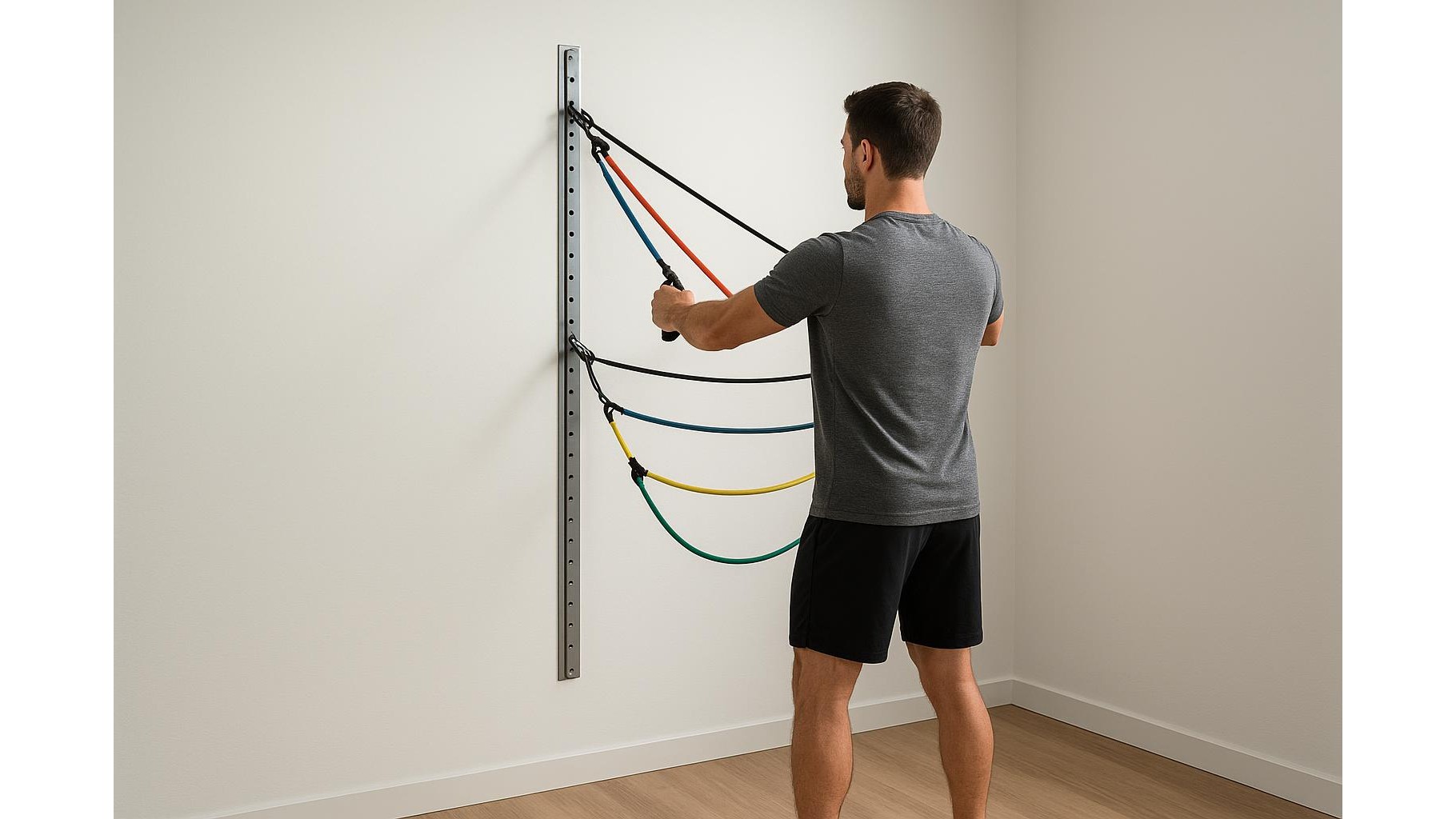
A well-designed wall-mounted resistance band setup can closely mimic the path and feel of cable exercises. Instead of a weight stack and pulley, tension comes from layered latex bands clipped to a fixed anchor at different heights. You still get constant tension, smooth resistance and the ability to work single limbs or bilateral patterns. With a sturdy wall anchor and a full spectrum of band strengths, you can perform rows, presses, pulldowns, curls, triceps work and even cable crunches, while taking up less than a metre of wall space. The key is correct anchor placement, band selection and strict attention to safety.
[h2]Anchor placement: setting up parallel resistance lines[/h2]
To truly imitate a full cable stack, you need multiple anchor points that recreate low, mid and high pulley positions. A typical vertical spread is from roughly shin height up to slightly above head level. With a multi-point anchor you can clip bands in seconds without moving hardware. For example, a heavy-duty wall system with several mounting holes in a vertical rail lets you pull from any angle while keeping force parallel to the floor or at a controlled incline. Even if you use a single anchor plate, installing two plates at different heights on the same stud line can give you versatile parallel resistance options for rows, presses and rotational work.
Choosing bands for a cable-like feel
Band quality determines whether your setup feels like a toy or a serious training tool. Look for layerable resistance bands that span from very light to very heavy, with clear pound or kilo ratings. Flat loop bands are versatile for lower body work and assisted bodyweight exercises, while tube bands with carabiner ends excel for precise “cable” moves. The ability to clip multiple bands to one handle is crucial: by combining two or three bands you approximate the incremental jumps of a weight stack. Using a pair of identical bands on each side of your anchor also helps replicate the symmetrical loading of a dual-cable station and keeps resistance balanced through the full range of motion.
handles, attachments and exercise variety
Attachments turn a simple wall anchor into a full functional trainer. A pair of padded single handles covers most push and pull patterns, from chest presses to face pulls. Add an ankle cuff and you unlock hip abductions, kicks and hamstring curls that closely mirror cable leg work. A longer triceps rope, if compatible with your bands, lets you perform pushdowns, hammer curls and high-to-low chops. Many complete sets include assorted handles, but you can also upgrade to commercial-grade attachments to improve grip comfort and durability. With smart attachment choices, your compact wall system can deliver nearly the same exercise menu as a large dual-stack cable machine.
Safety tips for high-tension band setups
Because resistance bands store elastic energy, safety must come first. Mount your wall anchor into solid structure—brick, concrete or wooden studs—using the supplied heavy-duty hardware and following local guidelines. Inspect bands regularly for cracks, discoloration or thinning, and retire any that show wear. When training, stand slightly off line from the band’s direct path so a failure is less likely to snap straight back at you. Use secure carabiners rather than tying knots, and avoid exposing bands to sharp edges or intense heat. Finally, treat heavy band stacks with the same respect as heavy weights: warm up with lighter tension, control the eccentric phase and never let bands slam back to the anchor.
Programming your wall-mounted system like a cable machine
Once your wall-mounted home gym is in place, organise workouts exactly as you would on a cable station. For hypertrophy, aim for 3–4 sets of 8–15 reps, adjusting resistance by swapping or layering bands to reach near-failure in the target rep range. Use low anchor points for rows, curls and kickbacks; mid-height for chest presses and flyes; high anchors for pulldowns, face pulls and woodchoppers. You can also perform unilateral work to correct imbalances, just as with a single cable column. Logging which band combinations match specific exercises helps you progress systematically over time and ensures your parallel resistance setup delivers consistent, measurable gains.
By combining thoughtful anchor placement, a broad set of resistance bands and the right attachments, a wall-mounted system can emulate most movements of a bulky commercial cable stack. The result is a compact, quiet and highly versatile home gym that fits almost any room while still supporting progressive overload and long-term strength development.