Building a serious home gym means lifting serious weight without a human spotter. That makes your safety setup just as important as your barbell. Choosing the right spotter arms, safety straps and crash pads, and setting them to the correct height, is what stands between you and a failed rep turning into an injury. In this guide we look at how to pick reliable equipment, how to check rack compatibility, and how to position everything so you can bench, squat and deadlift heavy at home with confidence.
Choosing spotter arms for heavy barbell work
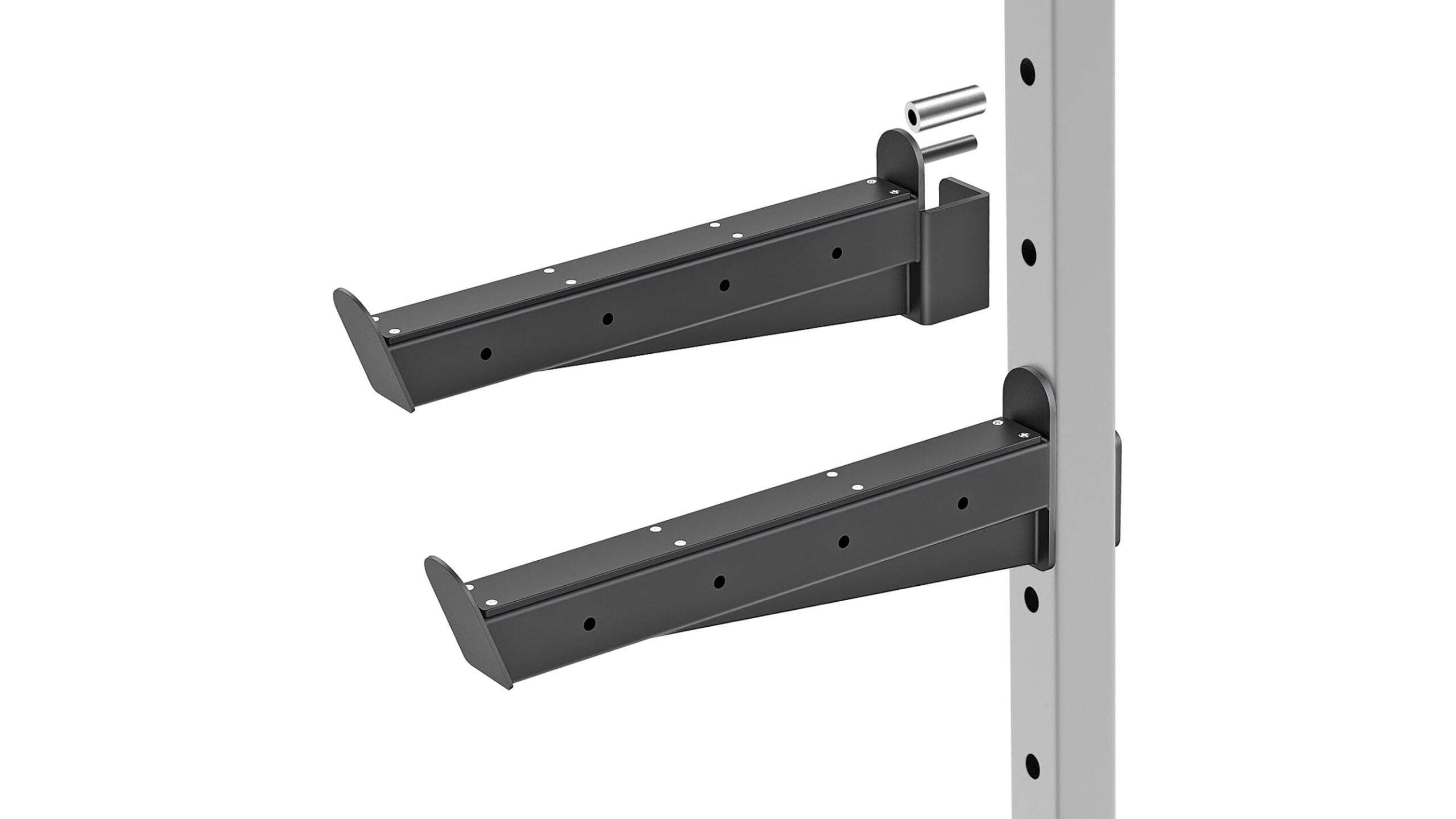
For most home lifters, solid spotter arms are the first safety upgrade. A good example in the UK market is the Kipika Safety Spotter Arms for 2″ x 2″ Power Racks. Built from heavy-duty steel with a powder-coat finish, each arm is rated to hold up to 500 lb, enough for ambitious squats, bench presses and shoulder presses. They fit most 2″ x 2″ racks with 5/8″ or 1″ holes, so they are ideal for typical home power cages. A 17.5″ reinforced rubber pad reduces noise and protects your barbell when you dump a lift, and welded end caps stop the bar from rolling off the edge. When comparing alternatives, always check load rating, tube size compatibility and how securely the locking pin engages with your uprights.
Dialling in ideal safety heights on your rack
Even the best spotter arms will not protect you if they are set at the wrong height. For the bench press, lie on the bench with an empty bar and lower it to your chest. Set the safety arms just below chest level so you can touch your chest on a good rep, but the bar will rest on the arms if you relax your wrists. For back squats, sit into your deepest safe squat with just the empty bar, then raise the safeties so they are 2–3 cm below the bar in that position. This allows a full range of motion while still catching you if you fail in the hole. For overhead press in a rack, set them just below chin height to catch a dropped bar without smashing the floor. Take time to test these positions with light weight before going heavy, and mark your preferred holes on the uprights for quick setup.
Extra security with bar and dumbbell support hooks
Beyond dedicated arms, some lifters add hooks that support dumbbells or the bar at the start and end of a lift. For example, the 2 Pack Dumbbell Spotter Hooks for Barbell are designed to hang from a barbell and hold dumbbells up to 220 lb per set. Their steel construction and non-slip treatment aim to make heavy dumbbell bench presses easier to set up by letting you start from a stable position and unrack from the bar, rather than kicking heavy bells into place. Products like this are useful if your main issue is getting heavy dumbbells into position safely. However, they are an addition, not a replacement, for proper rack-mounted safeties. Always read reviews with a critical eye, test them with light loads first, and never trust add-on gadgets for overhead work until you are completely confident in their stability.
Crash pads and floor protection for noisy home lifts
If you deadlift or drop weights in a flat or garage, investing in crash pads can protect both your floor and your joints. While the ODOXIA Sensory Crash Pad is marketed for kids and autism therapy, it illustrates the kind of thick, high-density foam construction that absorbs impact and provides a soft landing area. Large pads like this (around 152 x 152 cm) can double as a landing zone for Olympic lifts, box jumps or even as a buffer between dropped bumpers and hard floors. For barbell use, look for dense foam that will not bottom out, a removable washable cover, and enough surface area to comfortably catch both plates. Pair crash pads with basic rubber flooring and you dramatically cut noise, vibration and the risk of cracking concrete or upsetting neighbours.
Common home gym safety mistakes to avoid
Many injuries in a home gym come from simple, avoidable mistakes. A classic error is using spotter arms that do not match your rack’s dimensions or pin size, leaving them loose and wobbly. Another is setting safeties either too low (offering no protection) or too high (forcing partial range of motion). Lifters also underestimate how loud and destructive dropped weights can be without crash pads and proper flooring, which can lead to cracked tiles, damaged bars and angry neighbours. Finally, do not rely solely on improvised solutions like flimsy DIY straps, random furniture pads or unstable benches. Investing in a few well-chosen pieces of safety equipment and taking time to test your setup under light load will pay off every time you approach a heavy single.
Prioritising safety first in your home gym does not mean lifting timidly—it means building an environment where you can attack heavy sets with confidence. Solid spotter arms like the Kipika, smart accessories such as dedicated dumbbell hooks, and robust crash pads for impact and noise control all work together to protect you and your equipment. Combine the right gear with thoughtful height settings and honest self-assessment, and you can push strength gains at home without ever needing a human spotter.