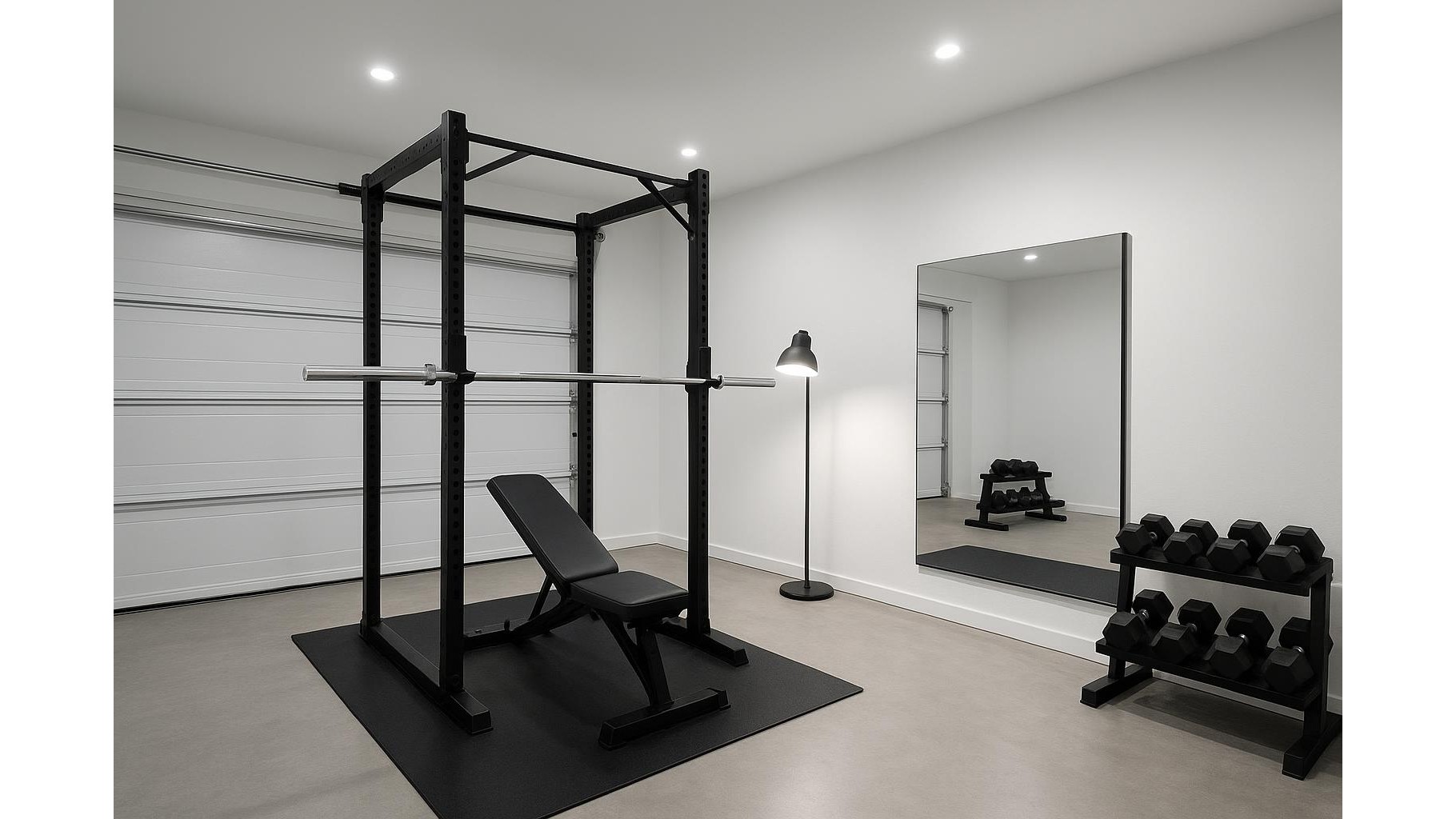
Designing a home gym usually starts with racks, benches and plates, but the often-overlooked factor that can make or break your training is lighting. The right combination of lamps and bulbs helps you see your technique clearly, reduces eye strain during longer sessions and creates a motivating atmosphere. With a bit of planning, you can build a bright, safe and energising workout space without spending a fortune.
Plan your lighting layout before buying anything
Before adding fixtures, take a few minutes to map your space. Identify your main workout zones: where you lift weights, do cardio and perform mobility or floor work. In each area, think about where shadows might fall on the barbell, mirrors or floor. As a rule of thumb, you want your primary light source above and slightly in front of where you stand to lift, not directly behind you. This reduces harsh shadows that can hide knee or hip position when you check form in the mirror. Measure ceiling height and available wall sockets so you know if you should prioritise ceiling lights, wall-mounted lamps or a combination of plug-in floor lamps and desk lamps. Planning first prevents impulse buys that do not actually improve visibility.
Choose the right brightness and colour temperature
For a typical garage or spare-room gym, aim for overall illumination of at least 500–750 lumens per square metre, which usually means multiple LED fixtures rather than a single central bulb. Check the packaging and look for LED bulbs between 4000K and 5000K colour temperature, often described as neutral white or cool daylight. This range keeps colours accurate in the mirror, makes small details like bar knurling easier to see and feels more energising than warm yellow light. Avoid bulbs with very low lumen output or very warm (2700K) light as your main source; they can make the room feel sleepy and hide movement details. If you train late at night, consider slightly warmer bulbs for secondary lamps to reduce eye strain while still using a bright, neutral overhead light during your main sets.
Layer overhead, task and accent lighting for safety
A safe home gym lighting setup uses layers. First, install a bright but diffused overhead light to eliminate dark corners where plates, dumbbells or bands could become trip hazards. Then add task lighting in high-skill areas: for example, a focused lamp near your rack so you can clearly see grip width and bar path, or a directional light pointed at your lifting platform. Finally, use softer accent lighting around mirrors or cardio machines to cut harsh contrast and make the space feel more inviting. Try to minimise glare on screens and mirrors by angling lamps slightly off-centre and choosing fixtures with diffusers or frosted covers. This combination of layers improves both safety and comfort, especially during longer sessions.
Reduce flicker and glare to protect your eyes
Not all LED lights are created equal. Cheap bulbs can produce subtle flicker that is hard to notice at first but causes headaches, fatigue and distraction over time. When possible, choose bulbs marked as flicker-free or designed for video recording, as these usually have better drivers. Position lights so they do not shine directly into your eyes when you bench press or do floor exercises; a bulb placed directly above the bench can be blinding during setup. Instead, offset it slightly or use a shade to diffuse the beam. Avoid glossy surfaces under strong lights, which can create sharp reflections that make it harder to focus on your movement. The goal is even, comfortable brightness that lets you concentrate fully on technique.
Use smart bulbs and dimmers to set the mood
Once your basic visibility and safety needs are covered, you can fine-tune the atmosphere of your home gym. Smart LED bulbs and dimmable lamps let you adjust brightness and, in some cases, colour, from your phone or a voice assistant. For example, you can keep lights bright and neutral white for heavy lifts, then shift to slightly dimmer, warmer light for stretching and cool-down. If you add subtle coloured accents—such as a soft blue or red wash on a back wall—make sure your main training area remains lit with a clear white tone so technique remains easy to see. Smart bulbs also offer scheduling, so your gym lights switch on automatically just before your planned training time, giving you one less excuse to skip a session.
Good home gym lighting does not require a massive budget; it just demands some forethought. By planning your layout, choosing bulbs with appropriate brightness and colour temperature, layering overhead and task lighting, and reducing flicker and glare, you create a space where technique is clear and injuries are less likely. Adding smart bulbs or dimmable lamps then lets you tune the mood to match your workouts. Treat lighting as seriously as you treat your barbell and rack choices, and your home gym will feel more professional, more motivating and far safer session after session.