Building a home gym around an adjustable weight bench is one of the smartest investments you can make. A solid bench unlocks pressing, rows, step‑ups, core work and more, without taking up the footprint of a full machine. But with dozens of options, from ultra‑budget to heavy‑duty commercial style, it’s easy to overpay or buy something that doesn’t fit your space or training goals. This guide walks you through the key features, safety points, and which type of bench makes sense for beginners, intermediate lifters and serious strength training at home.
Table of contents
Flat vs adjustable: which bench style suits your training?
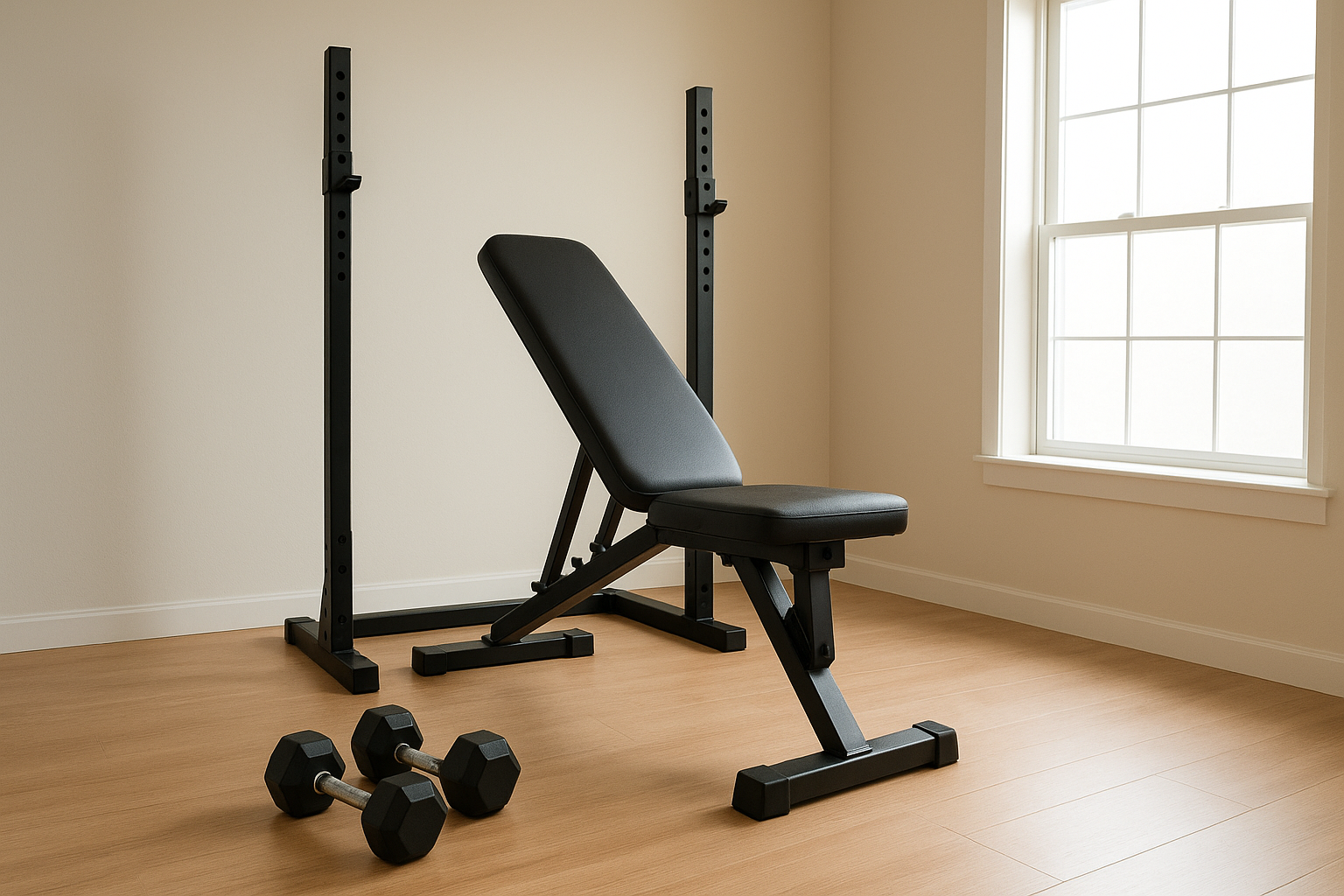
The first decision is whether you need a flat bench or a multi‑position adjustable bench. A flat bench is simple, stable and usually cheaper; it’s ideal if your training is focused on bench press, dumbbell rows, hip thrusts and bodyweight work. An adjustable bench adds incline and often decline positions, opening up movements like incline dumbbell press, seated shoulder press and different angles for flyes and curls. For most home gyms, an adjustable model offers better versatility per square metre. However, if your budget is tight and you mainly do barbell pressing on a rack, a well‑built flat bench can still be the most stable and cost‑effective choice.
Key features and safety essentials to look for
Whatever style you choose, prioritise stability and build quality. Look for a quoted weight capacity (user plus weights) of at least 250–300 kg for long‑term home use; this gives a margin for strength gains and dynamic loads. The bench should not wobble side‑to‑side when you lie on it or push through your feet. Check that the pad is firm, not squishy, so you can generate leg drive without sinking in. For adjustable benches, a robust ladder or lock‑pin mechanism and chunky steel frame are key safety elements. Wide rear feet and non‑slip caps help prevent tipping, especially during heavy dumbbell work. Always assemble the bench carefully following the instructions and re‑tighten bolts after the first few workouts.
Footprint, storage and small‑space considerations
In a home gym, footprint matters almost as much as strength rating. Measure your available floor space and remember you’ll need clearance at the head and foot of the bench for exercises. Many modern benches include wheels and a grab handle, making it easy to roll the bench in and out of a rack or into a corner when not in use. If you train in a living room or a very compact area, a foldable bench that stores upright against a wall can be a smart compromise, though it usually means sacrificing some stability and maximum load. Also consider bench height: a standard height around 43–46 cm works best for most people to plant their feet firmly on the floor without excessive arching.
Best choices for beginners, intermediates and heavy lifters
For beginners and casual lifters, a mid‑range adjustable bench with a flat plus several incline settings is usually ideal. It should feel stable, support basic dumbbell work and be comfortable enough to encourage consistent training, without the complexity or price of a commercial unit. Intermediate lifters who train 3–4 times per week will benefit from a bench with higher load capacity, tighter pad gap between seat and backrest, and more precise angle options for shoulder and upper chest work. Serious lifters and powerlifting‑focused athletes should prioritise a bench that matches powerlifting federation dimensions, with a very high weight rating, wide stable base and minimal flex. Even for advanced users, though, the ‘best’ bench is the one that fits both your programme and your room, so avoid overspec’d commercial monsters if you can’t move them or position them correctly at home.
Comfort, adjustability and long‑term value
Details of comfort and adjustability often determine how much you actually use your bench. A slightly wider pad can feel more secure for pressing, while a narrower one may allow better shoulder movement for smaller athletes. Check the angle range: for most home lifters, positions from flat up to about 70–80 degrees cover everything from incline press to seated overhead work. Extra fine angle increments are nice but not essential if they push the price up. Think about long‑term value: a sturdier bench generally outlives several sets of dumbbells and will support future strength levels. Spending a little more upfront on a stable, well‑designed bench usually works out cheaper over time than replacing a flimsy budget model that quickly feels limiting or unsafe.
Choosing the right home gym bench comes down to balancing space, budget and training goals. Decide first whether a flat or adjustable design better matches your programme, then focus on stability, safety and appropriate weight capacity. Consider how easily you can move and store the bench in your room, and whether its adjustability and comfort will support your progress for years rather than months. With a thoughtful choice, your bench becomes the reliable centrepiece of an efficient, effective home gym where you can build strength confidently and safely.