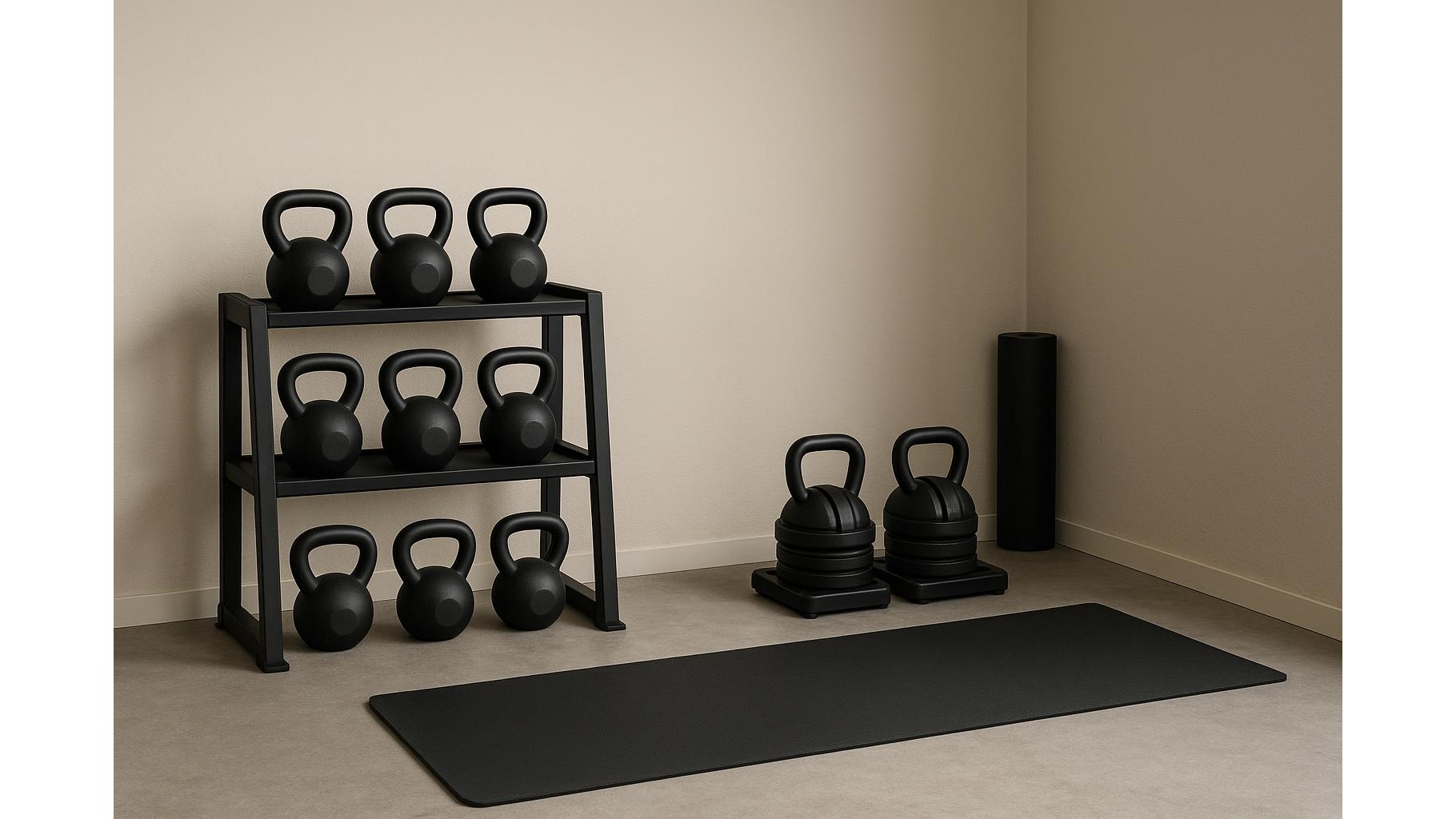
Building a space‑efficient home gym often comes down to making smart choices about modular gear. For kettlebell training, that usually means choosing between a compact rack of fixed hex kettlebells and a pair of adjustable kettlebell handles you can load with plates. Both promise versatility and a smaller footprint than a full commercial setup, but they behave very differently in real‑world use. This guide walks through safety, progression, budget and training feel so you can decide which modular option actually fits your home gym.
Training feel: how hex vs adjustable handles swing and press
Fixed hex kettlebells have a solid, sealed construction and a predictable profile. Their flat faces make them very stable for floor‑based moves like rows or push‑ups, and the consistent handle thickness gives you a repeatable grip for swings, cleans and snatches. Adjustable kettlebell handles, by contrast, are essentially a handle that you load with standard weight plates. The weight sits lower and often wider, which can slightly change the arc of your swing and the rack position on your forearm. Some lifters appreciate this barbell‑like feeling, especially for heavy goblet squats or deadlifts, but it can feel less refined for high‑rep ballistic work. If you prioritise classic kettlebell technique and smooth transitions between movements, fixed hex bells usually feel more natural.
Progression and versatility in a small space
In a tight home gym, load progression is crucial. With hex kettlebells you typically buy a few key sizes and add more over time, which can still eat up floor and budget as your strength grows. Adjustable kettlebell handles shine here: a single pair of handles combined with a modest stack of plates can cover light conditioning sessions and heavy strength work. You can micro‑load in small increments that are hard to find with fixed kettlebell jumps. This makes adjustable setups attractive for progressive overload and shared use between different lifters in the same home, since you can quickly dial weights up or down without owning a whole tree of bells.
Safety, stability and build quality
Safety is where the two designs truly diverge. Fixed hex kettlebells come as one solid piece, so there are no moving parts to loosen mid‑set. Their flat hex sides keep them from rolling during floor work and make them secure for renegade rows or hand‑supported push‑ups. Adjustable kettlebell handles depend on plates and collars staying tight. This demands a habit of checking and re‑tightening before each session, especially if you perform explosive swings or snatches. Poorly matched plates, cheap collars or over‑aggressive loading can lead to rattling or even plate movement. For beginners, or anyone training in a small space near furniture or kids, the extra vigilance required by adjustable handles is an important consideration.
Budget, durability and long‑term value
On paper, adjustable kettlebell handles can look cheaper because one pair replaces many bells. However, you must factor in the cost of a plate set and quality collars. Over time, a mid‑range selection of hex kettlebells (for example, light, medium and heavy pairs) can offer excellent durability with zero ongoing maintenance. Their tough shells and simple design stand up well to home use and occasional drops. Adjustable handles may be more cost‑effective if you already own plates, or if you plan to train across a very wide weight range. But if you mostly work within a narrow band of loads for conditioning and strength, investing in a few robust hex kettlebells can provide a simpler, quieter and lower‑stress solution.
Which modular setup really works for your home gym?
Choosing between hex kettlebells and adjustable kettlebell handles comes down to how you train and what your home gym looks like. If you love high‑rep swings, complexes and technical kettlebell work, fixed hex bells win for feel, safety and ease of use. Their flat sides and solid build encourage confident movement with minimal setup fuss. Adjustable handles are ideal if you need a wide weight range in very little space, already own plates, and are comfortable checking hardware before each session. In many home gyms, a hybrid approach works best: a couple of frequently used hex kettlebells for daily conditioning, supported by adjustable handles for occasional heavy lifts or shared use. Match the tool to your habits, and your modular kettlebell setup will genuinely support your training instead of getting in the way.
In summary, both modular options can power an effective home kettlebell program if chosen with your specific needs in mind. Hex kettlebells offer plug‑and‑play reliability and a classic kettlebell feel, while adjustable handles deliver unmatched flexibility for lifters chasing a broad strength spectrum in a compact corner of the house. Clarify whether you value simplicity or maximum range first; then build your setup around that priority so every session feels smooth, safe and productive.