
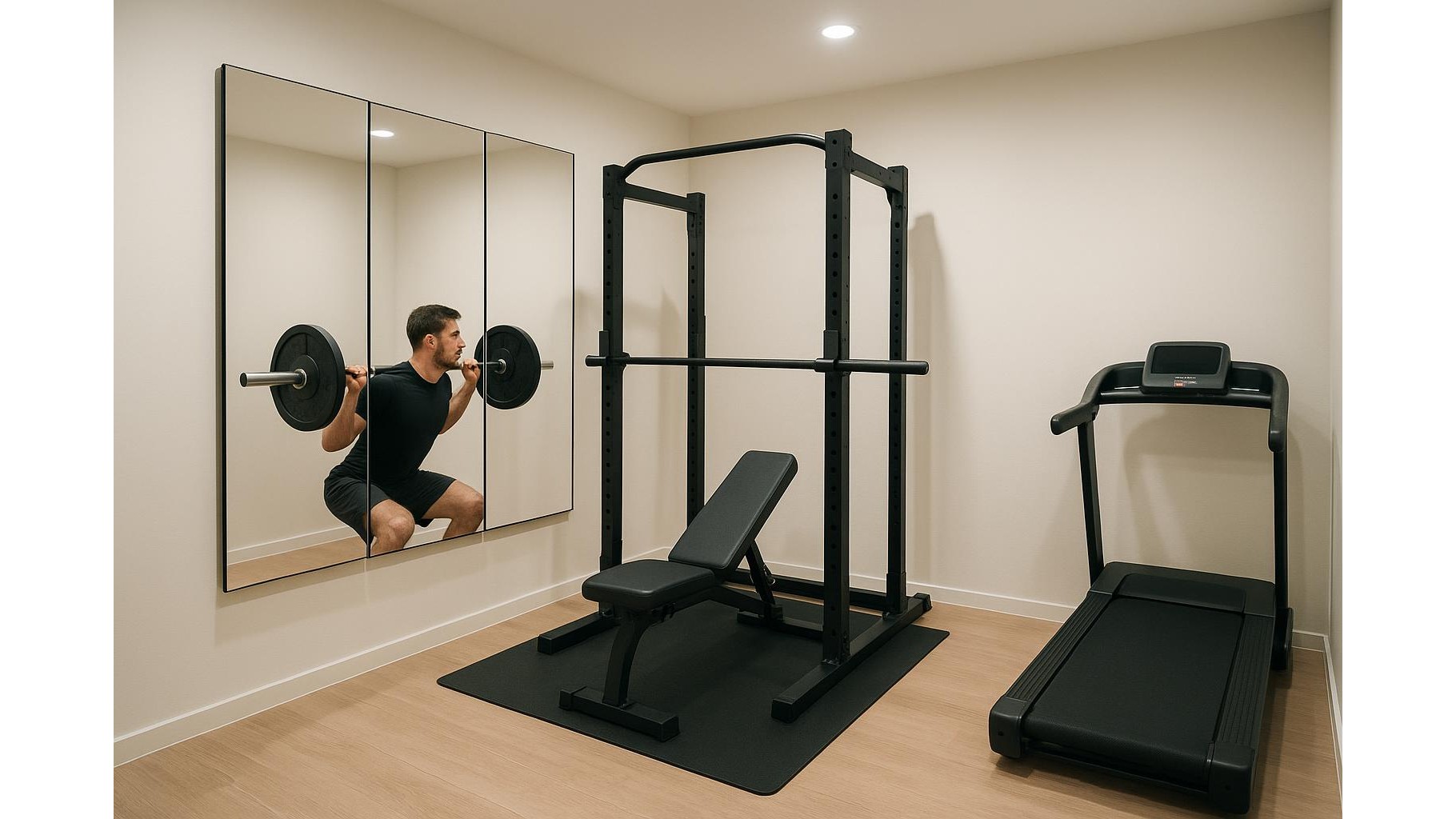
When you train in a small home gym, every centimetre counts. Adding mirrors is one of the most effective upgrades for checking exercise form, improving mind–muscle connection and making the space feel bigger. However, full-length freestanding mirrors can quickly eat into valuable training area. That is where foldable wall-mounted mirrors come in: they give you all the visual feedback you need, then tuck neatly away when it is time for deadlifts, HIIT or mobility flows.
Why foldable wall-mounted mirrors are perfect for tiny home gyms
Unlike classic mirror walls, foldable wall-mounted mirrors are designed for compact and multipurpose spaces. They hinge or slide so you can open them during training and fold them flat or against each other when not in use. This means no trip hazards, no bases on the floor and no risk of knocking over a mirror mid-workout. Foldable mirrors also allow you to angle the panels slightly, so you can see both your frontal and side profile at the same time – ideal for checking squats, overhead presses, rows and even your running form on a compact treadmill. Because they live on the wall, they free up your floor space for benches, racks and conditioning equipment.
How to choose the right foldable mirror setup
When picking a foldable mirror solution, start by measuring your main lifting zone and any cardio corner you want to monitor. The mirror height should at least cover from the floor to slightly above your head at full overhead reach, so you can track alignment in everything from Romanian deadlifts to push presses. Look for panels with shatter-resistant safety backing or acrylic alternatives to reduce risk if they are accidentally hit by a barbell. Hinged designs that close like cabinet doors are excellent for narrow rooms, while bi-fold or tri-fold designs can wrap around a squat rack area. Pay attention to mounting hardware: solid wall anchors and quality hinges matter more than fancy framing in a home gym environment.
Safe installation and mounting tips for home gym mirrors
Safety should be your first priority when installing wall-mounted gym mirrors. Always locate wall studs or use heavy-duty anchors appropriate for your wall type (brick, block, or plasterboard). Mount the mirrors slightly above skirting level so they are less exposed to bumps from plates and dumbbells. For foldable systems, ensure the hinges are rated for the mirror weight and check that the screws cannot loosen under repeated movement. It is wise to position mirrors outside the main bar path to minimise direct impact risk, while still keeping your lifting technique clearly visible. If you train with children at home, consider tempered glass or acrylic with rounded edges and avoid leaving panels partially open when not in use.
Controlling glare, reflections and visual distractions
Good mirrors are useless if you are blinded by glare every time you bench press. To manage reflections, start by assessing your light sources: overhead LEDs, windows and screens. Try to mount mirrors at an angle that avoids direct reflection of bare bulbs or bright windows. Soft, diffused lighting – for example, LED strips along the ceiling – works far better than a single harsh spotlight. Keep the area around the mirrors clean and uncluttered; too many objects in the reflection can distract you from your form checks. If you train with a TV or tablet, position it so it is not directly behind you in the mirror, reducing visual noise during sets. A simple microfibre cloth and glass cleaner routine keeps your reflection crisp enough to spot small technique errors.
Positioning mirrors for strength zones and cardio corners
To get the most from foldable mirrors, think in terms of zones. In a strength corner with a squat rack or power cage, place mirrors so you can see your hip, knee and back alignment in key lifts, without having to twist your neck between reps. A hinged setup that opens around the rack can give you both front and slight side views. In your cardio area, a narrower vertical panel beside a treadmill, exercise bike or rower is often enough to monitor posture and arm path. For small rooms, mount mirrors opposite a window to make the space feel larger and brighter, but still ensure the sun does not hit them directly during your usual training time. Thanks to the foldable design, you can close panels when you need a calmer, less stimulating environment for yoga, mobility or cool-down work.
Upgrading a compact home gym with foldable wall-mounted mirrors is one of the most cost-effective ways to improve your training experience. You gain better visual feedback on every rep, create the illusion of a larger, brighter room and avoid sacrificing valuable floor space. By choosing mirrors with safe materials, installing them securely and paying attention to light and positioning, you can build a smart, adaptable setup that supports both heavy strength sessions and high-energy cardio days – all within the footprint of a small room.









