Building a compact home gym often leads people to balance on wobbly chairs for squats, split squats and step-ups. That might feel convenient, but it is a recipe for ankle rolls, slips and damaged furniture. With a bit of planning, you can create stable doorway squat and lunge stations using the structure of the doorway itself, low platforms and purpose-built stands that are far safer and more effective than any chair.
Why you should retire the chair from leg day
Using a chair for Bulgarian split squats, step-ups or assisted squats seems like a quick hack, but it introduces several risks. Chairs are often too high, too light and not designed to resist sideways forces. When you load them with dumbbells or a backpack, they can slide or tip. This pushes your knee into awkward angles and makes you focus on not falling instead of on good technique. By swapping chairs for low platforms, doorway supports and compact stands, you lower your centre of gravity, get more predictable footing and can progressively load your legs with much more confidence.
Using the doorway as a built-in safety frame
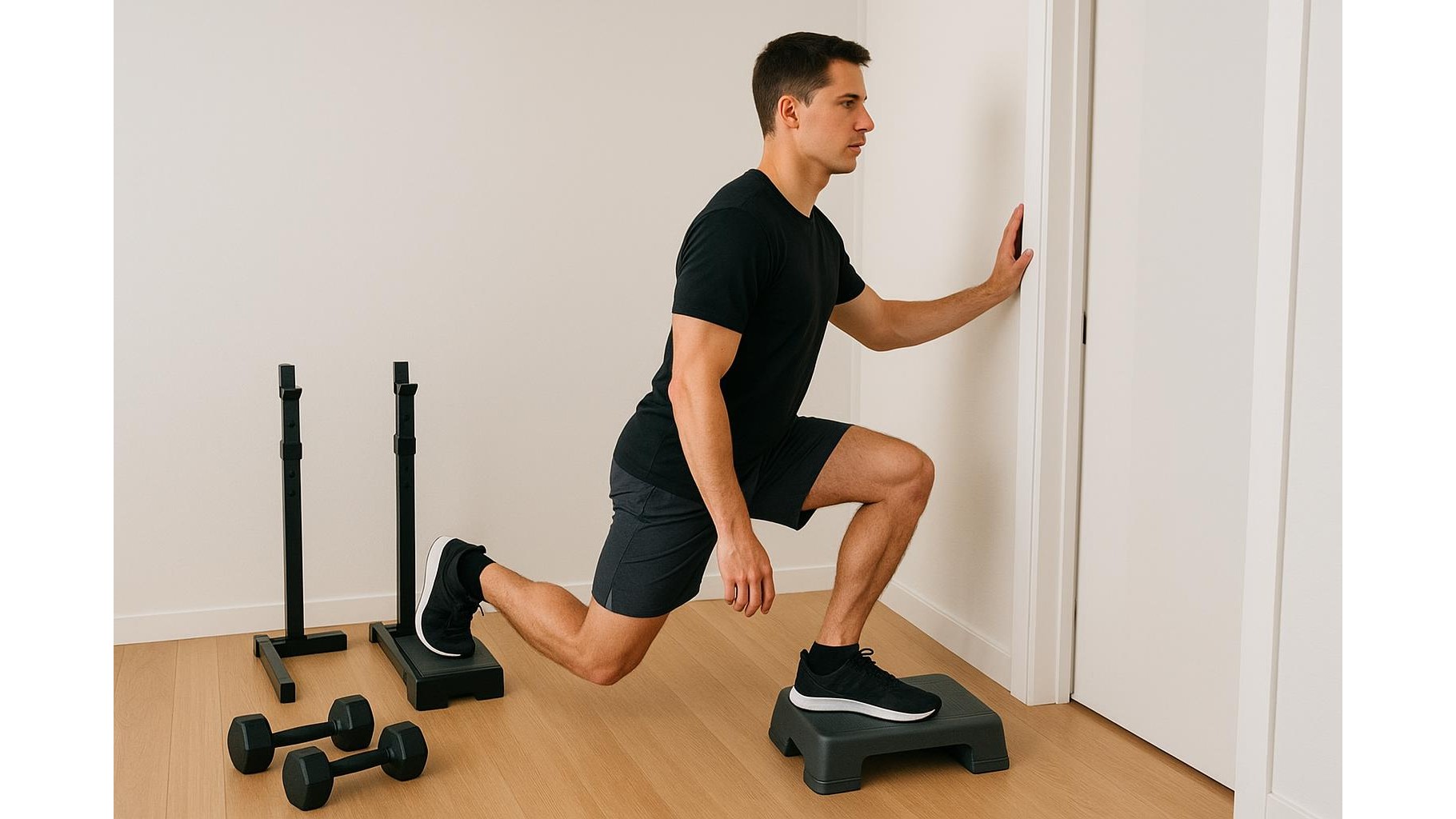
A doorway is a surprisingly useful anchor for lower-body work. For assisted squats, stand inside the frame, lightly holding each side of the jamb to help you sit deeper while keeping your chest up. This encourages better depth without collapsing at the lower back. For rear-foot elevated split squats, you can position a low step or platform inside the doorway so that, if you lose balance, you can quickly touch the frame with your hands for support. The vertical lines of the doorway also help you track that your front knee stays roughly over the middle of your foot instead of collapsing inward. Think of the doorway as a simple, free safety cage that reduces the chance of sideways falls in a small home gym.
Building stable platforms for split squats and step-ups
The core of a safe home leg station is a sturdy, low platform rather than a high, spindly chair. Aim for a step around knee height or slightly below for step-ups, and lower for rear-foot elevated split squats. In practice, an aerobic step platform or a short plyometric box with a wide base works best because it spreads the load and usually has non-slip feet. Place your platform so one side is close to a wall or inside a doorway; this immediately cuts wobble because you can use a fingertip on the wall for balance without hanging on it. Always test stability with your bodyweight first, then gradually add dumbbells or a weighted backpack as you feel secure.
Compact stands as safer chair replacements
Purpose-built squat and lunge stands are designed to handle dynamic loads in a way that chairs are not. A pair of narrow, adjustable squat stands or a low bar stand can double as support for step-ups, supported split squats and even box squats with a barbell if you have more equipment. Look for features like a broad base, rubber feet and steel construction so they will not rock when you shift weight from leg to leg. Set them up just inside a doorway or against a wall to limit any tipping. Compared with chairs, these stands keep your feet on a predictable surface, reduce the chance of slipping out from under you and last longer under repeated leg training sessions.
Key safety cues for squats, split squats and step-ups
Even with a stable setup, safety cues matter. For all squat variations, think “hips back then knees bend,” keeping your whole foot pressed into the platform. In step-ups, drive through the heel and mid-foot of the elevated leg instead of pushing off the floor with the trailing leg. For Bulgarian split squats, keep your front foot far enough forward that your knee can travel over the middle of your foot without jamming the toes; use just a light fingertip on the doorway or wall to steady yourself. Move slowly, especially on the way down, and stop each set one or two reps before form breaks. These habits make your doorway squat and lunge station a reliable, long-term part of your home routine instead of a one-time experiment.
By replacing precarious chairs with doorway-supported stations, solid platforms and compact stands, you can train squats, lunges and step-ups in a small space with far less risk. The doorway gives you instant balance assistance, low steps reduce the height you could fall from, and purpose-built stands withstand years of leg training. Combine these with simple safety cues and gradual loading, and you have a stable, space-efficient lower-body setup that lets you focus on building strength instead of worrying about tipping furniture.