Building a powerful lower body in a small home gym is absolutely possible if you choose the right compact plate-loaded leg machine. The challenge is finding a station that offers a solid range of motion, feels stable under heavy load and still fits into a tight footprint. In this guide, we’ll walk through the key features that matter for leg presses, hack squats and combo units, so you can pick a space-saving solution that doesn’t compromise on safety or results.
Measure your space and plan the training zone
Before looking at specific plate-loaded leg presses or hack squat machines, start with a tape measure. Compact machines can still be surprisingly long when the sled is fully extended, so you need to consider both the footprint and the operating space. Allow extra clearance behind and above the machine for your body and for plate loading. Check ceiling height if you are placing a machine on a platform or rubber tiles. Think about access to nearby weight plate storage and leave room to walk around safely. Planning this “training zone” first helps you narrow down models that genuinely fit, instead of discovering too late that your new leg press blocks a door or collides with a rack.
Prioritise safety, stability and load capacity
Even a compact home gym leg press should feel rock-solid when loaded. Look for a heavy-gauge steel frame, wide base and a stable backrest or shoulder pads that do not flex under pressure. Reliable safety stops and lock-out positions are critical: they let you bail out of a rep without getting pinned. Check the maximum weight rating of the sled or carriage, and make sure it can handle both your current strength and future progress. A plate-loaded design lets you micro-adjust the load, but it only works if the machine tracks smoothly on its rails and the bearings don’t bind. Stability might not look as exciting as huge numbers on the spec sheet, yet it’s what keeps your knees, hips and lower back safe over years of training.
Evaluate range of motion and biomechanics
Space-saving machines often compromise on range of motion, so pay close attention to how the carriage travels. You should be able to bring your knees deep without your lower back rounding or your heels lifting. Look for adjustable seat angles, backrest positions and multiple footplate angles so you can dial in a joint-friendly path. On hack squat and combo units, shoulder pads should sit comfortably without digging into your neck, and the movement should follow a natural arc for your hips and knees. Avoid designs that force your feet too high or too low, as this can overload the knees. A compact footprint is valuable, but not if it turns every session into a compensation pattern; quality biomechanics are what make a machine worth using for heavy, long-term leg training.
Choose between leg press, hack squat and combo units
For very small rooms, you’ll need to decide whether to invest in a dedicated leg press, a hack squat or a combo machine that offers both patterns in one frame. A compact leg press typically lies lower to the ground and can tuck under a power rack, making it easier to fit into narrow spaces. A hack squat shines for quad-focused work and offers a more upright position that some people find easier on their lower back. Combo machines add versatility by letting you switch between leg press, hack squat and sometimes calf raises, but they are often taller and heavier. Make a list of your priority exercises and choose the design that gives you the most important movement patterns without overwhelming your available floor area.
Consider plate loading, comfort and usability
A plate-loaded lower-body station should integrate smoothly with the plates you already own. Check that the sleeves match your plate type and have enough loading length for progressive overload. For home gyms, simple convenience makes a big difference: angled or elevated sleeves are easier to access in tight corners, and integrated storage pegs reduce clutter. Comfort matters too. Look for thick, firm padding, non-slip upholstery and a textured footplate for secure foot placement, especially if you train hard or sweat heavily. Intuitive locking handles and quick-adjust mechanisms make it easier to change users and exercises, which is crucial in a multi-user household. The more user-friendly the machine, the more often you will actually use it.
Plan for long-term progression and integration
When you choose a compact plate-loaded leg machine, think beyond the first few months. A solid station should scale with your progress, allowing heavier loads, different stance widths and a variety of rep ranges. Consider how it will integrate with the rest of your home gym equipment: can you pair it with your rack, dumbbells and bands for complete lower-body sessions, or will it dominate the room and limit other setups? Opt for a design that is easy to move slightly if needed, yet heavy enough to feel anchored during use. By prioritising safety, biomechanics and smart use of space, you can build a compact, high-performance lower-body station that delivers years of effective training in even the smallest home gym.
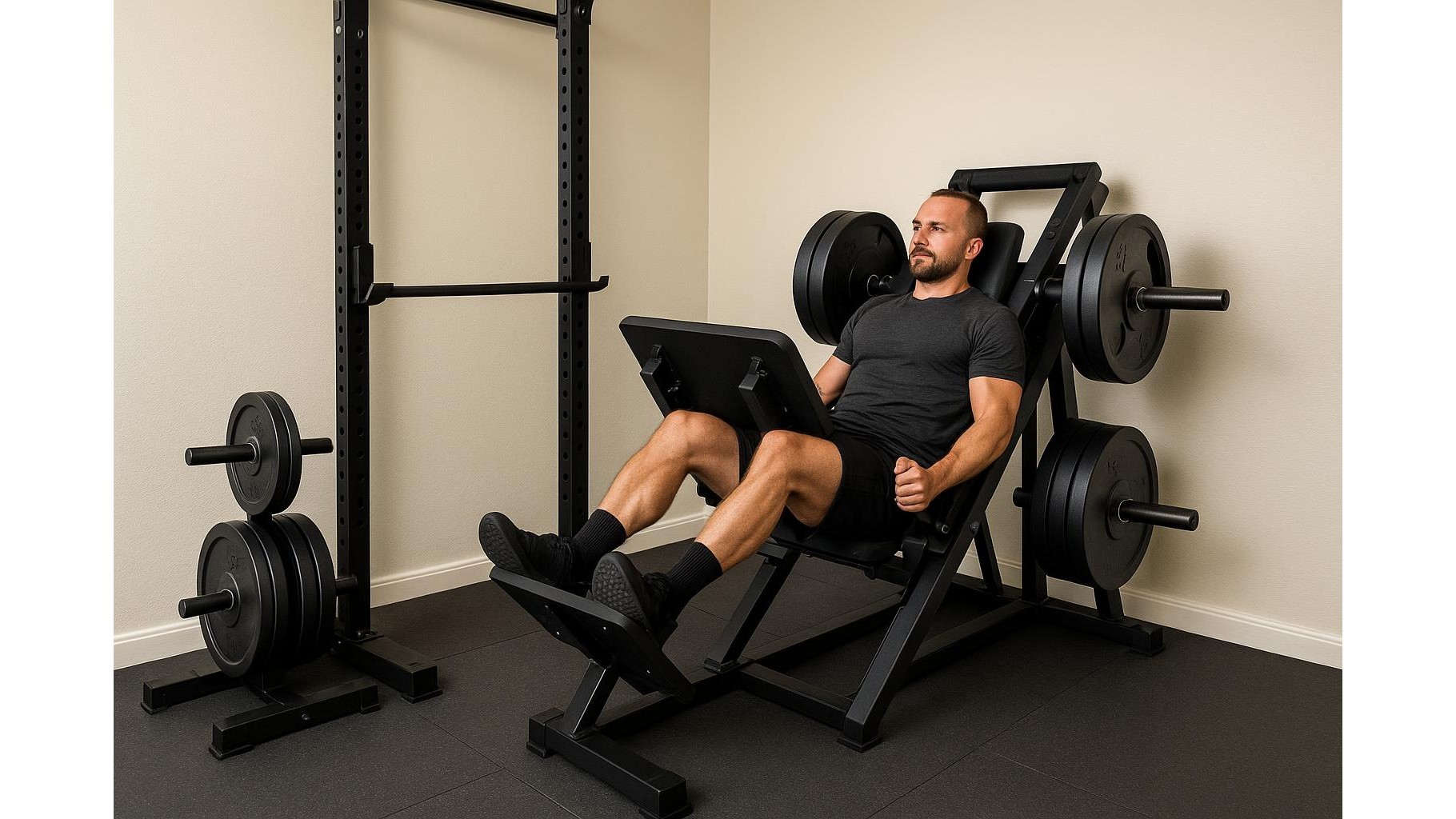
A practical image could show a small garage or spare-room gym with a compact plate-loaded leg press or hack squat set up alongside a power rack and weight tree, highlighting the efficient use of floor space, correct body positioning on the machine and neatly stored plates.