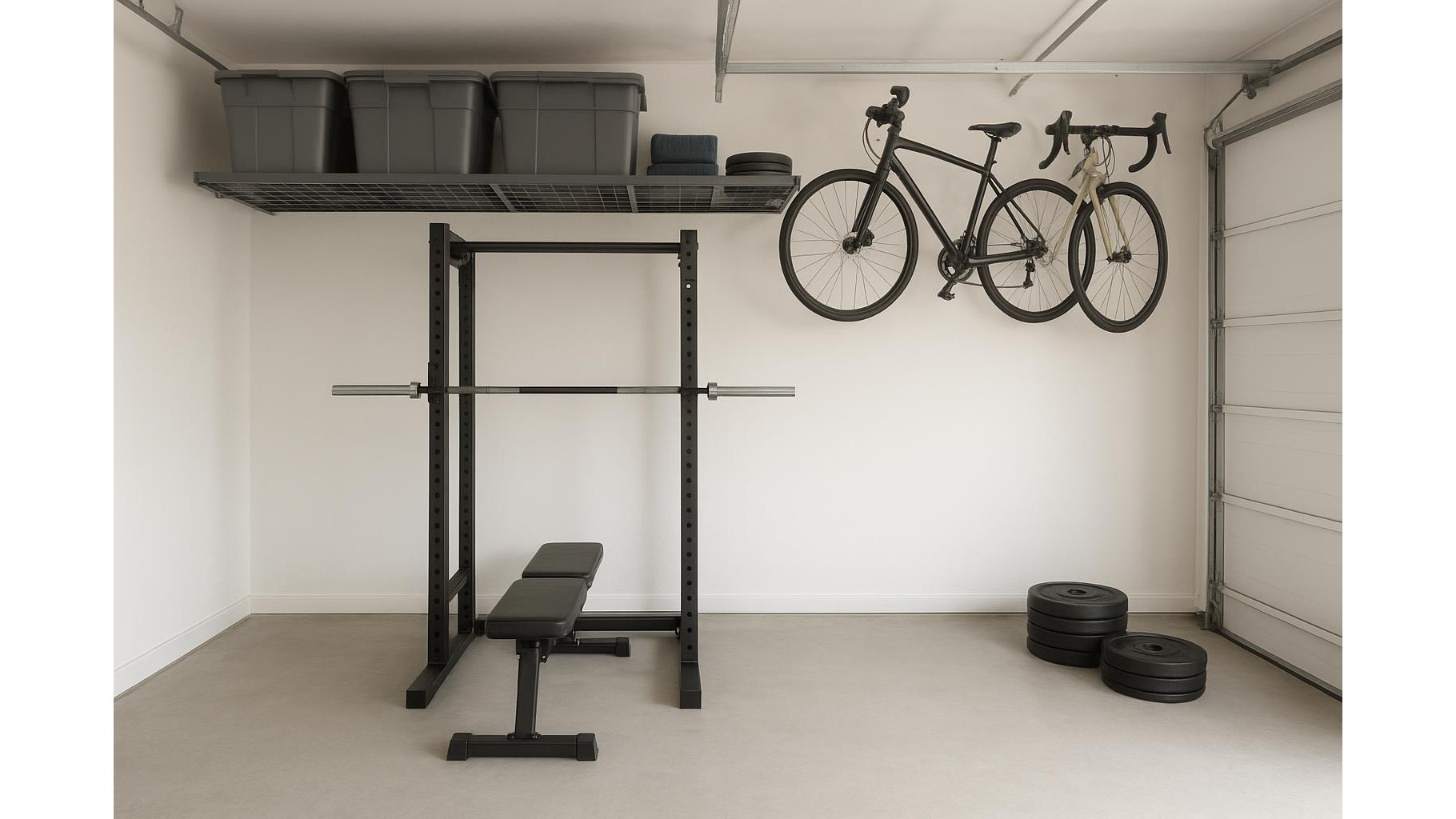
When you start collecting squat racks, barbells, yoga props and even bikes, your home gym floor can disappear fast. Smart ceiling storage lets you move bulky gear overhead, freeing precious training space while still keeping everything safe and accessible. In this guide we’ll explore practical overhead storage ideas for bikes, boards and rarely used equipment, plus what to look for when choosing and installing ceiling-mounted systems in your gym or garage.
Why ceiling storage is a game changer for home gyms
Most home gyms are limited by square footage, not by ceiling height. Using the vertical space above you is one of the easiest ways to expand your training area without moving house. Well‑designed ceiling racks and hoists keep equipment off the floor so you can lift, stretch and move freely, while also protecting gear from moisture and accidental damage. Overhead storage is particularly useful in garage gyms, where cars, tools and sports kit all compete for room. By moving the bulkiest items up high, you declutter the environment, improve safety and make cleaning the training zone much easier.
Types of ceiling storage for bulky gym gear
There are three main categories of ceiling storage systems worth considering. First are fixed overhead racks, metal platforms that bolt into joists and create a heavy‑duty shelf above your head; these are ideal for long‑term storage of items like spare weight plates, camping gear or seasonal sports equipment. Second are ceiling hooks and rails, simple but effective for hanging items such as resistance bands, skipping ropes or light accessories. Finally, there are pulley hoist systems, which use ropes and locking mechanisms to raise and lower bulkier objects like bikes or surfboards without heavy lifting. Combining these types lets you tailor ceiling storage to the specific mix of gym and sports gear you own.
Planning safe ceiling storage in a home or garage gym
Before drilling a single hole, take time to plan your overhead layout. Identify solid ceiling joists or concrete anchor points and confirm their spacing, as this will determine what kind of rack or hoist you can safely install. Map out where your rack, pull‑up bar and main lifting zone sit so stored items will never hang directly above your head during heavy lifts. Check the maximum load rating of any product and compare it with the combined weight of what you intend to store, adding a generous safety margin. In tight garages, think about door tracks, car height and lighting so overhead storage does not interfere with daily use. Finally, leave a clear pathway to raise and lower items without tripping over benches or cables.
Best practices for installing ceiling-mounted systems
When installing any ceiling-mounted storage, use appropriate fixings for the building material—heavy‑duty wood screws into timber joists or rated anchors for concrete. Pre‑drill pilot holes and always follow the manufacturer’s spacing recommendations for brackets. For racks, it is usually safer to over‑spec the hardware, choosing thicker steel and stronger bolts than you strictly need. With hoist systems, double‑check the routing of the rope and the engagement of the locking mechanism before trusting it with a heavy item. After installation, perform a load test by gradually adding weight and visually inspecting for flex or movement. Re‑check all fixings every few months, especially in unheated garages where temperature changes can affect materials.
What to store overhead (and what to keep at ground level)
Not everything belongs in the air. The best candidates for ceiling storage are bulky but light or medium‑weight items you don’t need every session: spare crash pads, camping kit, seasonal sports gear, yoga bolsters, extra mats and rarely used specialty bars. Bicycles and boards can also go overhead if they are securely fastened and easy to lower. Keep heavy, frequently used items—like your main barbell, kettlebells and dumbbells—at ground level on stable racks for quick access and safety. Use simple hooks or small rails above eye level for bands and skipping ropes, and reserve the highest positions for gear you use only a few times a year. This thoughtful separation ensures your home gym stays both decluttered and ready to train at any moment.
Smart overhead storage solutions can transform even a cramped garage into a functional, organised home gym. By planning your layout, respecting load limits and choosing the right mix of racks, hooks and hoists, you reclaim floor space without sacrificing safety. The result is a cleaner training environment where every piece of equipment has its place and you have room to focus on what matters most: consistent, effective workouts.