If you want explosive leg power at home without buying a full rack and plates, weighted jump platforms and plyometric boxes are a compact, versatile solution. From low-impact step-ups to powerful box jumps, these tools can turn a small corner of your living room or garage into a serious lower-body power station. This guide explains what they are, how they improve your home training, how to choose the right height and surface, and how to use them safely in tight spaces.
What are weighted jump platforms and plyo boxes?
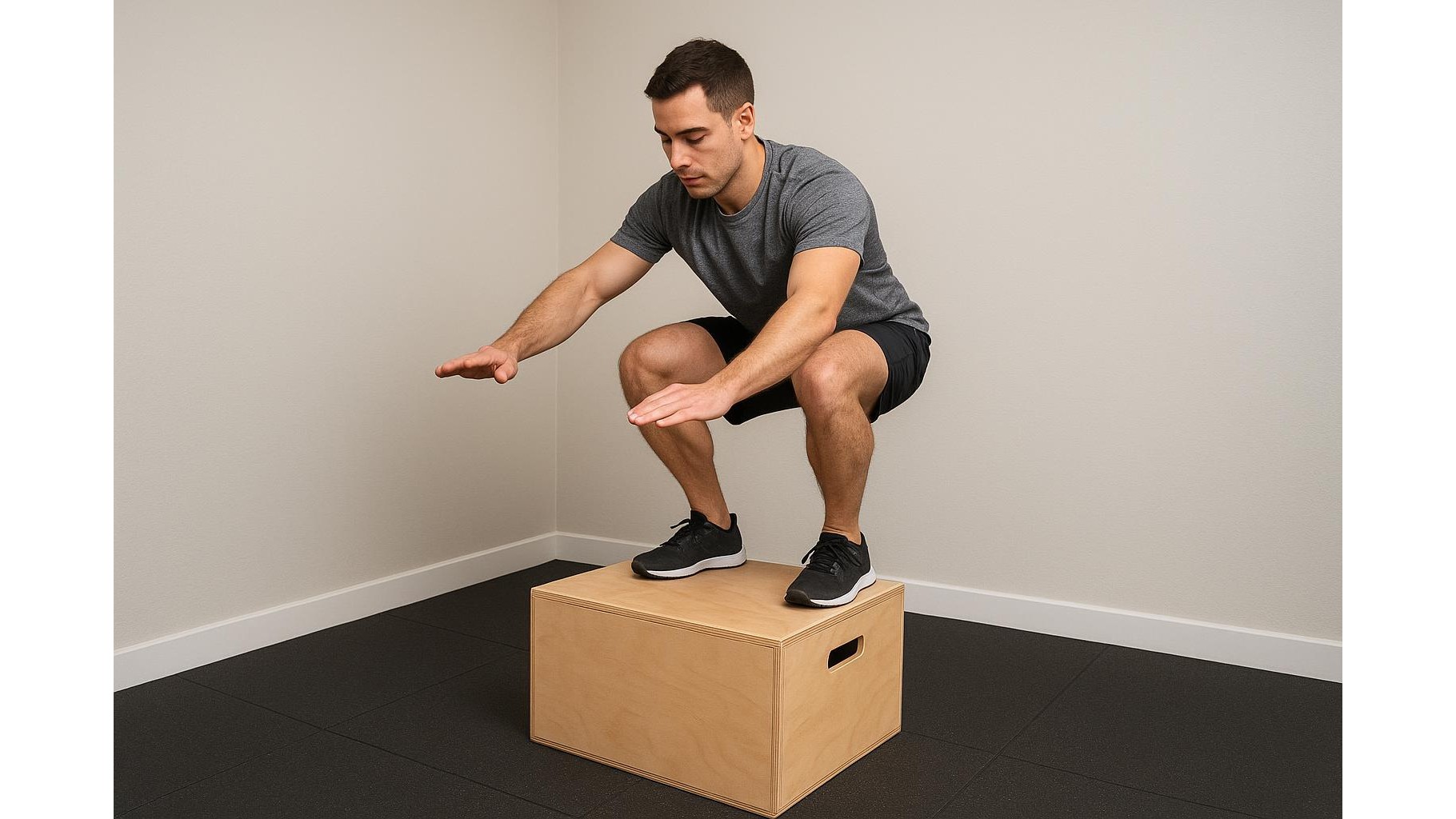
A plyometric box (or plyo box) is a sturdy platform designed for jump training, usually built from wood, metal, or dense foam. Many models are 3-in-1 boxes that offer three different heights depending on how you place them, making them ideal for home gyms with limited space. A weighted jump platform is similar, but often heavier or even loaded with plates to stop movement and add stability when landing. Compared with simple steps or chairs, proper plyo boxes are engineered to handle dynamic forces, reducing the risk of tipping or breaking. They are essential if you want to train fast, explosive movements like box jumps, depth drops or lateral hops at home.
How these tools upgrade your home leg and power training
Adding a plyometric box to your home gym opens up a wide range of exercises that traditional strength tools can’t match. You can perform box jumps, step-ups, Bulgarian split squats, lateral step-overs and elevated push-ups using a single platform. Because many movements are explosive, you train your fast-twitch muscle fibres and improve vertical jump, sprint acceleration and change of direction, all in a very small footprint. Compared to simply jumping on the floor, landing on a slightly higher, stable surface reduces impact forces on your ankles and knees, making power training more joint-friendly for beginners. With careful programming, a single box can support both strength and conditioning sessions.
Choosing the right height and surface for beginners
For safer home power training, start low. Beginners usually do well with a 30–40 cm (12–16 inch) height for step-ups and low box jumps. As your confidence and landing mechanics improve, you can gradually increase height, but remember that box jumps are about speed and control, not ego. A good rule: choose a height where you can land quietly with your whole foot on the box and your knees tracking over your toes. When it comes to surface, a box with a non-slip top or a rubberised coating offers more grip, especially if you train in socks or minimalist shoes. Foam plyo boxes can be more forgiving on the shins if you miss a jump, while wooden boxes are ultra-stable and durable but harsher on impact.
Safety tips for small-space home workouts
Training powerful jumps in a small apartment or garage demands extra attention to space management and technique. Keep at least one full box length clear on all sides of your platform and ensure the surface underneath is flat and non-slip (rubber mats are ideal). Always warm up with dynamic movements like leg swings, bodyweight squats and a few low-intensity step-ups before attempting jumps. Focus on a soft landing: think of landing like a spring, with knees and hips bending to absorb impact, chest up and core braced. Avoid high-rep, high-box jumps when you’re fatigued, as this is when technique breaks down and trips happen. If ceiling height is limited, stick to low boxes, step-ups and lateral movements to stay safe while still building power.
Progressions and exercise ideas for every level
Even if you’re brand new to plyometrics, you can build a progression that matches your current level. Start with static step-ups, elevated split squats and incline push-ups to get comfortable with the box height and balance. Next, move to low box jumps, box squats to jump (sit and explode up) and lateral step-overs to introduce speed while staying controlled. Intermediate users can add depth drops (stepping off the box and landing softly), lateral hops and single-leg step-ups with dumbbells. Advanced users might integrate contrast training, pairing heavy squats with explosive box jumps in the same session. Whatever your level, limit jump sets to short, focused bursts with plenty of rest to maintain quality.
Used correctly, weighted jump platforms and plyo boxes are one of the most efficient ways to build explosive leg power in a home gym, even when space is tight. By choosing an appropriate height, a grippy, stable surface and following basic safety guidelines, you can confidently integrate box-based drills into your weekly routine. Start low, prioritise smooth landings and gradually progress intensity as your strength and coordination improve. With a single well-chosen box, your home training can feel faster, more athletic and far more effective.