Creating a small home gym around adjustable dumbbells is smart and space‑saving, but leaving heavy weights on the floor is a recipe for clutter, chipped tiles and painful toe stubs. The key is planning adjustable dumbbell storage that keeps handles and plates off walkways, at a safe lifting height and close to your main training zone. In this guide we look at stands, low‑profile racks and under‑bench solutions, plus simple safety tips to keep your compact setup tidy and efficient.
Why dedicated storage matters in tiny training spaces
Adjustable dumbbells are marketed as all‑in‑one weight sets, but they still need a parking spot. In a tight flat or spare room, simply sliding them under the coffee table quickly turns into a trip hazard. Proper storage does three big things: it protects your floor from dropped metal, it keeps the handles at a more ergonomic hip height for setup, and it clearly defines your training area so the rest of the room can stay livable. Even if you only have a corner beside a folding bench, a slim stand or rack makes your home gym layout feel intentional instead of improvised.
Stands designed for adjustable dumbbells
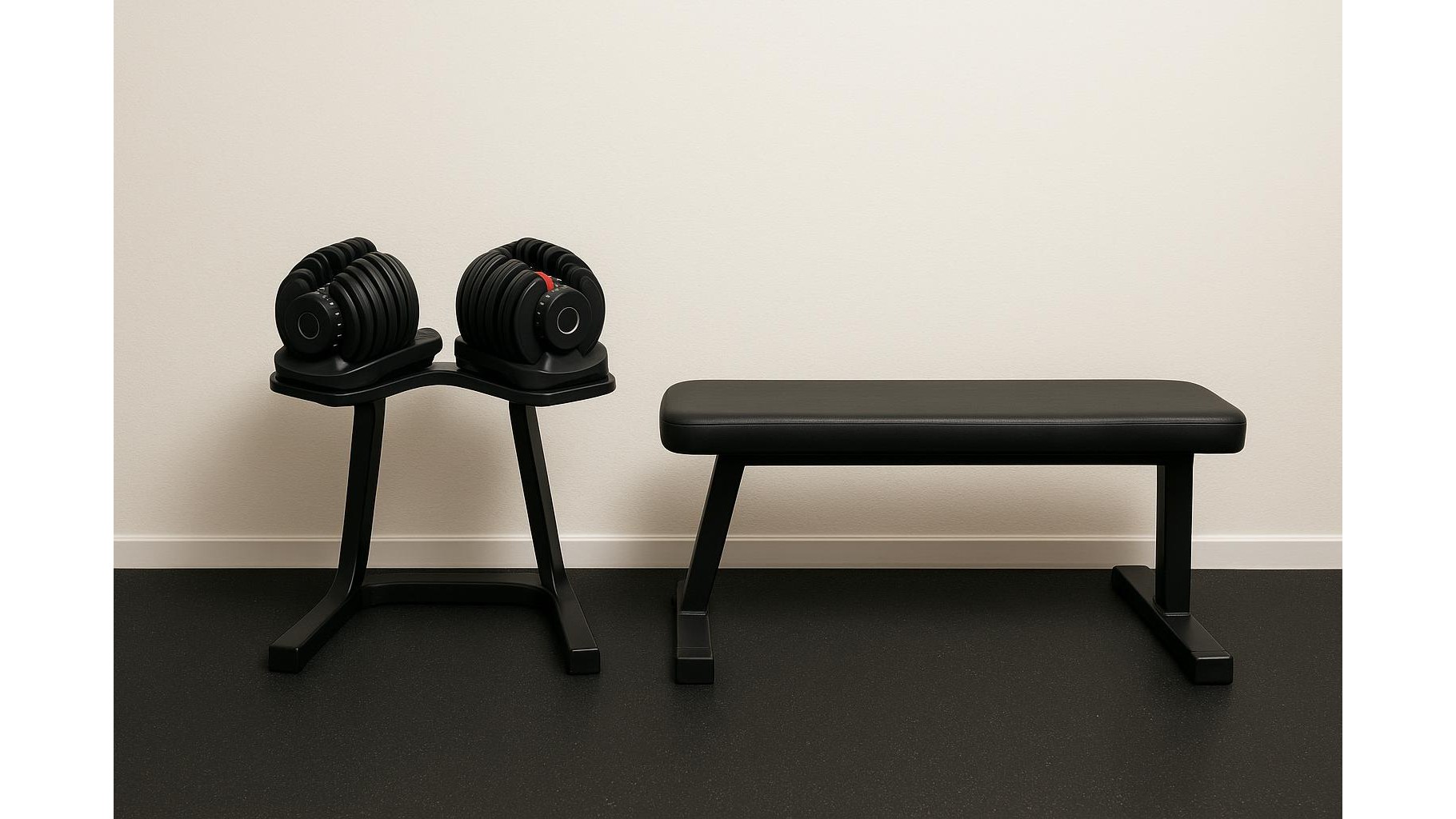
The most comfortable option is a purpose‑built adjustable dumbbell stand, which brings the cradles to roughly mid‑thigh level so you can load and unload plates without constant bending. A good stand for compact rooms should have a small footprint, rubber feet to protect hard floors and a stable, wide base. Many users underestimate how much easier it is on the lower back to re‑rack at hip height instead of lifting from the floor, especially during heavy sets and drop‑set workouts. When choosing a stand, confirm that the tray shape and width match your specific dumbbell system and that you can access the adjustment mechanism without your knuckles bumping any frame tubing.
Low‑profile racks that double as general storage
If you want something more versatile, a low‑profile dumbbell rack can store both adjustable and fixed dumbbells in one place. Look for a two‑tier design that sits close to the wall, with angled shelves so handles naturally roll into place instead of onto the floor. In very small rooms, depth matters more than width: a rack that protrudes less than the length of your bench keeps the lifting lane clear. Add simple accessories like rubber mats on each tier to stop steel bases from sliding, and use the lower shelf for heavier weights so the rack does not become top‑heavy. This kind of compact rack turns a messy corner of plates, collars and dumbbells into a single, easy‑to‑clean zone.
Under‑bench and hidden storage solutions
When every square metre counts, under‑bench storage is worth exploiting. Many flat or adjustable benches leave a dead zone underneath that can fit a shallow crate, low rolling platform or custom wooden tray sized to your dumbbells. The trick is to keep the handles oriented so you can slide them out without twisting your wrists in a cramped position. If your bench is on wheels, store the dumbbells perpendicular to the long side so you can access them from either end. Just remember load limits: not all budget benches are designed to support the extra static weight of very heavy adjustable dumbbells stored directly on their frame, so keep the weight on the floor, not on the bench’s cross‑members.
Safety, floor protection and clutter control
Good dumbbell storage ideas are as much about safety as they are about looks. Always pair your stand or rack with a dense rubber or EVA gym floor mat to cushion accidental drops and protect both tiles and neighbours below. Leave at least one full step of clear space around your rack so you never have to twist with a heavy dumbbell while dodging furniture. Get into the habit of re‑racking after every set; in small home gyms even a single dumbbell in the wrong place can block your footing on lunges or push‑ups. Finally, keep accessories like collars, wrist straps and micro‑plates in a small bin on the rack so the floor around your storage zone stays completely uncluttered.
Dialling in your adjustable dumbbell storage is one of the fastest ways to make a tiny home gym feel safer, more professional and easier to train in. Whether you choose a dedicated stand, a slim low‑profile rack or a clever under‑bench setup, focus on stable support, easy access and clear walking lanes. Protect the floor, store the heaviest weights lowest and keep everything you need within arm’s reach. With a tidy setup you will spend less time shifting equipment and more time actually lifting.