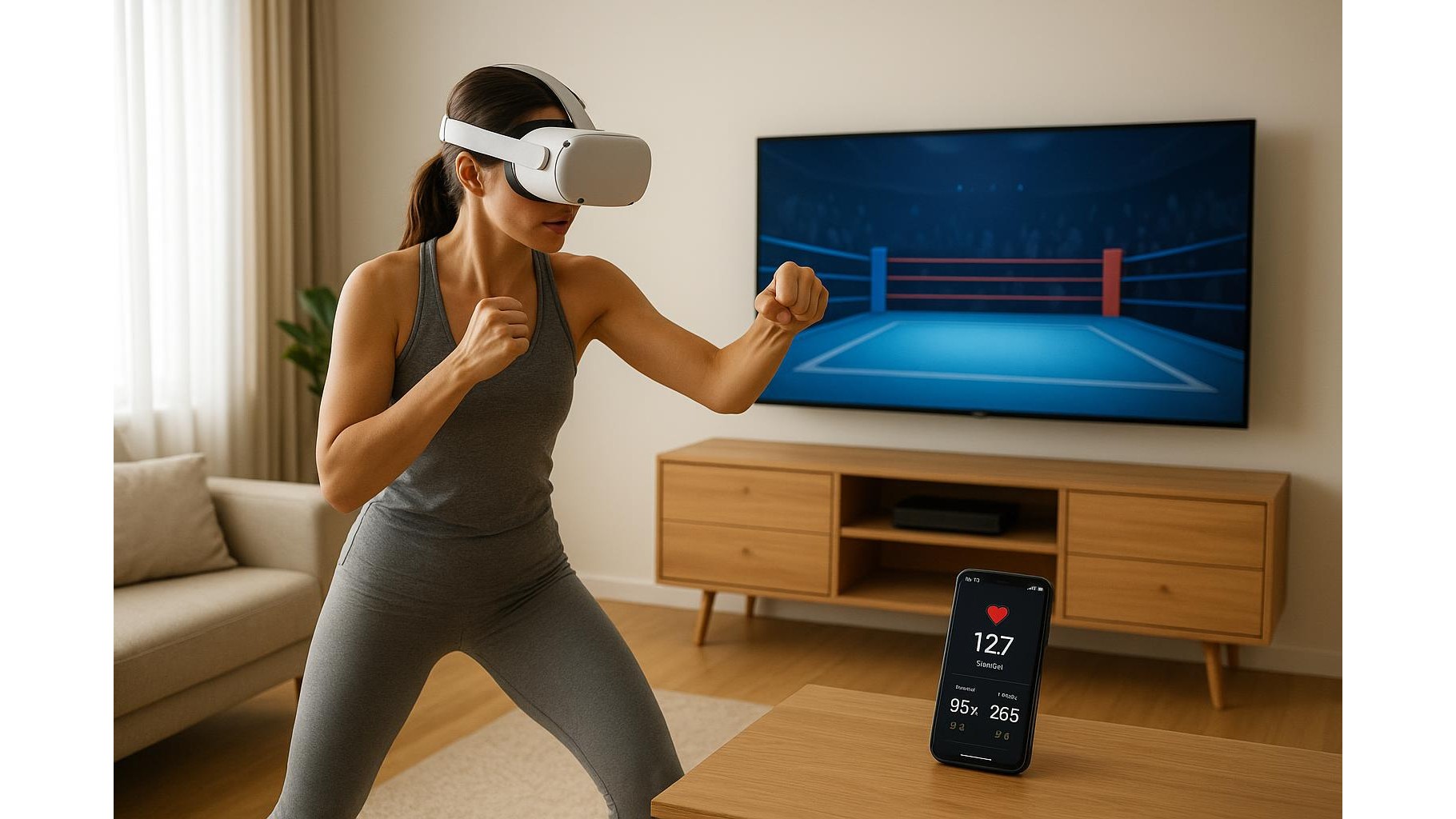
If you think VR boxing is just a gimmick, pair a good headset with a heart rate strap or fitness smartwatch and you quickly realise it can rival a traditional home cardio workout. With the right games, intensity tracking and a few comfort tweaks, your living room can become a surprisingly serious cardio studio that delivers structured rounds, measurable progress and far more fun than another session on the exercise bike.
Choosing the right VR setup for boxing workouts
The core of your home VR boxing studio is a standalone headset like the Meta Quest series, which lets you move freely without cables. Look for a headset with good inside-out tracking and comfortable straps so you can throw punches, slip and pivot without worrying about stability. Ensure you have enough clear floor space to avoid hitting furniture when you hook or uppercut. In your settings, define a generous guardian/boundary and remove trip hazards like coffee tables or loose cables. For audio, built‑in speakers are fine, but a pair of lightweight, open‑ear headphones can boost immersion while still letting you stay aware of your surroundings.
Picking VR boxing games that feel like real training
Not all VR boxing games are created equal. For cardio, you want titles that emphasise realistic rounds, timed rest and a high punch volume. Look for games that offer configurable round length, difficulty levels and training modes such as mitt drills, dodging or defense-focused sessions. Modes with ghost opponents, leaderboards or performance scores help keep you motivated and give structure to your routine. Prioritise games with clear visual cues and clean graphics to reduce motion sickness and eye strain, especially during longer sessions of 20–30 minutes or more.
Using heart rate straps and watches to track intensity
To turn play into training, pair your headset with a chest heart rate strap or fitness smartwatch. Chest straps generally offer more accurate, low‑latency readings, which is ideal for tracking rapid spikes during intense combinations. Many modern straps and watches sync with companion apps on your phone or even directly with some VR fitness titles, letting you see your heart rate zones, calories burned and workout duration. Aim to spend most of your boxing session in moderate to vigorous zones (around 70–85% of your maximum heart rate) to build cardiovascular fitness. After each workout, review your data to check whether you are gradually increasing total active minutes and keeping recovery heart rate healthy.
Structuring rounds, combos and progression
Approach your VR boxing like a real boxing workout. Start with a 5‑minute warm‑up of light jabs, footwork and head movement. Then move into 3–5 rounds of 2–3 minutes, with 60 seconds of rest, adjusting based on your fitness level. During work rounds, focus on crisp combinations (for example, jab–cross–hook, jab–cross–roll) rather than flailing wildly, and use the game’s difficulty settings to push your conditioning without sacrificing form. Track average and peak heart rate each session and aim for small, steady progress: an extra round, a slightly higher average heart rate, or improved in‑game scores. This structure turns your VR routine from casual play into a progressive cardio plan.
Reducing motion sickness and staying comfortable
Because boxing involves fast upper‑body movement, managing comfort is crucial. If you are prone to VR motion sickness, start with shorter 10‑minute sessions and pick games that use mostly stationary movement rather than artificial locomotion. Keep the headset balanced and snug to avoid it bouncing while you punch, and use a wipeable or fabric replacement face gasket if you sweat heavily. Take regular breaks between rounds to hydrate and let your eyes relax. Good ventilation in the room and a small fan can make longer workouts more pleasant, while wrist wraps or lightweight gloves can protect your hands if you tend to punch aggressively at the air.
With the right headset, well‑chosen VR boxing titles and reliable heart rate tracking from a strap or smartwatch, your living room can double as an engaging, data‑driven cardio studio. By structuring rounds, monitoring intensity and respecting your comfort limits, you get an enjoyable, highly effective home workout that builds stamina, coordination and stress relief without ever leaving the house.