Turning your living room or garage into a home gym is easier than ever, but training alone makes it harder to know if your exercise form is actually solid. A simple, surprisingly powerful solution is to repurpose a basic indoor smart security camera as an always‑ready, wide‑angle form‑check tool. With the right placement, settings and review habits, you can treat your camera like a silent coach that shows you exactly what your squat, press or row really looks like.
Why a smart security camera works for form checks
A modern indoor security camera has almost everything you need to review technique: a wide‑angle lens, fixed mounting, cloud or local recording, and instant playback on your phone. Unlike pro gym camera setups, these devices are compact, affordable and designed to stay on for long periods. For home gym lifters, that means you can walk into your space, start your warm‑up sets and know the camera is already framing your full body. Because these cameras are built for indoor monitoring, they handle changing light fairly well and sit unobtrusively in a corner, ready to capture your bar path, joint angles and overall posture rep after rep.
Best angles and placement in a home gym
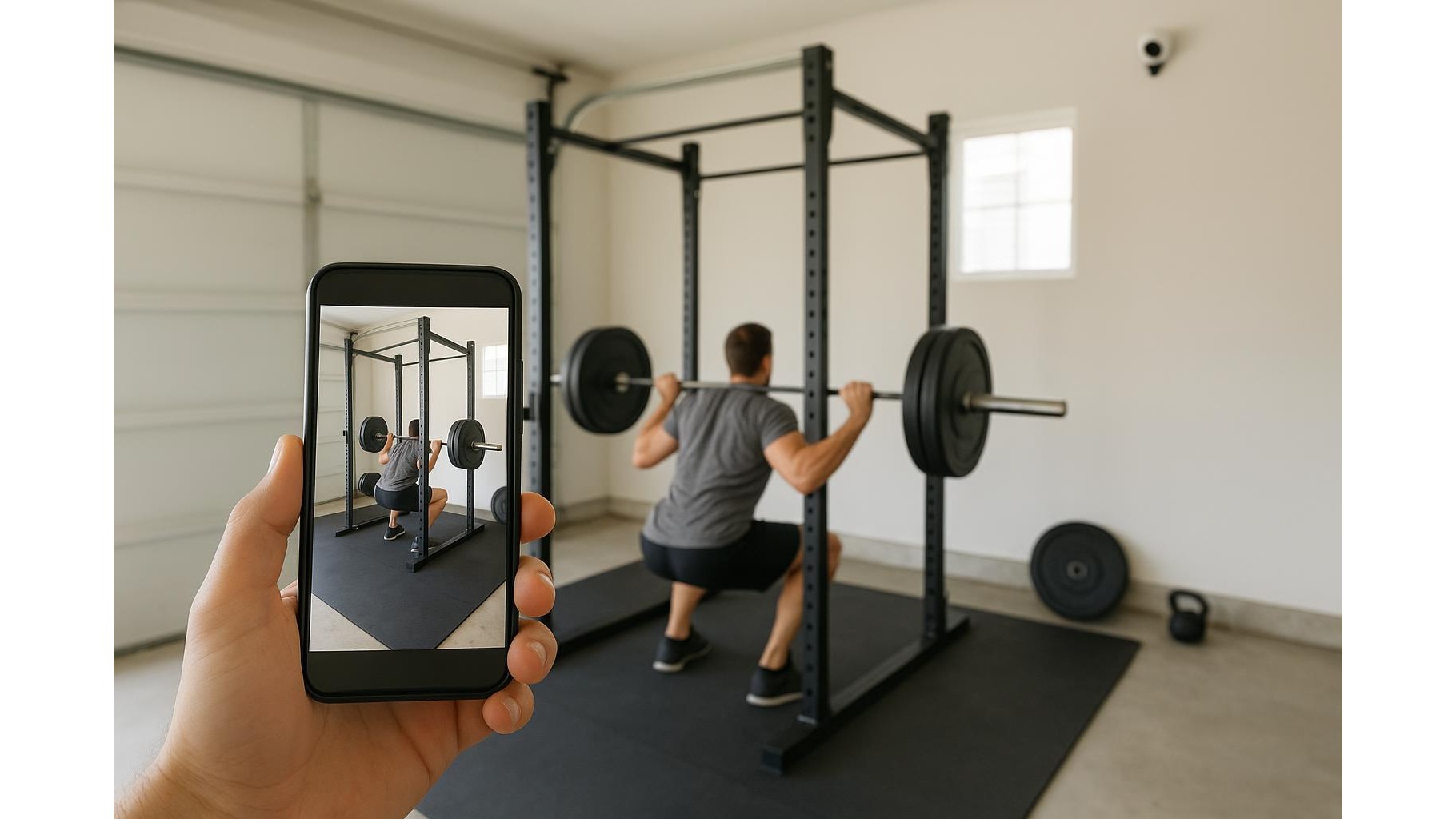
The key to using a smart camera for form analysis is angle. For squats and deadlifts, a classic choice is a 45‑degree side angle: position the camera slightly in front of you, hip‑height or a bit lower, so you can see knee tracking, back angle and bar path in the same shot. For overhead presses and bench presses, a true side or slightly front‑diagonal angle helps reveal elbow flare and bar travel. Rows and hip hinges often benefit from a lower camera height to highlight lumbar position. Aim to place the camera 2–4 metres away to take advantage of the wide‑angle lens, and do a few bodyweight reps while watching the live preview on your phone to confirm that your head, feet and barbell all stay in frame throughout the movement.
Dialling in privacy and security settings
Because you’ll be training in private spaces, configuring privacy settings on your indoor camera is essential. Start by creating activity zones (if supported) that limit recording to your home gym area rather than your entire living space. Disable external sharing and make sure cloud clips are accessible only from your secured account with two‑factor authentication. If your camera includes a microphone, consider muting audio for workouts, especially if your gym is close to other rooms. Some platforms offer a physical privacy shutter or a software “privacy mode” to block video outside training hours. Treat your camera like any connected device: update firmware regularly, use a strong unique password and connect it only to trusted, encrypted Wi‑Fi networks.
Simple workflow to capture and review your lifts
To turn your smart camera into a habit‑forming form coach, build a straightforward workflow. Before your session, open the camera app and confirm framing. Many apps let you create event‑based clips when there is motion; you can deliberately step into frame before each set to trigger recording. After your set, during your rest period, scrub back 20–40 seconds and quickly check one or two key points: depth in squats, bar path in presses, spinal alignment on deadlifts. Use pinch‑to‑zoom to inspect joint angles, then bookmark or download clips of problem sets. Over time, create a small library of comparison videos—“week 1 squat,” “week 4 squat”—so you can visually track progress in mobility, stability and bar speed, without needing extra equipment.
Tips to get the clearest, most useful footage
To maximise the value of your DIY form‑check camera, optimise your environment. Good lighting matters more than raw resolution: add a cheap floor lamp or LED strip behind and slightly above the camera to reduce shadows on your hips and knees. Avoid pointing the lens straight at a bright window, which can turn you into a silhouette. Wear contrasting clothing—light top with dark shorts or vice versa—so your joints and bar are easy to distinguish. Keep the lens clean and dust‑free, especially in garage gyms. Finally, mark a consistent “training lane” on the floor with tape so you always lift in the same spot; this makes comparisons between sessions more reliable and keeps you automatically centred in the frame.
Using a smart home security camera as a form‑check tool is an efficient, low‑cost way to bring objective feedback into your home gym. With thoughtful placement, solid privacy controls, and a simple routine of quick video reviews between sets, you can spot leaks in your technique, fix them before they become injuries, and track your progress over time. Treat the camera as a quiet training partner: always ready, always honest, and always focused on helping you move better.