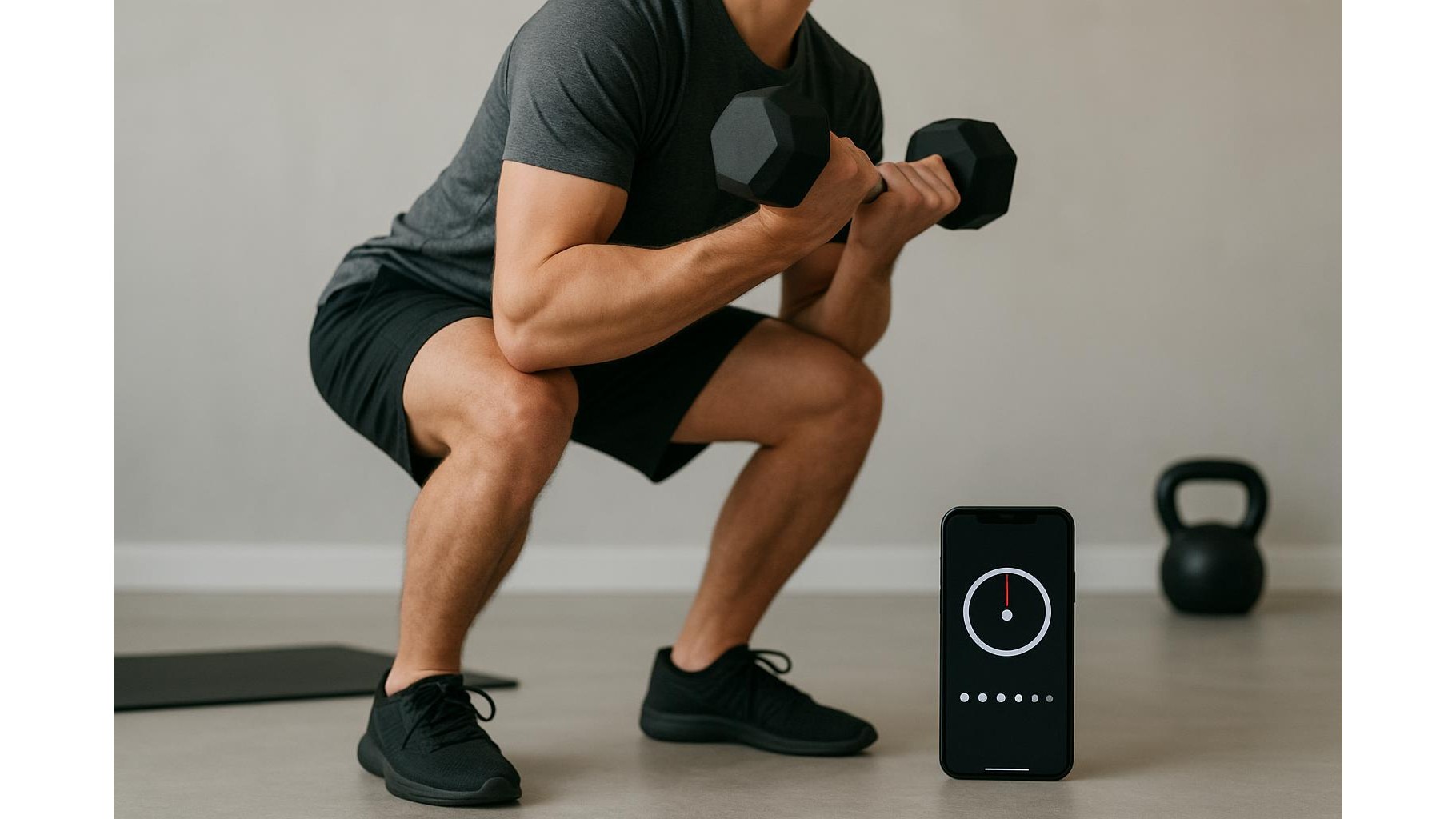
Training at home often means working without a coach counting reps or correcting form. A simple metronome app on your phone can fill that gap, helping you control tempo, increase time under tension and make every set more productive. By turning your sets into “training to a beat”, you bring structure and focus to home strength workouts, whether you lift dumbbells, use resistance bands or train with bodyweight only.
Why tempo matters in home strength training
Most people rush reps, especially at home. A controlled rep tempo improves technique, joint safety and muscle stimulus. Instead of thinking only about how many reps you do, tempo makes you think about how you perform each rep: for example, 3 seconds down, 1 second pause, 2 seconds up. This increases time under tension, which is a key driver of hypertrophy and strength. A metronome app gives you an external rhythm to follow, so you do not rely on inconsistent mental counting.
How to set up a metronome app for lifting tempo
Most metronome and beat apps allow you to set beats per minute (BPM) and choose different sounds. For strength work, start with a slow BPM such as 40–60. One simple method is to use one beep per movement phase: for example, on squats you can descend for 2 beeps, hold for 1 beep, then stand up for 2 beeps. That makes a clear 5-beat rep. For push-ups or rows, you can match the beeps to the eccentric (lowering) and concentric (lifting) parts of the exercise. Experiment with BPM until you find a pace that lets you keep strict form while still challenging your muscles.
Using tempo to increase time under tension
To get more from light dumbbells or resistance bands in a home gym, use tempo to extend time under tension. Instead of simply adding more reps, slow them down. For example, a biceps curl with a 3–1–2 tempo (3 seconds up, 1-second squeeze, 2 seconds down) can be guided by a metronome so every second is consistent across sets. You can also use isometric holds at the hardest point of the movement by assigning extra beats there. This helps you turn simple exercises like bodyweight squats, glute bridges or band rows into powerful, muscle-building sets without needing heavy equipment.
Metronome beats to improve technique and consistency
One of the biggest advantages of a tempo-controlled workout is more consistent technique. A metronome beat forces you to avoid bouncing, jerking or cutting reps short. For beginners training at home without a coach, this audio cue keeps reps smooth and reduces the risk of injury. For more advanced lifters, metronome tempo work is ideal for rehab, prehab and deload weeks, where the goal is quality over heavy loads. You can also use different tempos across phases: slower eccentrics in hypertrophy phases, slightly faster but still controlled reps in strength phases, all guided by simple beat changes.
Structuring full workouts around tempo
Instead of just applying a metronome to occasional sets, you can design entire home strength sessions around specific tempos. For example, perform 3–4 compound lifts (squats, push-ups, rows, hip hinges) using a fixed tempo like 3–1–2 for all sets, then finish with accessory work at a slightly faster tempo. Use the metronome both for rep pacing and for rest intervals: set a timer or count a fixed number of beats for rest to avoid scrolling on your phone. Over weeks, you can progress by adding reps at the same tempo, slowing the tempo further, or keeping tempo and increasing resistance.
Making tempo work a sustainable habit
To make metronome tempo training part of your routine, keep the setup simple. Create a few saved tempos in your favourite metronome or beat app and label them (for example “slow hypertrophy”, “medium strength”, “core tempo”). Use the same tempo schemes for 4–6 weeks so you can actually track progress. Combine the beats with a basic log of sets, reps and perceived effort. Over time, you will find that your reps feel smoother, your joints feel better and your home workouts feel more intentional and athletic. Controlling tempo is a low-tech, high-impact way to get stronger in a limited home-gym setup.
Using metronome apps to control tempo in home strength workouts