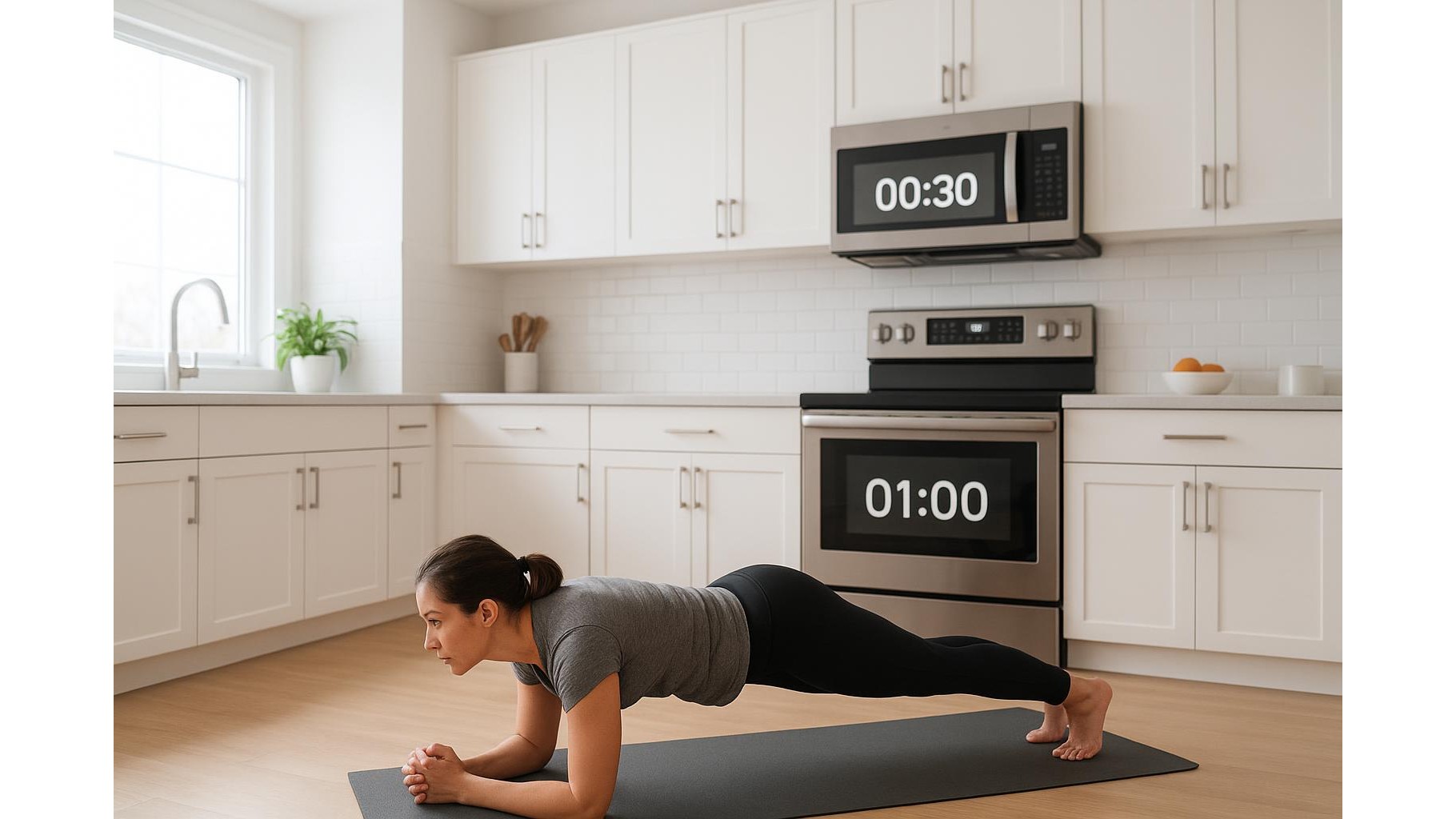
When you train at home, you do not always want to keep your phone nearby. Maybe you are trying to disconnect, you do not have a fitness watch, or your battery is dying. In all these cases, the humble kitchen timer built into your microwave or oven can become a surprisingly effective backup workout clock. With a few smart tricks, you can run EMOM (Every Minute on the Minute) sessions, circuits, and structured rest periods using nothing more than the beeps already in your kitchen.
Table of contents
Why microwave and oven timers work well for home workouts
Most modern microwaves and ovens include a simple countdown timer and a loud alarm. These features are perfect for home training because they are easy to see and hear while you move around your living room or home gym. Unlike a phone screen that can lock or dim, the appliance display usually stays visible, and the sound is designed to cut through background noise. For basic interval training, you rarely need millisecond precision. A clear beep at the end of 30 seconds, 45 seconds, or 1 minute is enough to keep your work-to-rest ratios consistent and your sessions structured.
Simple countdowns for strength sets and rest periods
The easiest way to use built-in kitchen timers is as a basic rest timer between sets. For example, if you are doing bodyweight squats, push-ups, or dumbbell rows in your home gym, set the microwave timer for 60–90 seconds as soon as your set ends. When the alarm beeps, start your next set immediately. This keeps your rest periods consistent and prevents you from scrolling on your phone or losing track of time. For longer strength blocks (3–5 minutes of continuous work), use the oven timer, which often allows longer durations and keeps counting even if you move around the house while recovering between heavy or more demanding efforts.
Running EMOM and fixed-interval circuits with a single alarm
You can also adapt a simple kitchen timer to guide EMOM workouts and fixed-interval circuits. For a basic EMOM, choose how many minutes you will train (for example, 10 or 20) and set the countdown timer for the total duration. Use a wall clock or the microwave display clock to see each minute change, starting a new set at the top of every minute until the final alarm sounds. For circuits like 40 seconds work, 20 seconds rest, simply set the microwave timer for 40 seconds, work until it beeps, then use the remaining 20 seconds as your rest while you quickly reset the timer. It is a manual solution, but once you get into the rhythm, it feels surprisingly smooth and keeps your intensity high.
Combining kitchen timers with simple visual cues
To make kitchen timers even more effective, combine their audio alarms with simple visual cues in your workout area. Place your exercise mat or dumbbells where you can see the microwave or oven display from your main training position. If the display is far away, use a bright sticky note or marker on the counter showing your interval structure (for example: “8 rounds – 30s work / 30s rest”). Glancing at this note when the alarm beeps helps you remember whether you are in a work or rest phase. You can also assign different exercises to specific time blocks written on the note, turning a basic timer into a clear home training plan that you can repeat week after week.
Practical safety and consistency tips for kitchen-based timing
When using microwave and oven timers for training, think about safety and consistency. Make sure there is nothing inside the microwave while the timer is running, and use the dedicated timer function instead of starting a cooking cycle. Keep the workout area clear so you can move freely between your training spot and the kitchen controls without tripping on equipment. Pay attention to the volume and pattern of the alarm beeps; if the sound is short, consider staying reasonably close so you do not miss your cue. Finally, use the same durations from session to session so you can track your progress—how many reps you complete per interval or how well you maintain pace across an entire EMOM—turning your kitchen into a reliable, low-tech interval training station.
Using built-in kitchen timers from your microwave and oven as backup workout clocks is a simple, low-cost way to structure at-home training without relying on your phone. With basic countdowns for rest periods, easy adaptations for EMOMs and circuits, and a few visual cues to stay organized, you can create consistent, time-efficient sessions using tools you already own. The key is to treat those beeps as non‑negotiable training signals, so every alarm becomes a cue to work, rest, or move on—keeping your home workouts focused, effective, and distraction-free.