Protecting your home workout time is harder than it looks. Work messages, family demands and digital distractions all compete with your training slots. By turning simple digital calendars and reminder apps into a structured system, you can ring‑fence your exercise and recovery just like important meetings – and actually follow through.
Table of contents
Turn your calendar into a training contract
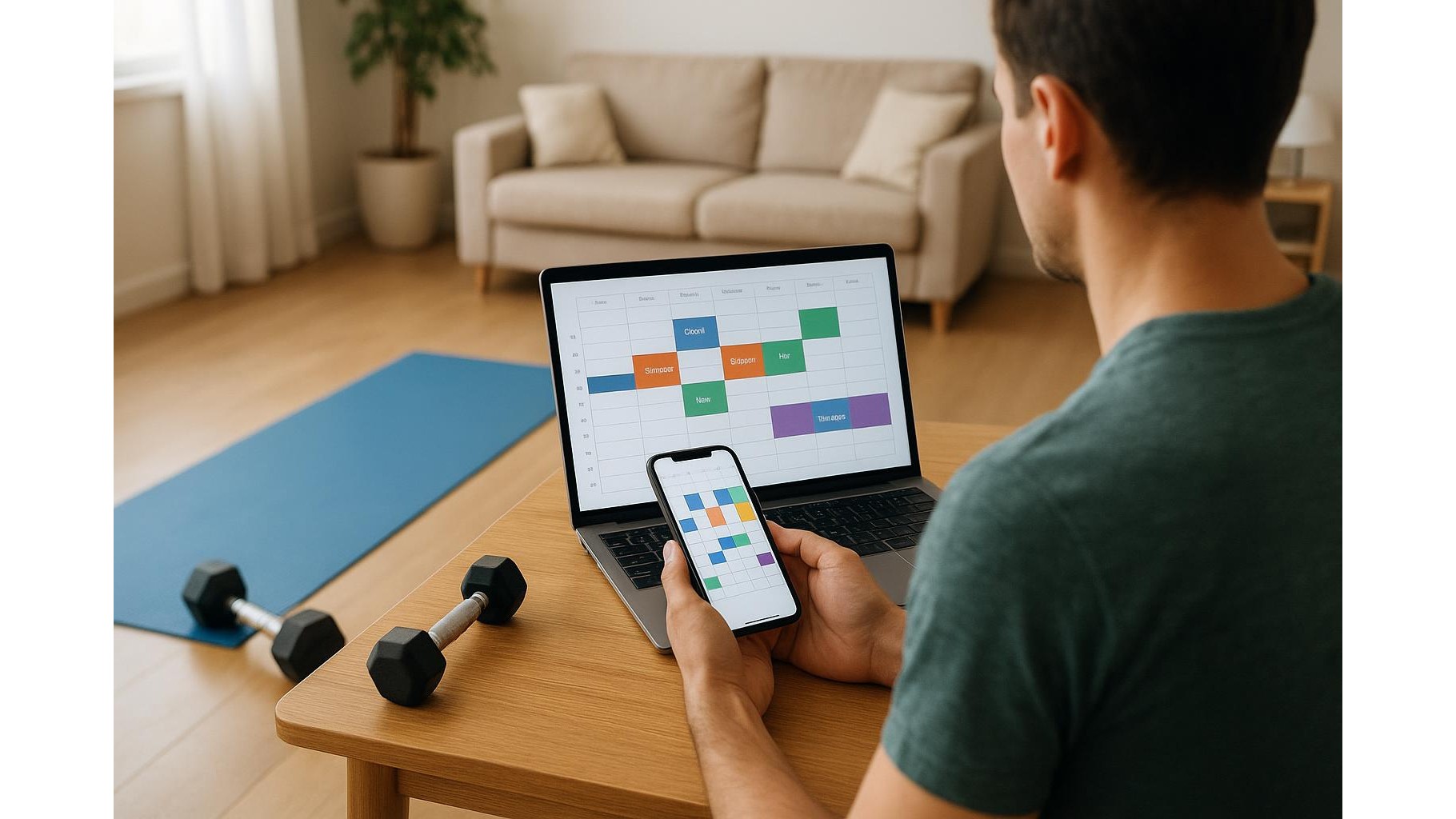
The first step is to treat your calendar as a training contract rather than a vague wishlist. Instead of “work out sometime in the evening”, create clear calendar blocks like “Strength session – lower body” or “Mobility and stretching”. Make them recurring on the days you want to build a habit, and set them as “busy” so colleagues and family see that slot as taken. Colour‑code your blocks: one colour for strength, one for cardio, one for recovery. Over a week, your calendar becomes a visual training plan, making it obvious if you are over‑loading or neglecting key sessions.
Use layered reminders, not just one alert
A single notification is easy to swipe away, so use layered smart reminders around each planned session. Set a reminder 60 minutes before to help you wrap up work, another 15 minutes before to change clothes and fill a water bottle, and a final “start now” alert at the scheduled time. Many calendar and reminder apps allow custom labels: use action phrases like “Shut laptop and warm up” instead of vague titles. This builds a mini countdown sequence that shifts your mindset from work mode to training mode, dramatically reducing the chance that you let the session slip.
Protect your environment as well as your time
Even with solid time blocks, a messy space can derail your routine. Pair your digital reminders with a simple environment reset ritual. Add a repeating reminder directly after your session labeled “Reset home gym space” and spend five minutes putting equipment back, laying out tomorrow’s clothes and charging devices like your timer or headphones. This keeps your home gym environment permanently “ready to train”, which lowers friction the next day. The easier it is to step in and start, the more effective your calendar system becomes at turning scheduled time into real workouts.
Schedule recovery like a non‑negotiable meeting
Many people only block out time for intense workouts, but serious progress comes from planned recovery sessions as well. Use your calendar to schedule stretching, foam rolling, light mobility flows or even short guided relaxation after heavy training days. Give these blocks the same “busy” status as your hardest workouts so you are not tempted to sacrifice them for errands. Smart reminders can cue you to dim the lights, silence notifications and focus on sleep hygiene on key nights. By honouring recovery blocks, you protect your joints, reduce soreness and keep your home training sustainable week after week.
Align reminders with your real daily rhythms
The most powerful smart reminder system respects your actual life patterns. Review your calendar after a week and notice which sessions you consistently hit and which ones you skip. If evening blocks keep getting overrun by work or family tasks, experiment with shorter morning sessions and adjust the reminder timing. Use different sounds or labels to separate “hard to move” sessions – like a long strength workout – from flexible ones like a walk or stretch. Over time, your calendar becomes a realistic map of when you truly have energy and focus, making your home workouts more consistent and far less stressful.
By combining deliberate calendar blocks, layered smart reminders and a simple habit of resetting your environment, you create a robust system that protects your home workout time instead of leaving it to chance. Treat your sessions and recovery blocks as appointments with your future self, adjust them to fit your real routine, and your digital tools will stop being a source of distraction and become the backbone of a sustainable home training lifestyle.