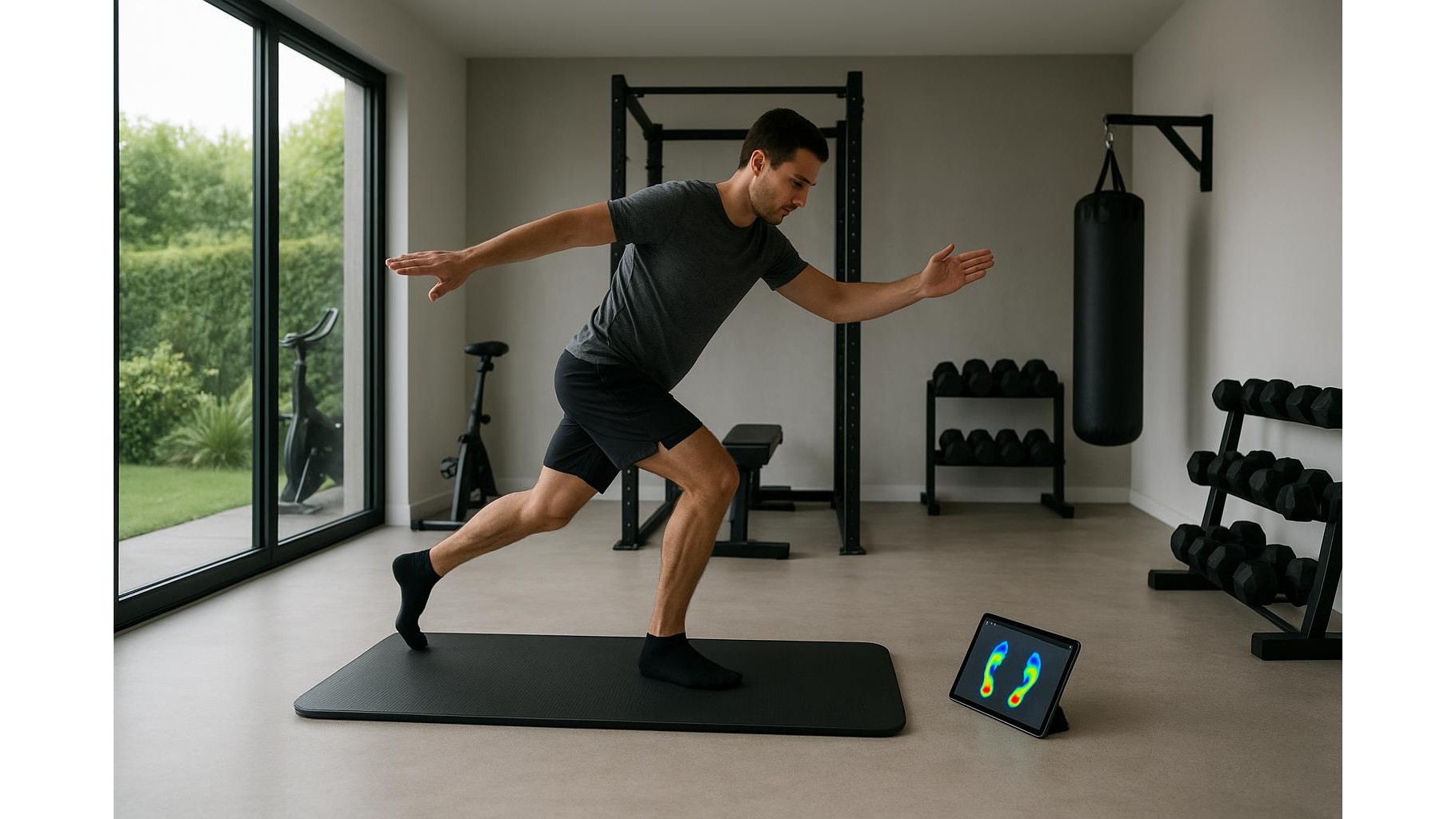
Smart pressure‑sensing mats are one of the most intriguing new additions to the home gym. By embedding pressure sensors into a training surface and connecting it to an app, these mats can show how you distribute weight, where your feet or hands land, and how your balance changes over time. For anyone training at home without a coach, this kind of real‑time feedback can turn an ordinary floor into a powerful digital training partner.
Table of contents
How pressure‑sensing mats actually work
At the core of a smart pressure mat is a grid of sensors that detect force at different points across the surface. When you stand, jump or hold a pose, the mat translates these forces into a heat map that appears in a companion app via Bluetooth or Wi‑Fi. Some systems rely on simple on/off switches under the surface, while more advanced models use capacitive or resistive sensors that can estimate not just whether an area is loaded, but how much pressure is applied. The app then uses algorithms to track centre of pressure, symmetry between left and right sides, and changes over time, building a picture of how you move in your home workouts.
What metrics they track: balance, stance and more
Most connected mats focus on a few key movement metrics. Balance metrics include how steady your centre of pressure is in static holds like single‑leg stands or yoga poses. Stance metrics show where your feet or hands land relative to the mat, helpful for standardising your squat, deadlift or push‑up setup. Many apps display symmetry, highlighting if you consistently load one side more than the other, which can signal weakness or tightness. Some platforms add rep‑counting, contact time for plyometrics, and basic workload tracking across sessions. Together, these metrics provide objective data that you’d usually only get from in‑person coaching or lab‑grade force plates.
Who benefits most from a smart training mat at home
While any home exerciser can use a pressure‑sensing mat, a few groups benefit the most. Beginner lifters and fitness enthusiasts can use stance and balance feedback to build solid movement patterns from day one, reducing the risk of ingraining bad habits. Runners and field‑sport athletes can track landing patterns, side‑to‑side asymmetries and basic jump metrics between strength or plyometric sessions. Older adults or anyone returning from injury can use simple balance tests on the mat to monitor stability improvements safely at home. Even dedicated yogis and Pilates practitioners can fine‑tune pose alignment using visual pressure maps instead of relying only on feel or mirrors.
Key features to check before you invest
Because this is still an emerging category, it is important to scrutinise features before you buy. Look for a mat with a durable surface that matches your training style: grippy and cushioned for yoga, or lower‑profile for lifting and dynamic movements. Check the stated weight capacity and impact rating if you plan to jump or lift heavy. App quality is critical: you want clear visualisations, history tracking and exportable data, not just a flashy dashboard. Verify connectivity (Bluetooth version, device compatibility) and whether the platform requires a subscription for advanced metrics. Finally, consider dimensions: a mat that is too short or narrow will limit stance feedback in exercises like lunges or wide‑stance squats.
Limitations, safety and how to use them effectively
Smart pressure‑sensing mats are powerful tools, but they are not a complete replacement for coaching or medical assessment. Sensors can drift or misread under extreme loads, and the system cannot tell if your joints are in a safe position; it only knows where the pressure is. Use the mat’s feedback as one layer of information alongside video analysis, mirrors and, where possible, expert guidance. Start by testing basic stances and balance drills, then progress to more complex patterns. Avoid relying solely on numbers: the goal is to connect what you see on the screen with what you feel in your body, building better body awareness as you train.
In summary, smart pressure‑sensing mats turn your training space into an interactive feedback zone, showing how you load, balance and progress over time. By capturing objective data on stance, symmetry and stability, these connected surfaces can help home athletes refine technique, spot imbalances and stay more engaged with their fitness journey. As the technology matures, prices should fall and metrics will become even more precise, but the core value is already clear: actionable feedback from the floor up, right in your home gym.