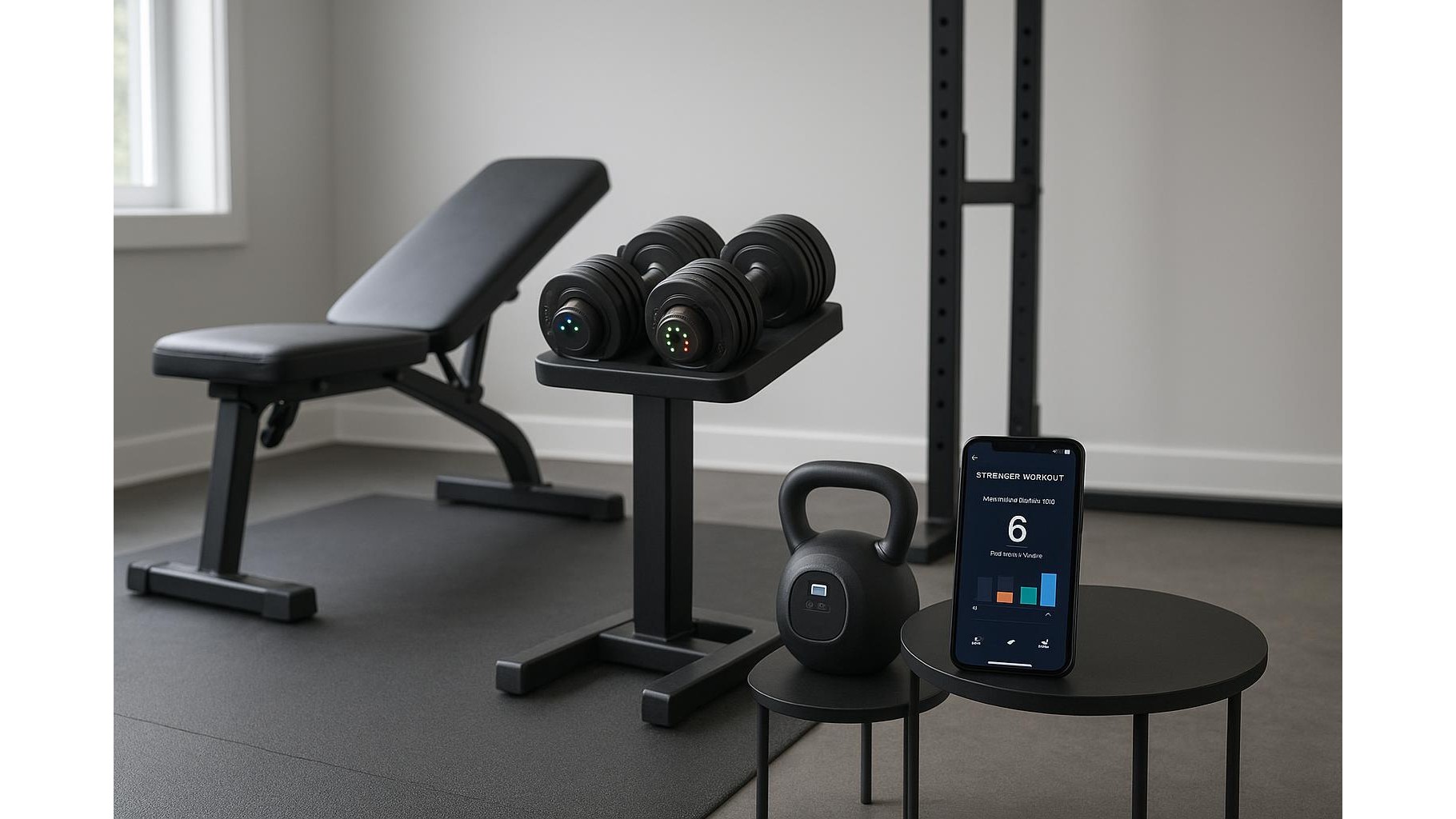
Smart strength tools are finally moving from glossy ads to real home gyms. Smart dumbbells and smart kettlebells promise built‑in rep counting, weight tracking and coaching via apps, all without needing a commercial studio. But are auto‑tracking weights really worth the upgrade over classic iron, or just another gadget that will collect dust?
What makes a dumbbell or kettlebell “smart”?
Smart free weights combine familiar hardware with sensors, Bluetooth connectivity and a companion fitness app. Motion sensors and accelerometers inside the handle detect movement patterns, count reps and sometimes estimate power output. The app turns this stream of data into structured workout logs, showing sets, volume and progression over time. Some systems also integrate with Apple Health, Google Fit or wearables to merge strength training stats with your daily activity and recovery data. The goal is to remove guesswork: you lift, the system records, and your history is always available in your phone.
Key benefits over classic iron for home gyms
For home users who train alone, the strongest advantage of connected dumbbells and kettlebells is automated progress tracking. Instead of scribbling numbers in a notebook—or skipping tracking altogether—the system logs weights, reps and rest with minimal effort. Many apps layer on guided programs, time‑under‑tension cues and video demonstrations, making it easier for beginners to follow structured plans without hiring a coach. Real‑time feedback can flag form issues such as inconsistent tempo or incomplete range of motion. Over weeks, this data helps you adjust loads intelligently, avoid plateaus and spot early signs of overreaching, something static metal weights cannot do on their own.
Limitations, costs and when smart isn’t so smart
Despite the appeal, smart free weights bring clear trade‑offs. First, price: connected systems often cost significantly more than comparable traditional dumbbell or kettlebell sets, especially when you factor in required subscriptions for premium workouts or analytics. Second, you introduce complexity: batteries need charging, firmware and apps require updates, and connectivity issues can derail a quick session. Not all sensors are equally accurate either—fast, ballistic kettlebell moves can be harder to track reliably, and some systems struggle with unconventional exercises. If you already love your training log, or you prefer minimalist setups, classic iron may still be the more robust and cost‑effective option.
Who benefits most from smart load tracking?
The people who gain the most are home users who want accountability and clear structure without hiring a personal trainer. Beginners can rely on guided programs and rep targets that adapt as they progress, while intermediate lifters get detailed volume and intensity data to fine‑tune their routines. Busy professionals, who need to squeeze effective sessions into short windows, benefit from quick‑start workouts and automatic logging that removes mental overhead. On the other hand, highly experienced strength athletes, or those who already follow periodised paper programs, may find smart systems helpful but non‑essential, using them mainly for convenience rather than performance breakthroughs.
How to evaluate a smart dumbbell or kettlebell system
Before upgrading, focus less on flashy marketing and more on the software ecosystem. A good system offers a stable app, clear progress charts, flexible program creation and exportable data, not just pretty animations. Check whether the weights themselves are ergonomically sound—grip diameter, handle texture and balance still matter as much as the tech inside. Consider long‑term support: will the app be maintained, and are features locked behind recurring fees? Finally, make sure the product plays nicely with the rest of your home gym equipment. Smart tracking is most valuable when it fits seamlessly into your existing setup instead of forcing you into a closed, proprietary island.
Are smart weights worth it for your home gym?
Smart dumbbells and kettlebells won’t instantly make you stronger, but they can make you more consistent, better organised and more informed about your training. For data‑driven users who thrive on metrics and structure, the extra investment in auto‑tracking weights and app‑based coaching can absolutely be worth it. For others, especially lifters who already track progress manually and value simplicity, traditional iron may remain the best choice. The real upgrade is not the chip in the handle—it is choosing a system, smart or classic, that you will actually use week after week in your home gym.