For many home athletes, the hardest part of interval training is not the workout itself but the tech. Overbuilt apps, tiny icons and endless settings can kill motivation before the first set of push‑ups. The good news: you do not need complex gear to run effective intervals, EMOM blocks or rest periods. Between ultra‑simple cube timers and stripped‑down phone timer apps, you can create clear structure for your home sessions with almost no learning curve.
Why ultra-simple timers work so well at home
Simple interval timer tools shine because they reduce friction. At home you want to drop into a workout fast: pick a time, start moving, and stop when the signal goes. A minimal device or app lets you focus on cues like “work hard until the beep” instead of fiddling with complex interval programming. For tech‑averse athletes, this is huge: fewer buttons, bigger numbers and obvious beeps mean fewer excuses. You are also more likely to be consistent when your timer is always ready, whether you are doing a 20‑minute EMOM, Tabata‑style sprints, or simple strength sets with fixed rest periods.
Physical cube timers: flip and go
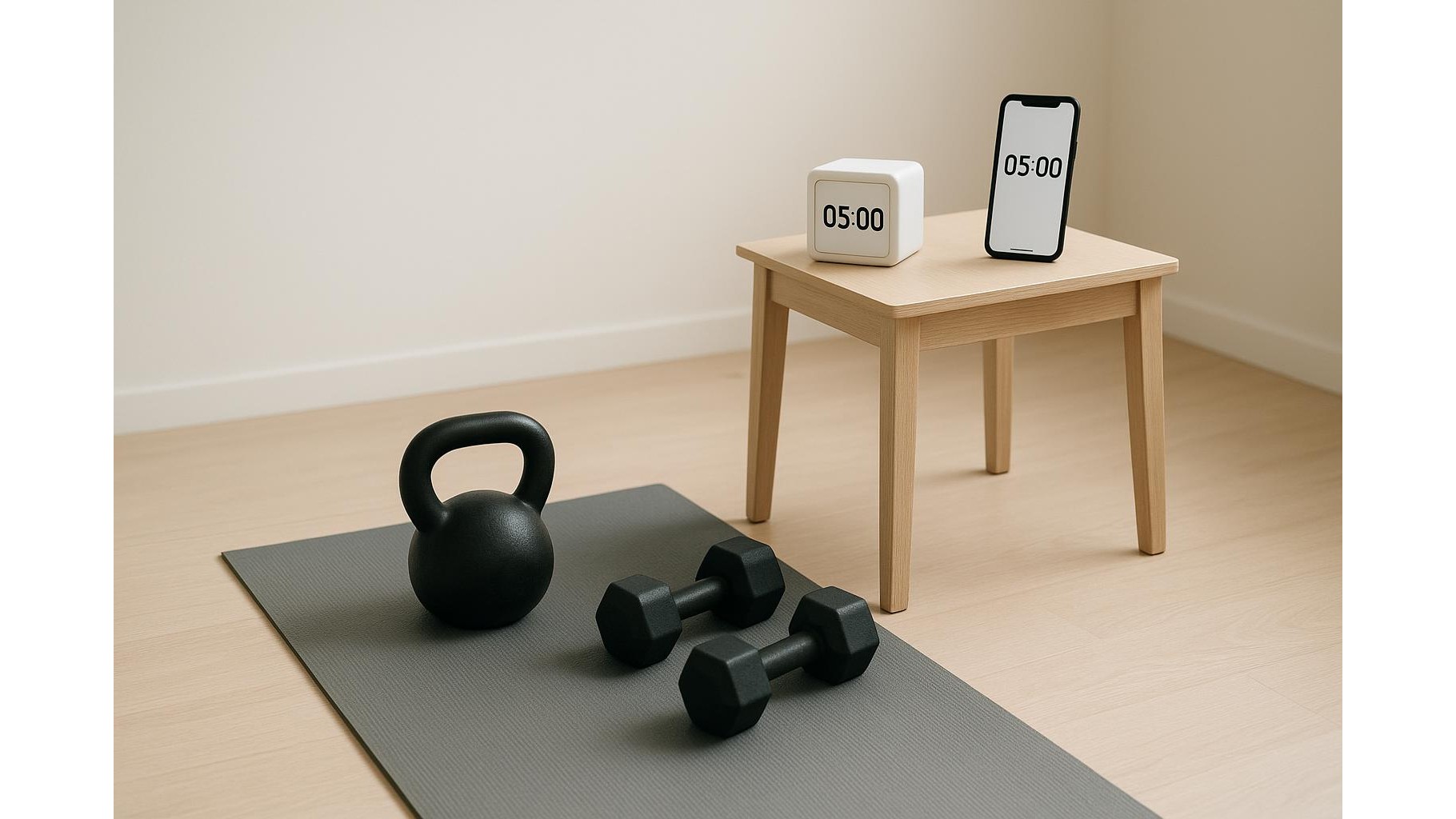
The classic physical cube timer is a palm‑sized cube with a different time on each face. You select an interval simply by placing that face upward on the table or floor; the timer starts automatically and beeps when time is up. For EMOM or short circuits, you just flip again and keep going. The main advantages are instant visual clarity, tactile feedback and zero menu diving. You can glance across the room and see how much work or rest remains from the display, making it ideal for garage gyms and living rooms. Limitations? Time options are usually fixed, so you are tied to the presets printed on the cube, and you typically get a single countdown rather than complex work–rest patterns. But for straightforward interval training and time‑boxed sets, a cube gives you a satisfyingly analog feel.
Basic phone apps: minimalist interval structure
On the digital side, ultra‑simple timer apps focus on a clean display, big buttons and a few preset patterns instead of advanced analytics. A good basic timer app will let you build a simple work/rest interval, loop it for a set number of rounds and show a large countdown you can see across the room. This works perfectly for EMOMs, ladders or 30:30 conditioning. Because it lives on your phone, you do not need extra hardware, and you can quickly tweak times—for example shifting from 40 seconds work to 20 seconds work as you fatigue. The trade‑off is potential distraction: notifications, messages and other apps can interrupt your training if you are not disciplined about using airplane or focus modes.
Choosing between a cube timer and a basic app
Deciding between a cube timer and a basic interval app comes down to your personality and space. If you want something you can slam on the bench, see from a distance, and operate without looking at a screen, a cube is hard to beat. It is especially friendly for shared home gyms where kids or less tech‑savvy family members may jump into a workout. If you prefer flexible intervals and do not mind your phone being nearby, a minimalist app offers more control: you can program EMOMs, pyramids and custom rest periods in seconds. Many tech‑averse athletes end up using both: the cube for simple conditioning blocks and the app for sessions that need changing intervals as fitness progresses.
Practical tips to keep intervals truly simple
Whichever tool you choose, the goal is to keep your home workout timer so simple that you never hesitate to start. Pre‑decide two or three go‑to time schemes—like 30 seconds on/30 off, 40 seconds work/20 rest, and a 60‑second EMOM—and stick with them for a month. Keep the timer stored where you train so there is zero setup friction. If you use an app, silence notifications and lock the screen orientation so the countdown stays visible. If you use a cube, test the volume from across the room and place it where you can see the display mid‑set. With these small tweaks, even the most tech‑averse home athlete can build consistent, focused interval sessions using nothing more than a cube or a basic app.
In the end, effective intervals at home do not depend on complex wearables or advanced tracking. A low‑tech cube timer or a stripped‑down interval app is enough to create clear start and stop signals, support EMOMs and protect your rest periods. By removing the noise of unnecessary features, these simple tools make it easier to show up, work hard and repeat—turning your home space into a reliable training environment you will actually use.