Counting reps accurately at home can be trickier than it sounds, especially when you are juggling strength training, HIIT and circuit workouts. From AI-powered camera apps to smart wearables and old-school manual clickers, there are now multiple ways to keep track of your sets, reps and rounds without losing focus. This guide compares the three main options, with practical pros, cons and setup tips so you can pick the best rep counter for your home gym routine.
AI camera apps: how they track your reps
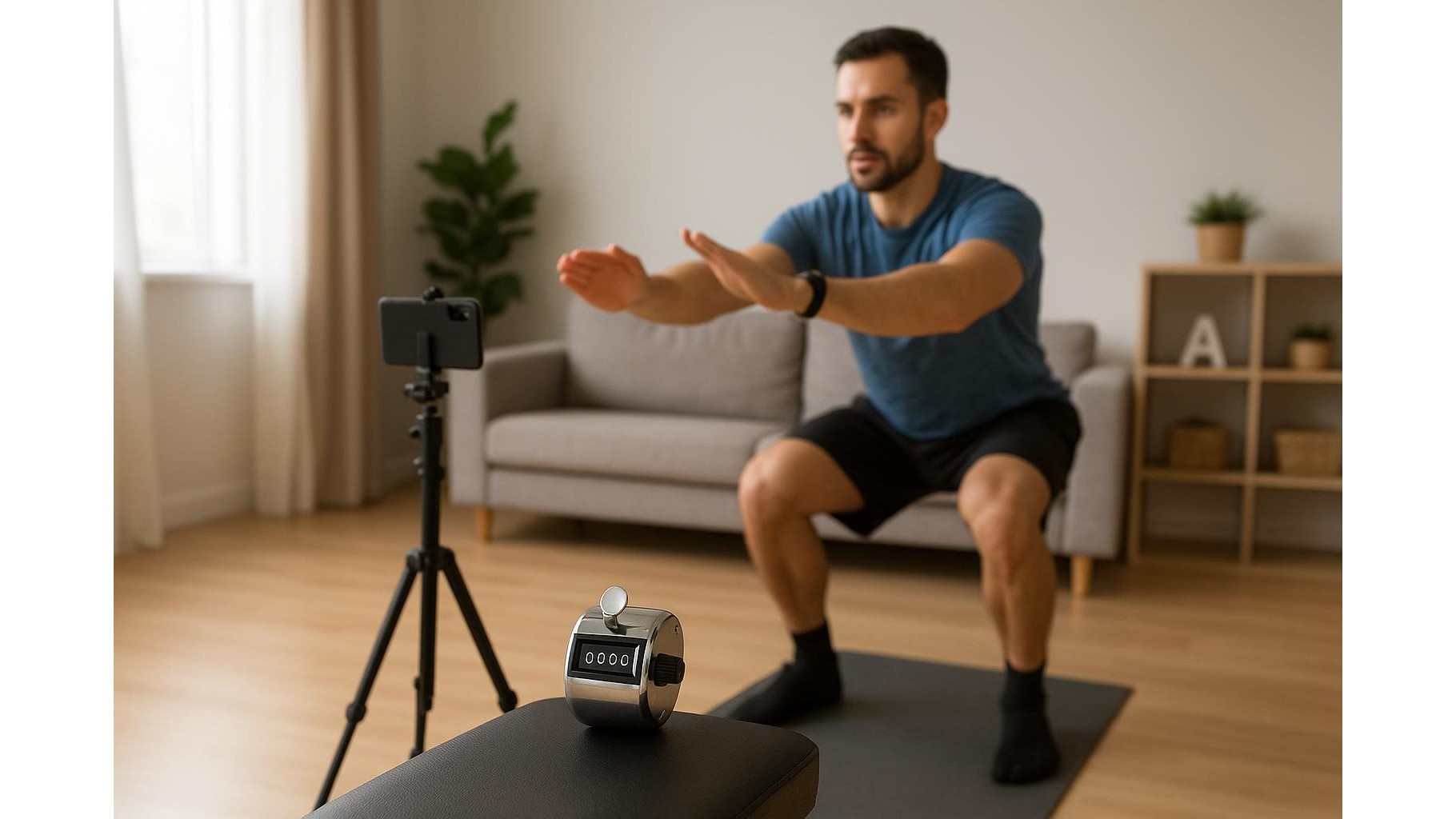
Modern AI camera workout apps use your phone or tablet camera to detect joint positions and movement patterns, estimating reps for exercises like squats, push-ups and lunges. Once installed from your app store, you simply place your device a few metres away, ensure good lighting and let the app “see” your body. These apps can often give form feedback (e.g. depth of squat, back angle) in addition to counting reps, which is a major advantage over dumb counters. However, they work best with clear, repetitive movements and enough space, and can struggle with complex flows, equipment-heavy moves or cramped rooms. Privacy-conscious users should also check what video data is stored or uploaded to the cloud.
Wearables for rep counting: rings and bands
Fitness trackers, smart rings and bands estimate reps by using built-in accelerometers and gyroscopes to detect motion. When worn on the wrist or finger, they excel at counting reps for arm-dominant moves such as biceps curls, rows and kettlebell swings, and can also capture heart rate, calories and rest times. The main appeal is convenience: you wear the device all day, then sync it with your phone to review sets and sessions. On the downside, rep accuracy can drop with very slow tempo lifts, isometric holds or when you mix lots of different moves in a single circuit without telling the app what you’re doing. They also need charging and occasional app updates, so they are not as “grab and go” as a simple mechanical counter.
Manual clickers: the low-tech rep counter
A basic hand tally counter or manual clicker is still one of the most reliable ways to track reps and sets at home. You simply hold the clicker in your free hand or place it somewhere easy to tap (on a bench or box) and press once per completed rep or set. There is zero battery life to worry about, no Bluetooth pairing and no learning curve. Manual clickers are ideal for EMOM (every minute on the minute) work, long cardio intervals and metabolic circuits where you just need a running total. The main limitation is that you must remember to click; during heavy barbell sets or fast HIIT sprints you may miss presses, and you will not get any additional data such as heart rate, tempo or rest timing.
Best option for strength, HIIT and circuits
For heavy strength training, where you perform relatively low reps and care about form, AI camera apps and manual clickers tend to win. The camera can provide technique cues while a clicker gives a foolproof rep count for compound lifts. For HIIT and circuit training, where heart rate, intervals and total volume matter, a wearable band or ring is more useful, as it combines rep or movement detection with heart-rate tracking and timers. If you often train in a small space or share your living room, a wearable is less intrusive than setting up a tripod and camera. Many home athletes find a hybrid approach works best: using a wearable for conditioning days and a clicker or camera app for slower, form-focused strength sessions.
Setup tips to avoid miscounts
Whichever rep counter you choose, a few setup tweaks can dramatically improve accuracy. With AI camera apps, frame your entire body, avoid backlighting and stick to exercises the app officially supports. For wearables, wear the device on the same wrist or finger each session, fasten it snugly and tell the app which exercise you are doing when possible. With manual clickers, decide in advance whether you will click per rep or per set, and place the counter somewhere you can reach without breaking flow. It is also worth keeping a simple workout log (digital or paper) where you can note any obvious miscounts or strange readings, helping you adjust your setup over time for more reliable data.
In summary, there is no single perfect solution for home workout rep counting. AI camera apps shine for visual feedback and guided sessions, wearables offer all-day tracking and are great for HIIT and circuits, while manual clickers remain dependable, cheap and almost impossible to break. Consider your space, budget and training style, then experiment with one or two methods to find the combination that keeps you honest on reps without distracting from the work that really matters: consistent, progressive training.