
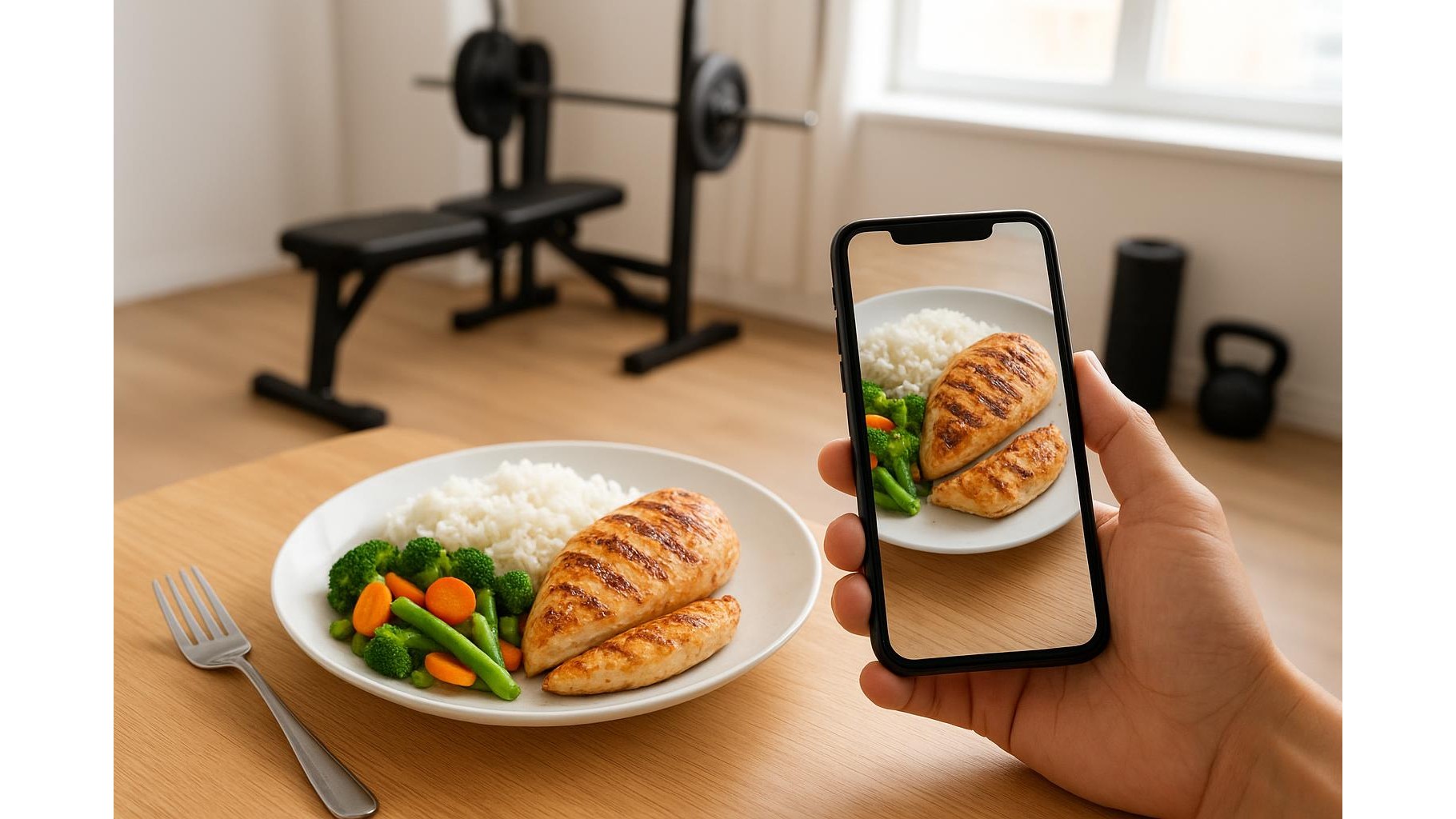
For home athletes, eating to support training often feels harder than the training itself. Weighing every gram of rice or chicken quickly becomes exhausting, especially if you have a family, a job, and limited time. A new wave of photo-based food tracking apps promises a simpler path: snap a picture of your meal, let AI estimate calories and macros, and get on with your day. This article explores how these apps work, their pros and cons for people who train and eat at home, and how to get the most accurate results without turning your kitchen into a science lab.
How photo-based food tracking apps actually work
Modern food tracking apps use computer vision and large nutrition databases to turn a photo of your meal into an estimated breakdown of calories, protein, carbs and fats. After you take a picture, the app identifies the foods on your plate, estimates portion size by comparing them to standard serving references, and pulls typical nutritional values from its database. Some apps then ask short follow-up questions (e.g., “Was this chicken grilled or fried?”) to refine the estimate. Others learn from your corrections over time, adjusting to your usual recipes and plating style. For home gym users who eat similar meals most days, this learning effect can make logging increasingly fast and accurate.
Benefits for people who train and eat at home
For home athletes, the biggest advantage of photo-based food logging is lower friction. Instead of pulling out a food scale for every ingredient, you can capture an image in seconds, which makes it easier to stick with macro tracking over weeks and months. This is especially helpful if you cook large family-style meals or prep several containers at once. Many apps also show clear macro breakdowns meal by meal, so you can see whether your post-workout plate is high enough in protein or if you are under-fuelling on training days. At home, where you control ingredients and portions, using photos plus a bit of routine makes it realistic to eat for muscle gain or fat loss without obsessing over each gram.
Limits, risks and when the estimates go wrong
Despite the convenience, AI food tracking is not magic. It struggles with mixed dishes such as stews, casseroles and lasagne, where ingredients are hidden, and with foods heavily covered in sauces or cheese. Portion estimation from a single angle can be off, especially for bowls and deep plates. Lighting and image quality also matter: dark or blurry photos reduce accuracy. For home athletes, the main risk is quietly eating more or less than you think, and then blaming your training program when progress stalls. If your weight and performance do not match your logged intake over several weeks, the estimates are probably wrong. Think of photo-based tracking as a smart approximation, not as a precision tool like a lab scale.
Best practices to improve accuracy at home
To get the most from photo nutrition apps, treat them like a supportive coach: they work best when you give them good information. Take photos in decent light, from above and slightly angled so all items are clearly visible. Whenever possible, include simple reference portions (for example, the same plate, a standard bowl, or your hand) so the app can better gauge size. In the first week, it is worth weighing a few typical foods (like your usual serving of rice, oats, or chicken) and saving them as custom meals in the app; after that, you can mostly rely on photos plus these saved templates. Periodically compare app estimates with rough label-based calculations to make sure you are still in the right ballpark, especially when you change recipes.
Combining photo-based tracking with smart meal structure
For people who train at home, the most powerful approach is to pair AI photo logging with a simple, repeatable meal structure. Build a handful of go-to meals that hit your target protein and calories—such as a post-workout bowl with lean meat, a measured base of carbs, and a portion of vegetables. Log these meals several times using photos and minor manual adjustments until the estimates align with your goals. Then keep reusing the same combinations. Over time, you will learn what “enough” food looks like for your body without needing to weigh it every day. The app becomes a quick check, not a constant judge, which is crucial if you want a sustainable, low-stress relationship with food and training.
In summary, photo-based food tracking apps offer home athletes a realistic way to monitor calories and macros without turning every meal into a weighing session. They are fast, convenient and particularly effective when your diet is relatively consistent and you cook most meals yourself. However, they remain estimation tools, not perfect instruments, and work best when combined with occasional checks, good photos and a simple meal routine. Use them to guide your decisions, not to chase imaginary precision, and you will have more mental energy left for what really matters in your home gym: training hard and recovering well.









