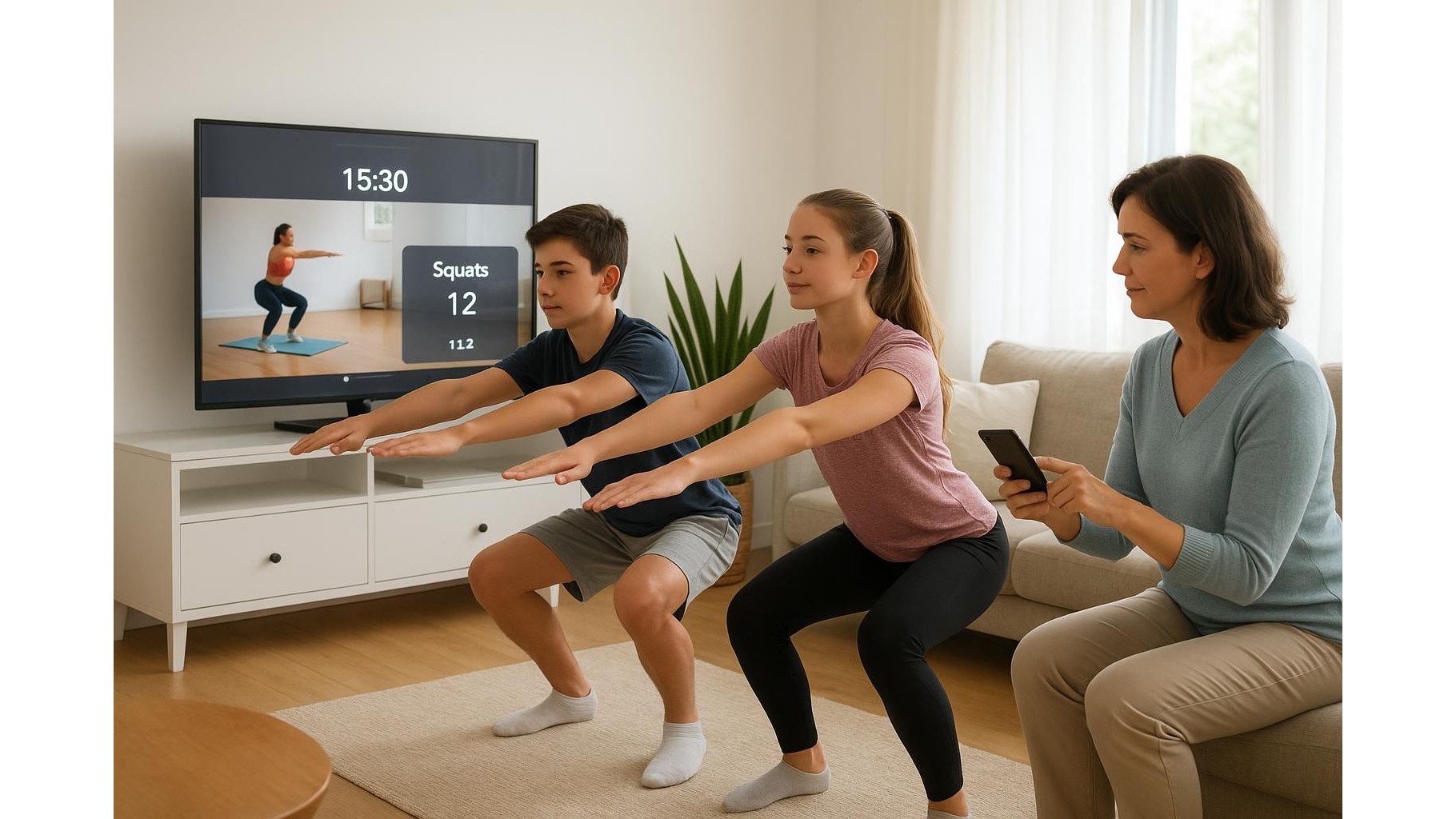
Home workouts can be a powerful way for teenagers to build lifelong fitness habits, especially when they train with fitness apps and connected devices. But without the right parental controls, these tools can expose teens to oversharing, unhealthy comparison and obsessive tracking. This guide helps parents set up apps, adjust privacy settings and create a balanced approach so tech supports, rather than harms, a young person’s relationship with exercise.
Start with a family conversation about goals and boundaries
Before touching any settings, sit down with your teen and discuss why you’re using home workout apps in the first place. Are the goals to move more, support a sport, improve mood, or manage screen time better? Agree on what “success” looks like: consistent movement and feeling stronger, not chasing a perfect body or number on the scale. Set boundaries around what is and is not OK to track (for example, steps and minutes of activity vs. calories and weight), how long workouts should last, and how often progress is checked. When teens feel included in these decisions, they are more likely to use fitness technology in a healthy, sustainable way.
Set privacy controls and limit data sharing
Most fitness apps for teens collect a lot of data: workouts, heart rate, sleep and sometimes even location. Head into the app’s privacy settings with your child and switch off any public sharing by default. Disable geolocation features that show live runs or home address routes, and choose anonymous usernames that do not reveal real names or school information. Check which permissions the app requests on the phone (camera, contacts, microphone) and revoke anything that is not strictly necessary. If the platform includes a community or social feed, restrict who can view your teen’s activity to trusted friends or keep it completely private to avoid unwanted comments and pressure.
Filter content and avoid toxic comparison
Many workout platforms now push recommended videos, challenges and influencers. For young users, this can mean exposure to extreme body ideals or diet-focused routines. Use available content filters and family restrictions to block adult or inappropriate material, and teach your teen to recognise red flags such as “no days off”, “shred fat fast” or “bikini body in 2 weeks”. Encourage them to follow trainers who emphasise strength, mobility and confidence over looks. Regularly review their saved workouts and favourite creators together and be ready to swap out any routine that triggers anxiety or body dissatisfaction. The aim is to use home workouts to build resilience and self-esteem, not to fuel endless comparison with others.
Promote healthy goal‑setting instead of obsessive tracking
Tracking can be motivating, but teens are especially vulnerable to turning numbers into a source of stress. Help them set process‑based goals such as “move 20–30 minutes most days” or “complete three strength sessions per week” rather than rigid calorie or weight targets. In app dashboards, prioritise simple metrics like minutes active, step count and training streaks, and hide or de‑emphasise calorie counters where possible. Encourage scheduled rest days and celebrate them as part of training, not a failure. If you notice your child checking stats compulsively, feeling guilty for missing a workout or drastically reducing food to “fix” numbers in the app, it’s time to step in, scale back tracking and, if needed, talk to a health professional.
Use parental features and create a shared routine
Many platforms now include family accounts or dashboards that let parents see general activity trends without micromanaging every step. Use these tools to support, not spy: agree that you’ll look at weekly summaries together and celebrate progress as a team. Build a shared home workout routine where adults and teens train in the same space, even if you follow different programs. This normalises movement and gives you a chance to model healthy behaviour: taking breaks, stopping when in pain, and speaking kindly about your own body. Combine app‑based workouts with offline activities like walks, bike rides or stretching sessions to show that fitness is bigger than any single device, screen or program.
With clear communication, smart parental controls and thoughtful use of fitness apps, home workouts can become a safe and empowering part of a teenager’s day. By focusing on privacy, positive content, realistic goals and balanced tracking, parents can help their children enjoy the benefits of movement while protecting their mental and digital wellbeing.