Building a smart home gym is no longer just about buying a treadmill and a pair of dumbbells. By connecting your favourite fitness apps and devices to Alexa, Google Home and Apple HomeKit, you can start timers, log sessions, control lights and music, and keep your hands free for lifting. In this guide we’ll walk through practical integrations that actually make your workouts smoother, not more complicated.
Voice assistants as your home gym hub
Your smart speaker is the natural hub of a voice‑controlled home gym. With the latest Alexa, Google Assistant and HomeKit devices you can start workouts, adjust volume, and control lighting scenes without touching a screen mid‑set. Look for compact speakers with clear sound so they double as your music system. Place your smart speaker at the edge of the room, away from heavy weights and sweat, but close enough that it can pick up your voice when you’re breathing hard. Once your assistant is set up, connect it to your preferred workout apps (such as HIIT timers or yoga apps) so a simple command like “start leg day timer” or “play my workout playlist” becomes part of your warm‑up routine.
Connecting fitness apps, timers and routines
The most useful smart gym automations are simple: timers, intervals and routines. On Alexa and Google Assistant you can link popular workout timer apps or use built‑in routines. Create commands such as “start EMOM for 20 minutes” or “start 40/20 intervals” to trigger repeating timers without grabbing your phone. In parallel, build multi‑step routines that launch your preferred music playlist, set your countdown and lower the lights in a single phrase. For Apple users, the Shortcuts app lets you design similar automations that run through HomePod or iPhone, integrating your calendar, reminders and workout logging so that every session is saved hands‑free as soon as you say your chosen phrase.
Smart lights and ambience for better focus
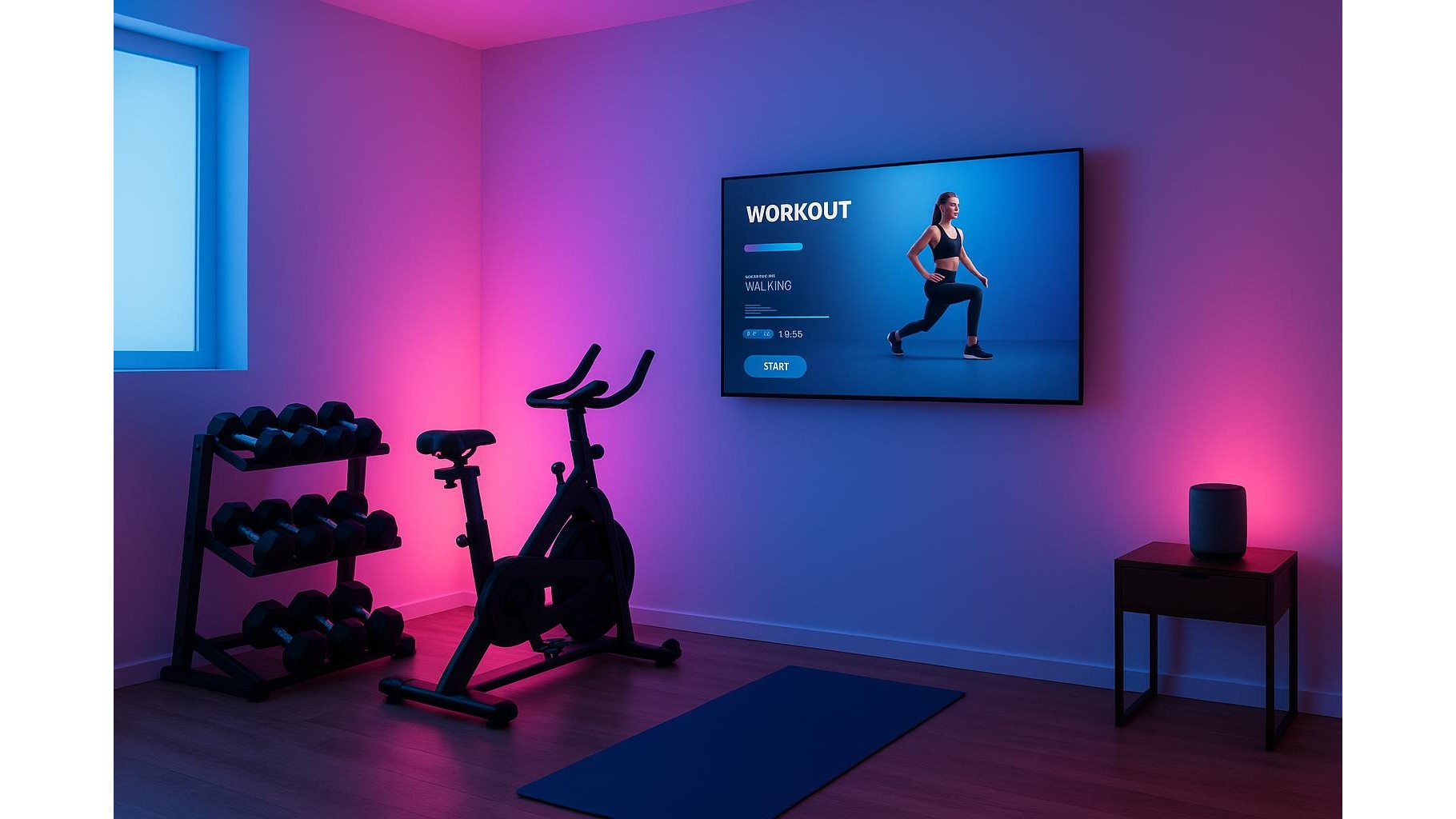
Lighting is one of the easiest wins in a connected home gym. Pair smart bulbs and LED strips with Alexa, Google Home or HomeKit and build scenes like “Cardio Blue”, “Strength Focus” or “Cool Down”. Use bright, cool white or blue tints for high‑intensity intervals, then warm, dim scenes for stretching or evening sessions. Simple voice commands can reduce glare on screens, help you see your weights clearly and create a more motivating atmosphere. When your lights are tied into routines, starting your workout also automatically sets the right ambience and can even flash or change colour when your rest period ends, giving you a visual cue to get back under the bar.
Music, speakers and TV control without touching a screen
In a sweaty gym environment, touchscreens are less than ideal. With smart integrations you can control your sound system and TV purely by voice. Link your streaming services to your smart speaker and define playlists like “Powerlifting Mix” or “Morning Mobility” so you can jump straight into the right soundtrack. If you have a TV or monitor in your gym, integrating it via Chromecast, Apple TV or a compatible smart TV lets you say commands such as “play yoga on YouTube in the gym” or “open my guided cycling workout”. This keeps your hands free, avoids interrupting your flow between sets, and makes it more likely you’ll actually follow along with structured video workouts instead of scrolling on your phone.
Tracking workouts and integrating wearables
To get the most from a smart home gym, your fitness trackers and wearables should feed data into the same ecosystem you use for voice control. Many heart‑rate monitors, smartwatches and connected cardio machines can sync with platforms that work alongside Alexa, Google Home or HomeKit. This means you can ask your assistant for your resting heart rate, weekly workout count or last run distance while you warm up. In some setups you can also log sessions with a phrase like “log a strength workout” and have the details stored automatically. Over time, this hands‑free logging helps you stay consistent and understand whether your home training is actually moving you towards your goals.
When you connect fitness apps, smart speakers, lights and wearables into a single ecosystem, your home gym becomes far more than a room with equipment. Voice‑controlled timers, music, scenes and logging reduce friction and decision fatigue, so you can focus on lifting, riding or stretching. Start with one or two integrations that solve real annoyances in your current setup, then layer in extra automations as they prove useful. The result is a smarter, more enjoyable workout space that genuinely supports your training habits.