Building a powerful home gym routine is not just about sets, reps and progressive overload. Your stress, sleep and mental recovery quietly shape every workout. By linking data from your favourite meditation apps with your home workout logs, you can finally see how your mind and body interact day by day. In this guide you will learn simple, non‑technical workflows to cross‑reference sessions from apps like Headspace, Calm or Insight Timer with your strength, cardio and mobility tracking so you can adjust training, avoid burnout and improve performance.
Why link mindfulness and workout data at home
Most people track either fitness metrics or mindfulness habits, but not both. That means you miss crucial patterns: heavy squat days after poor sleep, slower runs on high‑stress workdays, or brilliant sessions right after a deep breathing practice. When you connect meditation logs with training notes, you can see how stress levels, mood and recovery quality affect your lifts, your pace and your motivation. This insight is especially valuable in a home gym, where you are both the coach and the athlete: data helps you decide when to push harder and when to scale back.
Tools you need for tracking (without being a techie)
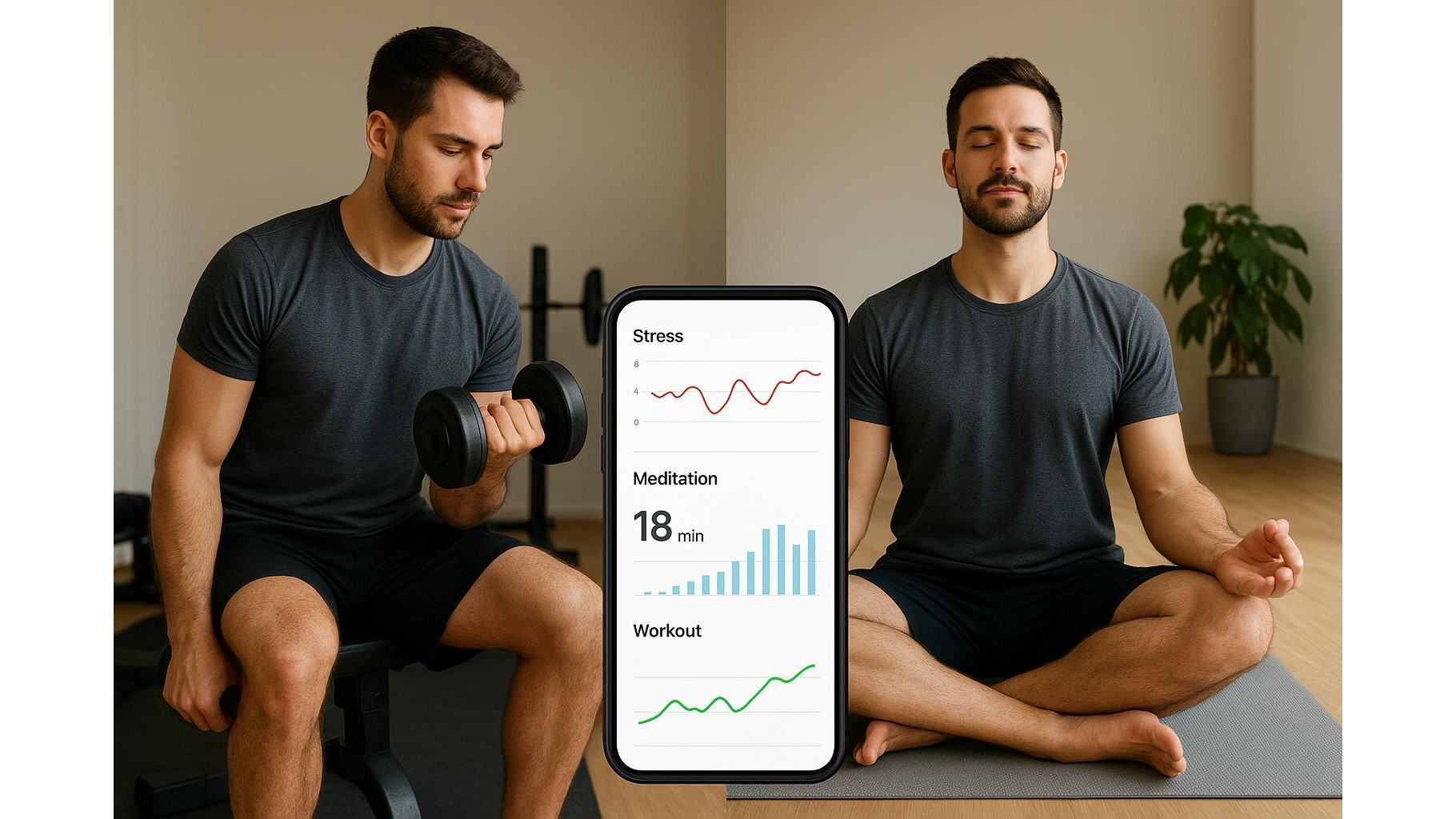
You do not need complex code or advanced spreadsheets to bring your mindfulness and fitness tracking together. Use a simple combo: your favourite meditation app, a basic workout log (notebook, notes app or Google Sheets) and, if you like more detail, a wearable tracker that records heart rate and sometimes heart rate variability (HRV). Many meditation apps let you export or at least view a history of your sessions, including total minutes and streaks. Your only task is to copy over a few key details—such as stress level or mood—into the same place where you keep your sets, reps and RPE (rate of perceived exertion).
A simple daily workflow to connect stress and performance
Start with a minimal routine you can follow every day. After your meditation session, write down three quick numbers: minutes meditated, stress level from 1–10, and mood from 1–10. Then, after your home workout, log your main exercises, sets, reps, and an RPE from 1–10. Add a one‑line comment like “felt tired”, “highly focused” or “buzzing with energy”. Over a couple of weeks you will have a compact dataset where you can compare high‑stress days with low‑stress days and see how they line up with your strength gains, cardio performance and motivation. This workflow stays simple enough that you will actually use it.
How to read the patterns in your logs
Once you have a few weeks of combined logs, start looking for trends. Do harder sessions always feel worse after a stressful workday, even if you slept well? Do you hit personal bests on mornings after a longer meditation or breathing session? You might notice that heavy leg days perform best on moderate stress and high sleep, while short bodyweight circuits tolerate higher stress. Use bullet lists in your log—such as “conditions when I perform best”—to summarise what you see. These insights can guide weekly programming, helping you schedule intense training when your mental state is primed, and lighter recovery sessions when stress is high.
Adjusting your home training based on stress and recovery
With clearer patterns, you can begin to auto‑regulate your home workouts. If your combined log shows high stress, low mood and poor sleep for two or three days, treat that as a signal for a lighter session: focus on mobility, easy cardio and technique work instead of max‑effort lifting. When your log shows low stress and steady meditation streaks, you can plan heavier strength work or more intense intervals. Over time this approach reduces the risk of overtraining and helps you use your mindfulness practice as an active tool for better performance, not just relaxation away from training.
Keeping the system sustainable in the long run
The real power of linking meditation apps with home workout logs comes from consistency, not complexity. Keep the system light: a few numbers after meditation, a few notes after training, and a short weekly review. As your awareness of stress and recovery improves, you will naturally fine‑tune your exercises, volume and intensity. Over months, this blended log becomes a personalised guide to how your mind and body work together, helping you build a more resilient, sustainable and enjoyable home fitness lifestyle.