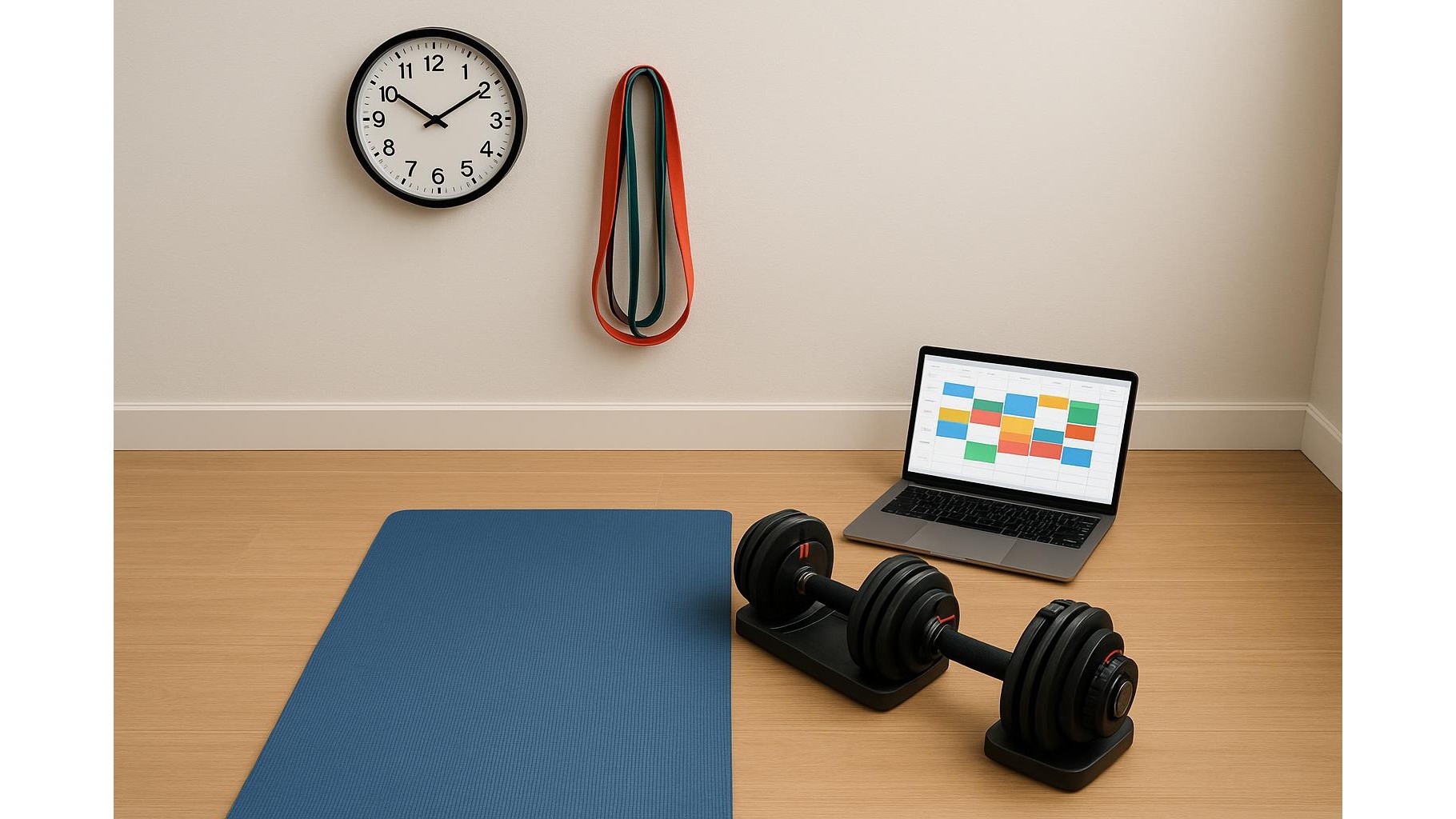
When you train at home, your biggest enemy usually isn’t lack of equipment – it’s lack of protected time. Work emails, kids’ schedules and endless notifications can quietly erase your workout from the day. Using calendar blocking, smart reminders and simple digital routines, you can turn your training into a non‑negotiable appointment that actually happens, even in a busy home.
Turn home workouts into real appointments
Most people treat home workouts as “optional extras”, so they are the first thing to go when the day gets messy. Start by blocking training in your digital calendar exactly like a meeting: fixed start and end time, location set to “Home Gym” or “Living Room”, and a clear title such as “Strength Workout – 30 minutes”. Use recurring events for consistency – for example Monday, Wednesday and Friday at 7:00. Mark these events as busy so colleagues and family members who see your calendar understand that this time is taken, and add a short description with your planned exercises so you don’t waste time deciding what to do.
Use reminders and alarms as a pre‑workout ritual
Calendar blocking only works if you actually notice the event. Turn on multiple reminders for each training block: one 60 minutes before (to adjust meals and finish tasks), one 15 minutes before (to wrap up work), and one at start time (to get moving). Your phone, laptop and even smartwatch can all deliver these nudges. Keep notifications for other apps muted during this window so your brain links that specific sound or vibration with “workout is starting”. Over a few weeks, this becomes a powerful pre‑workout ritual that shifts you from “work mode” to “training mode” almost automatically.
Color‑code and batch your training schedule
Visual cues in your calendar help you respect your home workout routine. Choose a dedicated color for training events so they stand out from work meetings and errands. Batch similar sessions together in your week – for example, strength days in one color shade and cardio days in another. This makes your energy demands more predictable and easier to protect from interruptions. Use short 5–10 minute calendar blocks before and after each workout labeled “Set up gear” and “Cool down & shower”. These mini‑blocks ensure you are not stealing time from the actual workout and remind you to leave your home gym space ready for the next session.
Automate your environment to reduce friction
Digital tools can quietly prepare your environment so sticking to the block requires less willpower. Use your phone’s routines or smart speaker to trigger a playlist when the calendar event starts, lower smart lights in your workspace, or switch them on in your garage gym. Create a recurring reminder the night before to lay out your home workout equipment – mat, resistance bands, kettlebell – so when the alarm goes off you see a clear visual cue to move. Automations don’t need to be complex; even a simple daily notification saying “Water, shoes, timer ready?” five minutes before training can cut the excuses that normally derail a session.
Defend your blocks from work and family interruptions
Protecting your home workout time means communicating clearly. Share your training blocks with your partner or housemates and agree on a “do not disturb unless emergency” rule. At work, set your status to busy or “focusing” during a lunch‑time training slot so colleagues know you’re unavailable. Use features like Focus or Do Not Disturb on your phone that automatically activate when a calendar event with the tag “Workout” begins, silencing calls and social media. Keep a small notepad or digital note nearby: if you remember a task mid‑set, write it down and return to training instead of breaking your block to act on it.
By treating your home workouts as fixed appointments, backing them with calculated reminders and removing friction from your environment, you turn good intentions into repeatable habits. Calendar blocking clarifies when you train, reminders get you started, and simple automations and boundaries keep you moving. Protect those blocks consistently, and your home gym stops being an aspirational corner of the house and becomes the engine of your long‑term fitness.