
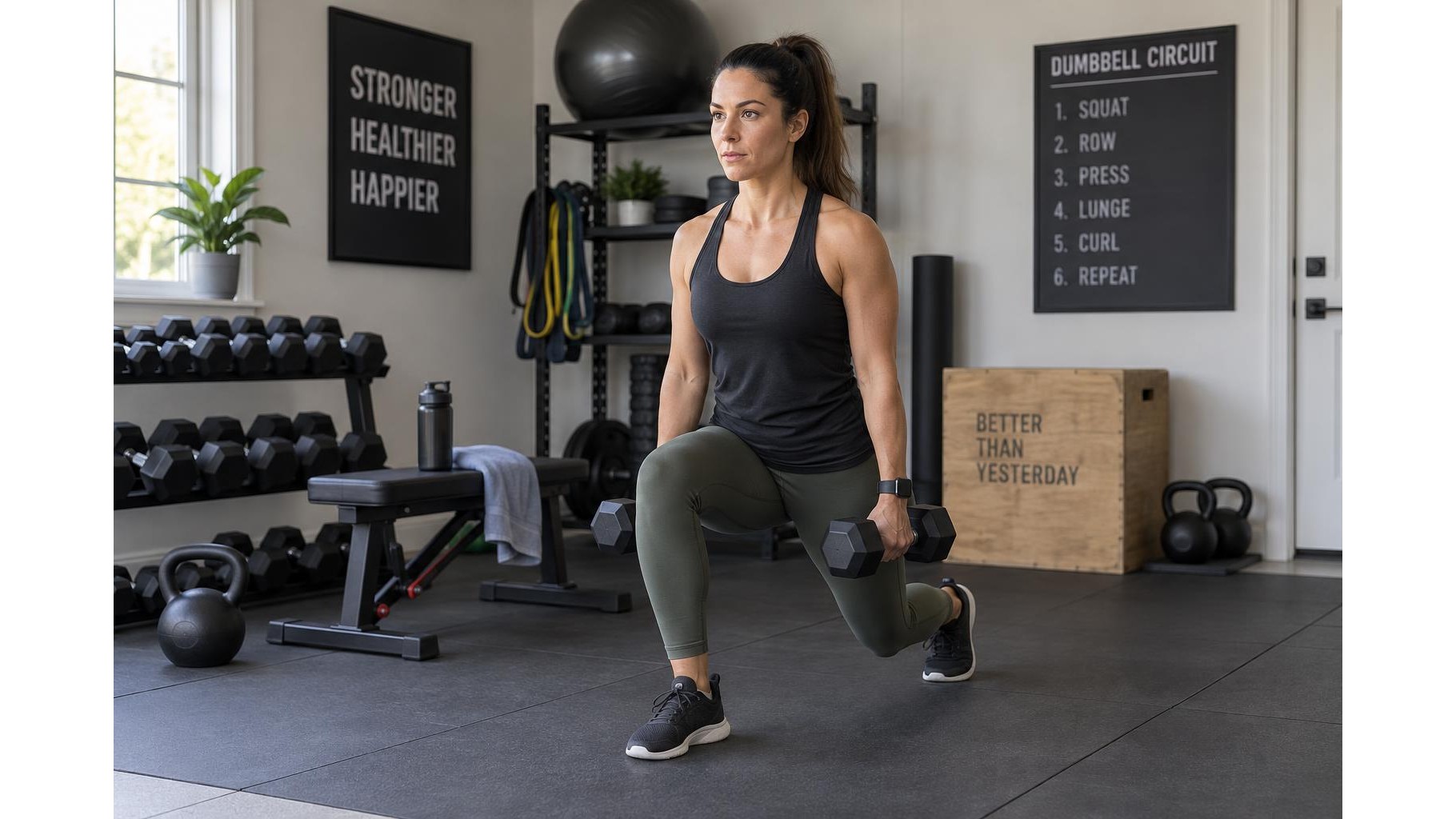
A smartwatch interval timer can keep a home strength circuit flowing without making your phone part of every set. Set work and recovery periods before you begin, then use wrist alerts as prompts to move on—not commands to sacrifice control. A little preparation helps the timer support your training while leaving attention where it belongs: on safe, consistent movement.
Choose a simple interval structure
Start by deciding how your circuit will work. For example, choose four exercises and complete each for 30 seconds, followed by 30 seconds of rest or transition time. Repeat the sequence for three rounds, with a longer recovery between rounds if needed. If you prefer repetitions over timed effort, use the watch to time rest periods instead of trying to race through a set. Keep the first session conservative: intervals should fit your current fitness and exercise choices, not an arbitrary online prescription.
Configure work, rest and rounds
Open the watch’s workout or interval-timer feature and enter the work duration, recovery duration and number of repetitions or rounds. Some devices offer a warm-up and cool-down phase; add these when available, or time them separately. Check whether the timer repeats automatically and whether it vibrates, beeps or both. A vibration can be useful in a shared home, while an audible alert may be easier to notice during movement. Before starting, make sure the display and alert settings are practical for your room and workout.
Make alerts useful, not distracting
Use alerts as clear cues: one signal to begin, another to stop or transition, and a distinctive signal when a round ends if your watch allows it. Test the settings with a short practice interval before your main workout. If alerts are too frequent or confusing, simplify the pattern rather than trying to interpret a complicated sequence mid-exercise. Keep the watch secure and positioned so you can feel its vibration. You should not need to stare at the screen during every interval; glance at it only when you need to confirm the next phase.
Plan transitions between exercises
Arrange equipment and exercise order before pressing start. Put dumbbells, a mat and water within reach, and choose movements that can follow one another without a long room reset. Decide in advance what comes after each alert—for example, move from squats to incline push-ups, then to a hip hinge and a core exercise. If changing equipment takes longer than the rest interval, include a practical transition period or pause the timer. The goal is a smooth circuit, not hurried setup or unsafe handling of weights.
Keep technique ahead of the timer
A countdown is a pacing aid, not a demand to continue at any cost. Stop a set when your form deteriorates, discomfort appears, or you cannot control the movement. Use the remaining work time to breathe and reset, or extend recovery before the next exercise. Choose a range of motion and load that allow steady, repeatable repetitions. For strength work, controlled technique matters more than filling every second. If you are new to an exercise, practise it without a timer first.
Review and adjust after the session
After the circuit, consider whether the work periods felt manageable, whether the rest was sufficient and whether alerts were easy to follow. Adjust one setting at a time: add recovery, shorten work intervals or reduce the number of rounds. As your conditioning improves, progress gradually rather than changing every variable at once. A brief note in a training log can help you repeat successful settings and identify what needs changing next time.
Used thoughtfully, a smartwatch interval feature makes home strength circuits easier to organise and keeps transitions predictable. Set a realistic structure, prepare your space and treat each alert as guidance. Let good technique—not the countdown—decide when a set is complete.









