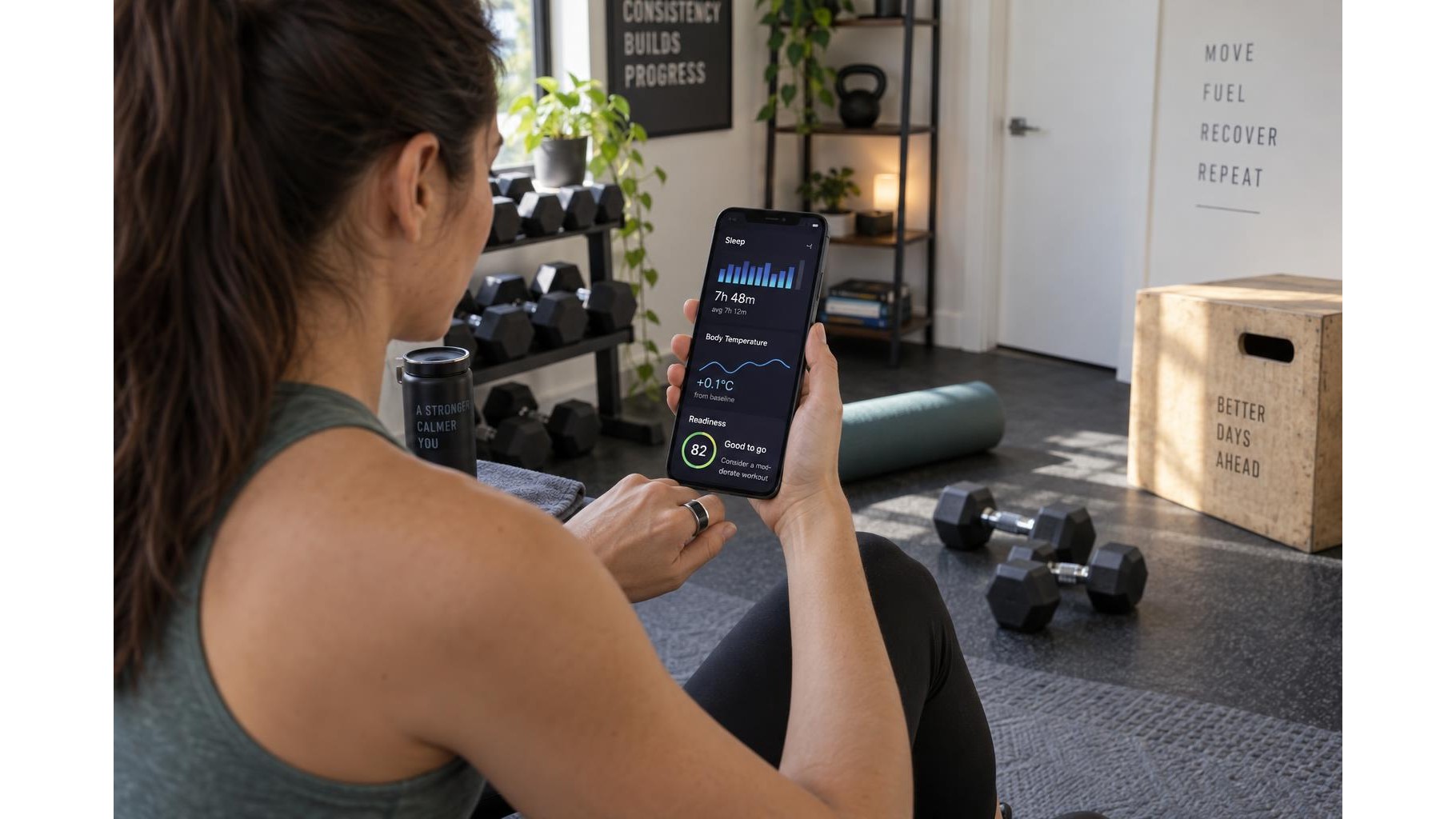
A smart ring can add useful context to a home-training plan by showing how sleep and overnight skin-temperature patterns change over time. These signals are not a diagnosis, a fitness test or a command to skip a workout. Instead, treat them as clues to compare with how you feel, muscle soreness and recent performance. The aim is to make sensible adjustments—not to let a single score decide your day.
Build a personal baseline first
Wear the ring consistently at night and allow several weeks of readings to establish your usual range. Sleep duration, timing and continuity vary between people, while skin temperature is normally reported as a change relative to your own baseline rather than as core body temperature. Check the ring’s measurement notes and focus on patterns across multiple nights. A late bedtime, travel, a warm bedroom, alcohol or an unusually hard session can all affect a reading. Record major changes in routine so you can interpret trends in context.
Read sleep trends, not just a score
Look beyond a single nightly sleep score. Ask whether you have been getting less sleep than usual, waking repeatedly or shifting your bedtime for several days. A short or disrupted night may make a demanding workout feel harder, but it does not automatically mean you must rest. Consider the week as a whole: one poor night after several good ones is different from a continuing sleep shortfall. Use the trend as a prompt to check your readiness, and protect a consistent sleep schedule where possible.
Put skin-temperature changes in context
Overnight skin-temperature deviations can be informative when they persist or appear alongside other changes, but they are not a direct reading of internal temperature and cannot identify the cause. Room conditions, menstrual-cycle changes, illness, alcohol and other factors may influence the pattern. If a deviation is unusual for you, check how you feel and look for other signs rather than interpreting the number alone. If you feel unwell, have a fever or have concerning symptoms, prioritise health and seek appropriate medical advice instead of training.
Combine wearable signals with body feedback
Before starting, take a quick check of energy, soreness, motivation and movement quality. During your warm-up, notice whether ordinary movements feel normal and whether effort is proportionate. Compare those observations with the ring’s longer-term sleep and temperature trends. When signals disagree, give greater weight to clear symptoms and how your body responds in real time. A wearable can help you notice a change; it cannot replace your judgement or diagnose why it happened.
Adjust the home session with a simple plan
If your trends look typical and you feel good, follow the planned session. If sleep has been poor for several nights or you feel unusually flat, keep the habit but reduce stress: lower the load, do fewer sets, choose easier variations or shorten the workout. With marked soreness, poor warm-up performance or feeling unwell, opt for gentle mobility or rest. Reassess during the session and stop if symptoms worsen. Avoid trying to “make up” missed work with an extra-hard workout later.
Use a smart ring as one part of a broader readiness picture, not as a verdict. Longer-term sleep and skin-temperature patterns can help you spot changes, while energy, soreness and performance guide the day’s decision. Keep notes, adjust conservatively and seek medical guidance for persistent or concerning symptoms. A flexible plan is more useful than chasing a perfect daily score.